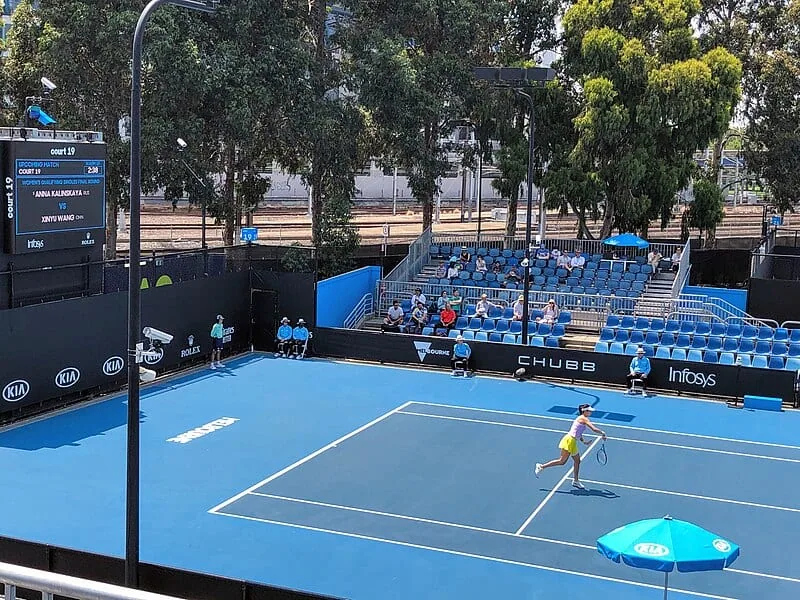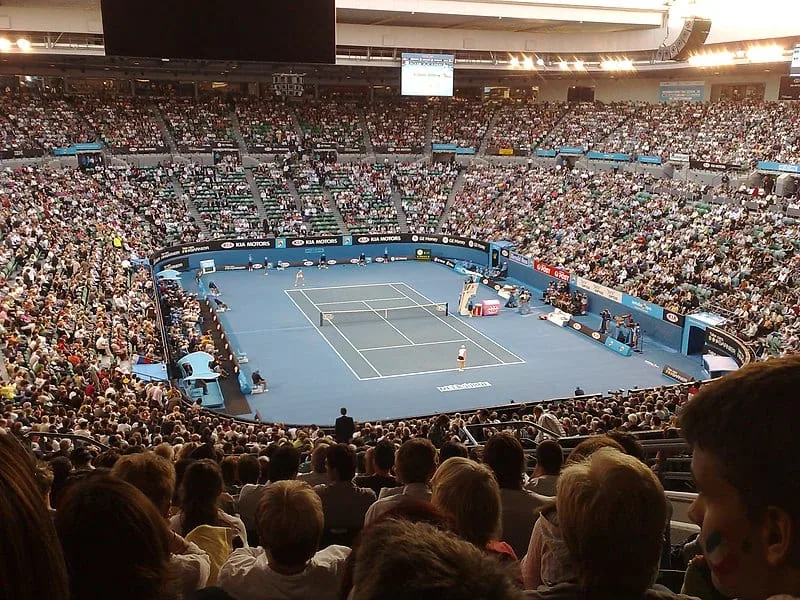
If there is a single match that marks the hinge between two eras of men's tennis, it is the 2012 Australian Open final. Novak Djokovic beat Rafael Nadal in five hours and fifty-three minutes — still the longest final in Grand Slam history — and by the time the trophy ceremony began, neither man could stand. They sat on small stools at the edge of Rod Laver Arena, emptied out, while officials made speeches around them. Everyone who watched remembered the stools. Almost no one remembered what was said.
That match now has a documentary. The Match That Changed Tennis, directed by Chris Haye for the newly formed Rainshadow Films, premieres on Discovery+ this month. It runs under an hour. It does not try to be cinematic. It tries to be accurate.
The Night in Melbourne
January 29, 2012. Rod Laver Arena. Djokovic was the defending champion and had just won three of the past four Grand Slams. Nadal had lost six consecutive finals against him heading into Melbourne. The match started at 7:30 p.m. local time and finished at 1:37 a.m. the following morning.
The scoreline — 5–7, 6–4, 6–2, 6–7, 7–5 — reads cleanly on the page. What it does not show: rallies of forty and fifty shots, repeatedly; humidity that dropped both players into the kind of physical state where coordination goes before willpower; a fifth set that lasted almost ninety minutes on its own. Djokovic served for the match at 5–4, was broken, and had to do it again at 6–5 against a Nadal who, by then, was surviving on pure competitive nervous system.
The final point came at 1:37 a.m. Djokovic tore off his shirt. Nadal put his hands on his knees. The TV cameras caught both of them breathing, and neither had anything left to say into a microphone.
Why It Changed Things
Grand Slam finals had been long before. There was the 2009 Wimbledon final (4h 18m, Federer over Roddick), the 2008 Wimbledon final (4h 48m, Nadal over Federer). But the 2012 final did something different. It demonstrated that two men could play at the physical ceiling of the sport for essentially an entire business day, and that the winner would be decided not by tactics or shot quality but by who was less completely destroyed.
In the years that followed, the men's game got faster, more powerful and physically more brutal. Best-of-five-set rallies became routine. Endurance and recovery became as important as forehand speed. Djokovic's career, in particular, never really came off the foundation that match laid down — the belief that he could outlast anyone, including Nadal, on any surface, in any condition.
It also changed how the sport thought about its own injury toll. The 10-point super-tiebreak at 6–6 in the deciding set — introduced across all four majors by 2022 — owes something to that night. Not directly. But the argument that Slam finals could no longer be allowed to simply run forever started there.
What the Documentary Does
From what has been published about the project, Haye's film avoids the usual dramatic-score-over-slow-motion treatment that sports documentaries have leaned on since the O.J. Simpson era. The film is tight — under sixty minutes — and structured around interviews with people who were there: players, coaches, officials, physios, broadcasters.
That is a deliberate choice. A match this famous has been retold so many times that the temptation is to lean on myth. Haye, on the evidence of early reviews, has instead tried to reconstruct specific moments — what was said in the tunnel before the fifth set, what Nadal's team was actually doing between games, what the on-court temperature was and why it mattered — and let the scale of the match speak without a voiceover telling the viewer how to feel.
Nadal himself has said, in previous interviews, that he has never rewatched the match in full. That is probably the cleanest endorsement of what the film is trying to do: document something the two men who played it have not, emotionally, been able to go back to.
The Trophy Ceremony
The stools are the detail that has stuck. Grand Slam trophy ceremonies are, by tradition, stand-up, smile-for-the-camera affairs. Both finalists are expected to hold their plates or cups at chest height and say something about the tournament and the opponent. The 2012 ceremony was the first major one in living memory where the winner and the runner-up physically could not do that. Officials brought out chairs. Djokovic, holding the Norman Brookes Challenge Cup, thanked everyone he could think of and then ran out of words. Nadal apologised to the crowd for being unable to speak at length.
It was not a polished broadcast moment. It was, on replay, something closer to the end of a boxing match than a tennis one.
A Marker, Not a Monument
Tennis documentaries have multiplied since the streaming era began. Most of them settle on one of three moods: tragedy (injury career-enders, mental-health crises), triumph (GOAT origin stories), or backstage (Netflix's Break Point). The Match That Changed Tennis is, from the brief available, trying to do something narrower — spend an hour on one match, honestly, and let the viewer decide what it meant.
Whether that approach finds an audience in 2026, when tennis coverage is competing with shorter-form content on every platform, is a business question. As a film-making choice it is a welcome one. The match deserves a document, not a hagiography. Fourteen years after the fact, it is still probably the most physically extreme tennis final ever played. Any film that sits with that quietly, without trying to out-drama it, is doing the sport a service.
Source reporting on the documentary's production and release details draws on coverage by Forbes.ru; the match details are public record and archived across every major tennis broadcast network.
Last updated: July 2026
🎾 Gear from this story
HeadHead Speed ProNovak Djokovic's racket of choiceView on Amazon →As an Amazon Associate, SUPER.TENNIS earns from qualifying purchases.