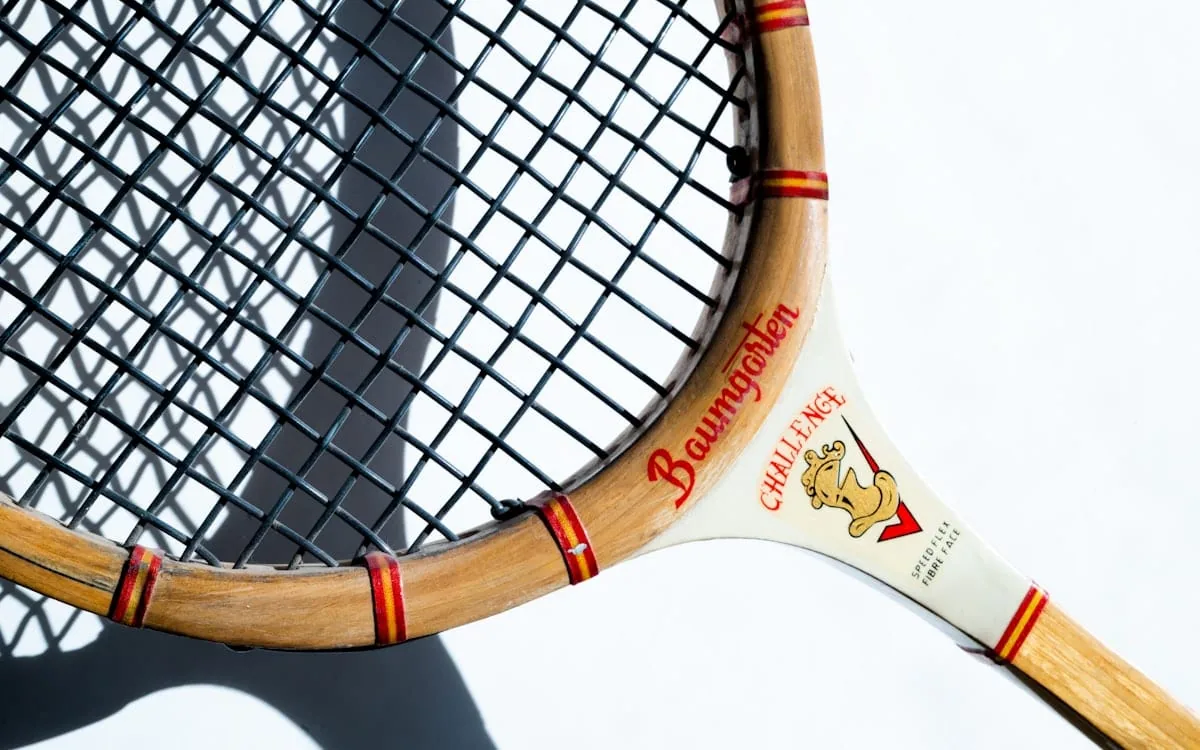
At every other tennis tournament on earth, a player can wear more or less whatever they like. Neon. Black. Their sponsor's loudest seasonal colourway. A different outfit every round if they fancy it. And then, for two weeks at the end of June, the whole sport arrives at one particular corner of south-west London and is told, politely but absolutely: you will wear white, head to toe, or you will not walk onto the court.
Not cream. Not off-white. Not white-with-a-bold-stripe. White. The shirt, the shorts or skirt, the socks, the shoes, the soles of the shoes, the cap, the headband, the wristbands — and, yes, any underwear that might conceivably become visible. It is the strictest dress code in professional sport, it has been enforced for about a century and a half, and once you know the story behind it, you will never look at Wimbledon's green-and-white the same way again.
With the grass season now underway and the tour having traded clay for lawn, the most famous tournament of all is coming — and so is its beautiful, maddening, oddly moving little rule.
Why white in the first place?
To understand the rule, you have to go back to the garden parties.
Lawn tennis was born in the 1870s as a genteel pastime for the Victorian upper classes — something to do on the manicured grass of a country house between tea and croquet. And in that buttoned-up, image-obsessed world, there was one deeply unfashionable thing a body could do in public: visibly sweat. A spreading damp patch on coloured clothing was considered improper, even slightly scandalous, particularly for women. White fabric hid perspiration far better than colours did. So white it was — not for style, originally, but for modesty, to spare everyone the embarrassment of seeing that a human being playing sport in the summer might actually perspire.
What began as Victorian squeamishness hardened, over the decades, into tradition, and tradition at the All England Club is a force roughly as movable as the weather. Long after the rest of the tennis world embraced colour, television, sponsorship and self-expression, Wimbledon kept its players in white — because that was how it had always been, and being how-it-had-always-been is, at Wimbledon, very nearly the whole point.
"Almost entirely white" — and they mean it
If you think "wear white" sounds like a loose guideline, you have underestimated the All England Club. In 2014 the tournament actually tightened the rule, replacing the old "predominantly in white" with the far stricter "almost entirely in white," and then spelled out what that meant in a level of detail that borders on the obsessive.
Off-white and cream? Not white enough — banned. A coloured trim is permitted, but only if it is no wider than one centimetre. Caps, headbands, socks and shoes must be white, soles included. Any undergarment that either is or could become visible during play must also be white. Officials at Wimbledon genuinely do inspect kit, and players genuinely have been sent back to change. This is not a vibe. It is a regulation, enforced by people with rulers and a straight face.
The most famous victim of the crackdown was, of all people, Roger Federer — Mr Wimbledon himself, an eight-time champion who looks more at home on that grass than anyone who has ever lived. In 2013 he turned up in shoes with bright orange soles, and the All England Club told the most elegant player in history, in effect, lovely shoes, you cannot wear them here. He did not wear them again. If Federer cannot get a splash of orange past the Wimbledon dress code, nobody can.
The rebels
Not everyone has gone quietly. The all-white rule has produced some of the great acts of defiance in tennis history.
The most famous was Andre Agassi. In the late 1980s, at the absolute peak of his neon-denim, rock-star, "image is everything" phase, Agassi simply refused to play Wimbledon at all — boycotting the tournament from 1988 to 1990, in part because he had no interest in stripping off his colourful identity to conform to the club's whites. When he finally came back, conformed, and won the title in 1992, it became one of the sport's great redemption stories — the rebel who bent the knee to tradition and was rewarded with the one trophy that had seemed least like him.
Over the years others have pushed at the edges — a flash of coloured underwear here, a borderline trim there, the occasional bandana that strayed too far from regulation white — and the club has pushed right back, every time. The dress code has become part of the tournament's theatre: the players testing the line, the All England Club holding it, the whole thing a gentle annual negotiation between self-expression and a century and a half of starch.
The rule that finally, humanely, bent
And then, in 2023, Wimbledon did something it almost never does. It changed.
For years, female players had quietly carried an extra anxiety into the most prestigious tournament of their lives: the fear of getting their period during a match and bleeding visibly through all-white clothing, on television, in front of the world. It is the kind of thing the men who wrote the rules in the 1880s never had to think about, and the kind of thing that, once players started speaking about it openly, was impossible to defend. Campaigners and players — among them some of the biggest names in the women's game — said it plainly: the all-white rule was making an already stressful situation worse.
So Wimbledon relaxed it. From 2023, female players have been allowed to wear dark-coloured undershorts beneath their white kit, provided they are not longer than the shorts or skirt itself. It is a small change on paper. In practice it was a rare, genuinely humane act from an institution famous for never bending — an acknowledgement that some traditions are worth preserving and some are just old men's rules that needed quietly updating. It is, to me, the most moving detail in the whole story: the most tradition-bound tournament in sport, listening, and softening, just enough.
Why it survives
You might reasonably ask why, in 2026, any of this still exists. The answer is partly stubbornness and partly something lovelier.
The stubbornness is real — Wimbledon preserves its rituals with an almost religious devotion, and the dress code is one of them, alongside the grass, the strawberries and cream, the ivy, the royal box, the refusal to put advertising hoardings around the courts. But the lovelier reason is what the white actually does. Against the deep green of the grass, all that white looks like nothing else in sport — timeless, clean, strangely beautiful, the same on television today as it was sixty years ago. Strip the colours away and every era of Wimbledon blurs into one continuous image. A photograph of Roger Federer in his whites could be from almost any decade. That continuity, that refusal to look like the loud, branded, ever-changing rest of the sport, is a huge part of why Wimbledon feels like the spiritual home of tennis.
The players, for their part, have learned to express themselves within the constraint — in the cut, the fit, the tiny permitted details, the way they wear it. Limit the palette to one colour and style becomes about everything except colour. There is an art to looking like yourself in head-to-toe white, and the best of them have mastered it.
What is confirmed, and what is just tradition
Confirmed: Wimbledon requires competitors to wear almost entirely white clothing on court, a rule rooted in the Victorian era when visible perspiration on coloured clothing was considered improper. Confirmed: the rule was tightened in 2014 from "predominantly" to "almost entirely" white, with detailed restrictions including a maximum one-centimetre coloured trim and requirements covering shoes, soles, caps, socks and visible undergarments. Confirmed: Roger Federer was asked not to wear shoes with orange soles after the 2013 tournament. Confirmed: Andre Agassi did not play Wimbledon from 1988 to 1990, with the dress code among his reasons, before returning and winning the title in 1992. Confirmed: in 2023 the All England Club relaxed the rule to allow female players to wear dark-coloured undershorts, following concerns raised by players about competing in all-white during menstruation.
Just tradition: almost everything else about why Wimbledon is the way it is. The grass, the whites, the strawberries, the refusal to modernise faster than a glacier — none of it is strictly necessary, and all of it is exactly why people love the place. Some rules survive because they make sense. This one survives because it makes Wimbledon look like Wimbledon.
The bottom line
Tennis spends fifty weeks of the year as a loud, colourful, modern global sport, and then for two weeks it puts on its whites and becomes something older and stranger and more beautiful. The all-white rule started as Victorian embarrassment about sweat, hardened into the strictest dress code in sport, survived rebellions and rulers and Roger Federer's orange soles — and then, in 2023, showed it could still listen, and bend, when bending was the right thing to do.
When Wimbledon arrives in a few weeks and the players walk out onto that impossible green grass in head-to-toe white, you will know exactly why, and exactly what it cost to keep it, and exactly when it finally softened. It is a daft old rule. It is also, somehow, one of the most beautiful things in sport. Both of those are true, and that contradiction is the most Wimbledon thing of all.
Sources
- The All England Lawn Tennis Club: competitor clothing and equipment rules
- Wimbledon official: the history of the all-white dress code
- BBC Sport: Wimbledon tightens its all-white clothing rule (2014)
- BBC Sport / Reuters: Wimbledon relaxes all-white rule to allow dark undershorts for women (2023)
- ESPN: Roger Federer's orange-soled shoes barred at Wimbledon
- Wikipedia: Andre Agassi — Wimbledon and the dress code
- Wikipedia: Wimbledon Championships — traditions
Photo: Roger Federer, Wimbledon 2012 champion / Ank Kumar, Infosys Limited / Wikimedia Commons / CC BY-SA 4.0
Last updated: September 2026
🎾 Gear from this story
WilsonWilson Pro Staff RF97Roger Federer's racket of choiceView on Amazon →As an Amazon Associate, SUPER.TENNIS earns from qualifying purchases.