On May 14, 2026, Jannik Sinner walked onto the red clay of the Foro Italico in Rome and finished a match that rewrote one of the most stubborn record books in modern tennis. With a 6-2, 6-4 quarterfinal victory over Andrey Rublev, the 24-year-old Italian world No. 1 won his 32nd consecutive ATP Masters 1000 singles match — one more than the streak Novak Djokovic put together in 2011, until Tuesday widely considered untouchable in the modern era.
The number alone is impressive. The context is what makes it historic. Sinner has now won his last five Masters 1000 titles in a row — Paris 2025, Indian Wells 2026, Miami 2026, Monte Carlo 2026 and Madrid 2026 — and he has done it across three different court surfaces (indoor hard, outdoor hard, red clay). Djokovic's 2011 streak began on hard court and ended on clay, but he played a single surface family at a time. Sinner has alternated and never lost.
He stands now three matches from a sixth straight Masters title, and three days from the start of Roland Garros 2026 — the one Grand Slam he has never won.
The record, explained
The ATP Masters 1000 is a tier of nine tournaments per year sitting just below the Grand Slams. Winning one usually requires beating five top-30 opponents in seven days. Going undefeated across multiple tournaments in a row is the closest thing in men's tennis to a baseball perfect-game stretch — it has, before this week, happened exactly once at this length in 35 years of Masters tennis.
Djokovic's 31-match streak ran from his February 2011 Indian Wells title through to his Madrid run that May, broken at last by an injured forearm against Rafael Nadal at Roland Garros. It defined the early Djokovic era and earned him his first stretch as world No. 1.
Sinner's 32 — and counting — has different fingerprints. He won Paris-Bercy 2025 indoors in November, then took a month off before Indian Wells in March, then did not lose at all through Miami's hard courts, Monte Carlo's slow Mediterranean clay, the higher-bouncing Madrid clay, and now Rome. He has played 32 best-of-three matches in five different cities on three different court surfaces against an average opponent ranked No. 23. He has dropped only nine sets across all 32 of them.
Read the SUPER.TENNIS preview of his Roland Garros 2026 favourite status for the broader context of why this run matters more than the number suggests.
Inside the Rublev match: Sinner's most efficient win of the streak
The 6-2, 6-4 score line undersells how close the second set was. Rublev — the Russian world No. 8 — broke Sinner once early, held three break points for a double break, then watched Sinner serve four consecutive aces to flatten the rally. Sinner reeled off five straight games to close out the set.
The match took one hour 23 minutes. By Sinner's standards in 2026 — his average clay match running 1:38 — this was almost a brisk practice session. He hit 24 winners against 11 unforced errors. His first-serve percentage was 72%. He converted 4 of 7 break points. Rublev, who played beautifully early, simply had no answer to the depth Sinner consistently extracted from the back of the court.
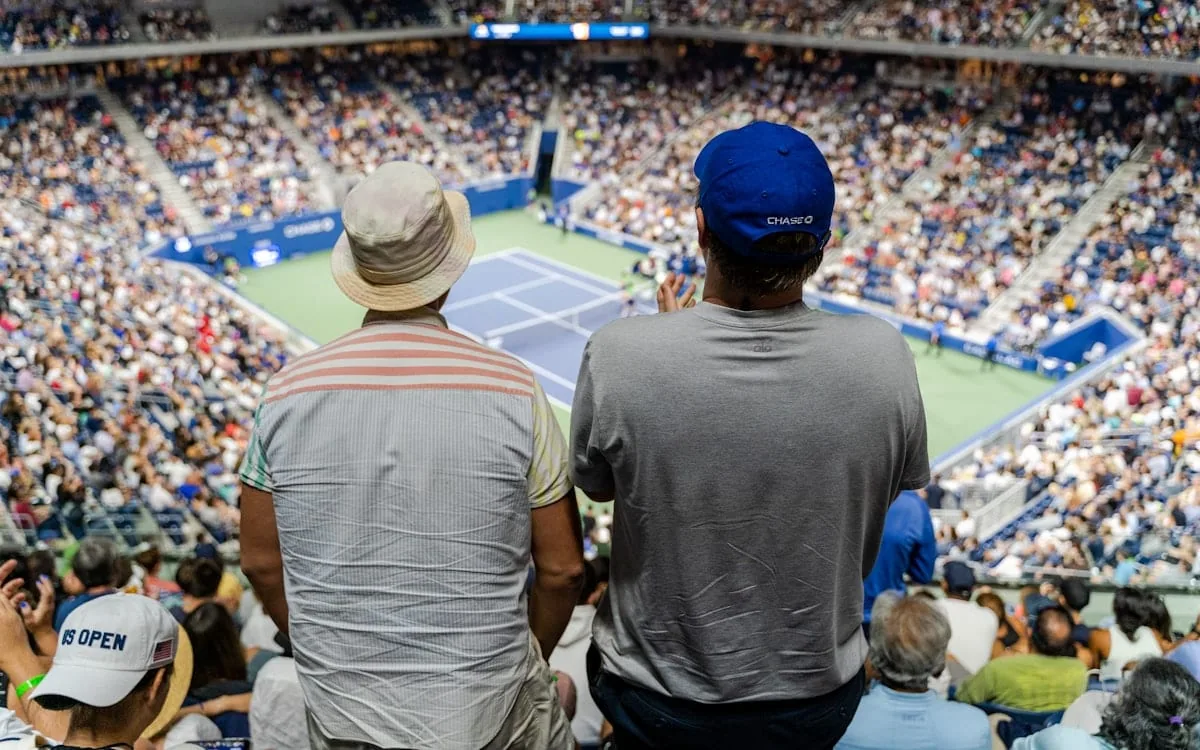
The Italian crowd at Court Centrale was reading the scoreboard in real time. When the final point landed, the chant went up immediately: "uno-due-trentadue" — one-two-thirty-two — the date and the new record on the same scoreboard.
Tonight's semi-final: Sinner vs Medvedev
The opponent in Friday evening's semi-final at the Foro Italico — scheduled not before 7 p.m. local — is Daniil Medvedev, who survived a three-set thriller against Spanish teenager Martín Landaluce 1-6, 6-4, 7-5 in his own quarter-final.
Medvedev's history against Sinner is the most pressure-tested in the field. They have played 11 times on the ATP Tour. Medvedev led 6-0 across their first six matches between 2020 and 2023, then Sinner won their next five — including the 2023 ATP Finals and the 2024 Australian Open final. The Russian has not figured out a way to handle Sinner's depth on either hard court or clay since Sinner's late-2023 tactical adjustment.
Medvedev's clay performance has been historically weak. He has reached one Roland Garros quarterfinal in his career (2021) and lost in the third round or earlier in seven of his other appearances. But he has been remarkably consistent in Rome — semifinalist twice before, and his 2026 run has felt like the more confident version of his 2023 self.
For the streak, Friday night is the biggest threat Sinner has faced since Monte Carlo, where he saved match point against Alcaraz in the final and won 7-6 in the third.
The five Masters titles, one by one
Tracking exactly how the streak built:
- Paris-Bercy 2025: Indoor hard. Sinner defeated Felix Auger-Aliassime in the final after surviving a quarter-final against Holger Rune. First step.
- Indian Wells 2026: Outdoor hard. Sinner d. Alcaraz in the final 7-5, 6-3 — their second straight Indian Wells final and Sinner's first title at the desert event.
- Miami 2026: Outdoor hard. Sinner d. Jakub Mensik in the final after the rising 19-year-old Czech upset Carlos Alcaraz in the semis.
- Monte Carlo 2026: Red clay (slow). Sinner d. Alcaraz 6-4, 1-6, 7-6(3) in a final that Alcaraz held match point in the third set tiebreak. Considered by many the match of the year.
- Madrid 2026: Red clay (high bounce, altitude). Sinner d. Alexander Zverev 6-3, 6-2 in a final Zverev later called "an awful tennis match" — for himself.
A sixth title in Rome would be his fourth Masters of 2026 alone, in five months. No player in the Open Era — not Djokovic, not Nadal, not Federer — has won six Masters 1000 titles in any 12-month window.
What this means for Roland Garros 2026
Roland Garros begins May 18. Sinner has spent five months turning every clay tournament he enters into a foregone conclusion. With Alcaraz out injured, Lorenzo Musetti withdrew with a thigh issue on May 13, and Djokovic playing reduced clay this season, the structural advantages line up clearly.
But Roland Garros has a habit of defying clay form. Best-of-five tennis tests the bodies of players carrying long streaks — and Sinner's deepest concern entering Paris is not the field but the fatigue. He has played more clay matches than any top-five player in 2026.
His draw at Roland Garros will be released this weekend, before the Sunday start. If he wins Rome and then Roland Garros, he will become the first player in history to hold all four Masters 1000 clay-court titles of a year plus the French Open in the same season.
The number he ends the streak at — 32, 33, 38, 50 — will be the headline. But the body that produces it will tell the bigger story.
Can anyone stop the streak before Paris?
Three opponents stand between Sinner and his sixth straight Masters trophy:
- Medvedev (Friday semi) — the only top-10 player with a positive ATP history against him. Long historical context, weak recent form on clay.
- Either Casper Ruud, Alexander Zverev, Stefanos Tsitsipas, or Tomas Machac in the final — all proven clay players, none currently producing Sinner-quality tennis.
- Sinner himself — physical exhaustion entering RG, mental discipline of not relaxing before Paris.
The most likely scenario: Sinner reaches the Rome final, wins it, takes the streak to 35, and then Roland Garros becomes the test. The longest Masters 1000 streak ever, plus Sinner's first French Open title, would put him on a 2026 trajectory matching Djokovic's 2011 — Djokovic's strongest year, with three Slams and five Masters titles.
Quick FAQ
What is the previous record for consecutive Masters 1000 wins? 31, set by Novak Djokovic between February and May 2011. The streak ended with a forearm injury and a Roland Garros semi-final loss to Roger Federer.
Who is Jannik Sinner's coach in 2026? Simone Vagnozzi remains lead coach, with Darren Cahill working as part-time consultant. The team has not changed during the streak.
Has Sinner ever lost a Masters 1000 final? Yes — twice. He lost to Holger Rune in Paris 2024 and to Stefanos Tsitsipas in Monte Carlo 2024. Both losses came before the start of the current streak.
When does Sinner play next? Friday May 15 at 7 p.m. local time in Rome, vs Daniil Medvedev in the Italian Open semi-final. The final, if he wins, is Sunday May 17.
When does Roland Garros 2026 start? May 18, 2026. The men's final is scheduled for June 7. Full preview in our Roland Garros 2026 article.
Who can realistically end the streak at Roland Garros? Djokovic, if he times his form. Zverev at full health. Possibly Casper Ruud or a deep Musetti run had he not withdrawn. Alcaraz is out injured.
What is the longest winning streak in tennis history? Single-tournament: Bjorn Borg's 41-match Wimbledon streak. Single-surface: Rafael Nadal's 81-match clay streak. Across Masters 1000 specifically: Sinner now holds the record at 32 and counting.
Last updated: August 2026
🎾 Gear from this story
HeadHead Speed MPJannik Sinner's racket of choiceView on Amazon →As an Amazon Associate, SUPER.TENNIS earns from qualifying purchases.