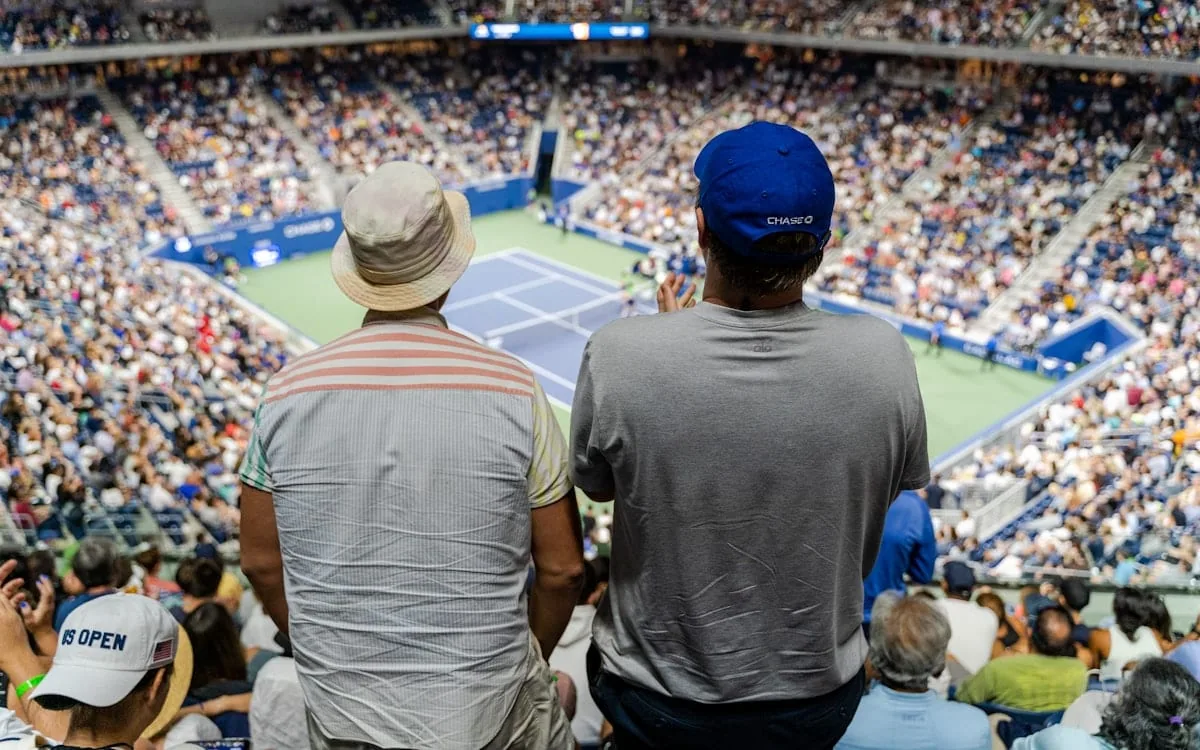
Three days before Roland Garros 2026 begins, the women's draw looks more competitive than it has in any year since 2017. Coco Gauff arrives in Paris as defending champion, the 22-year-old American who finally cracked clay last June by defeating Aryna Sabalenka in the final. Sabalenka enters as world No. 1 and the betting favourite — still trying, in the seventh year of her career, to win the only Grand Slam where her power game has historically been most exposed. And Iga Swiatek, the four-time champion who owned this tournament for half a decade, comes in trying to prove that her 2025 quarterfinal exit was an aberration and not the end of an era.
The WTA's clay season has been the most volatile in years. Sabalenka won Madrid. Swiatek crashed in Madrid before reaching the Rome semis. Gauff was forced to stop her Rome quarter-final for a medical emergency mid-match before recovering to win. Mirra Andreeva made the Madrid final at 17. Elena Rybakina won a 250-level clay event in Stuttgart and has quietly built a 12-3 clay record this season.
What we get in Paris from May 18 to June 7 is a women's draw with no clear favourite — the kind that produces the most interesting Roland Garros in years.
Coco Gauff — defending champion with the most to lose
Gauff entered last year's Roland Garros final having lost five of her previous six matches against Sabalenka. She left with her first French Open title, after a 6-7(5), 6-2, 6-4 final on Court Philippe-Chatrier that ran past nightfall and against the wind. Her serve — historically her biggest weakness — held under the most pressure of her career. Her forehand — historically her biggest tactical question — never broke down.
The Gauff who arrives in 2026 is a different player from the one who entered 2025. She has changed her service motion (smaller takeback, faster trigger), worked all winter with veteran coach Brad Gilbert on clay-specific tactics, and reached the Miami Open final earlier this year. Her Rome quarter-final against Mirra Andreeva — which she paused mid-match for a medical emergency before winning — proved her physical resilience.
The defending-champion's burden at Roland Garros is real, though. Justine Henin in 2008, Maria Sharapova in 2013, Garbiñe Muguruza in 2017, Simona Halep in 2019 — every recent women's RG winner has lost before the semi-finals the year after. Gauff is currently the +500 third-favourite in betting markets, behind Sabalenka and Swiatek.
Aryna Sabalenka — the favourite who cannot win Paris
Sabalenka has spent eight years trying to win Roland Garros. She has reached one final (2023, lost to Iga Swiatek), one semi-final (2024), and finished her quarterfinal runs in 2021 and 2022 with the same recurring problem — her power-base game collapsing in the third set as opponents extended rallies and tested her movement on clay.
The 2026 version of Sabalenka, however, has finally figured something out. She won Madrid 2026 in commanding fashion. She has now won three of her last four matches against Swiatek. She enters Paris with a clay record of 16-3 since January. Her serve is the heaviest on the women's tour, her forehand the cleanest power shot in the game, and her clay-court footwork has visibly improved over the past 18 months.
Betting markets have her at 25-30% to finally lift the Coupe Suzanne-Lenglen. That is the highest implied probability she has ever had entering Roland Garros.
The one question: can she handle a five-hour two-week tournament physically? Sabalenka has played more matches in 2026 than any top-five WTA player. The wear shows in late-tournament sets at Madrid and Rome.
Iga Swiatek — fighting for relevance at her own tournament
Swiatek has won four Roland Garros titles, including three in a row from 2022 to 2024. Her career record at this tournament is 35-2. She lost two matches at Roland Garros in five years and one of them — the 2025 quarter-final to Madison Keys — ended her 39-match clay-court winning streak and started a year of uncomfortable conversations about her form.
The 2026 Swiatek arrives in Paris with three coaching consultations under her belt, a Madrid withdrawal due to illness, and a Rome run that produced a 6-1, 6-2 demolition of Jessica Pegula — her most dominant clay-court win since the 2024 final. The semi-final against Gauff later this weekend, or potentially against Andreeva, will tell more about her form than any conversation.
She remains the only active WTA player with a four-Slam tally at one tournament. She remains the only player to have won three consecutive Roland Garros titles in the modern era. She remains the second favourite — 29% implied — in the betting markets, even after her shaky season.
But the body of evidence is now: she is no longer the only player who can win Roland Garros. She is one of four.
Elena Rybakina — the underrated clay-court threat
Rybakina is the only top-five player with a major already this season (Australian Open). Her clay credentials are quieter than the others but more recent. She won the 2024 Stuttgart clay event. She made the 2024 Roland Garros quarter-finals. She defeated Sabalenka in the 2025 Madrid quarter-finals.
Her game on red clay is built on three things: the heaviest serve on tour, an exceptionally flat groundstroke that skids off the surface, and remarkable mental composure in tight third sets. She does not give back the lead.
Her 15% implied probability undersells her chances. She is the player most likely to win one round you didn't expect — a Sabalenka quarter-final, a Gauff semi-final — and then keep going.
Mirra Andreeva — the 17-year-old wildcard
Andreeva reached the Madrid 2026 final, where she lost to compatriot Marta Kostyuk in three sets. She is now a top-15 WTA player at 17 years old. Her game is built on the patience and angles that work on clay better than anywhere else.
A run to the Roland Garros semi-finals is realistic. A run to the final is possible. Beyond that, it is asking a great deal of a teenager at her first deep Grand Slam run — but Coco Gauff's own 2023 semifinal at 19, and Swiatek's 2020 title at 19, prove the modern WTA does not require 30-year-old credentials.
The dark horse list
- Marta Kostyuk — Just won Madrid (her first WTA 1000 title). The Ukrainian world No. 18 has the patience and shot tolerance for clay. Threat to reach the quarter-finals.
- Madison Keys — The 2025 quarter-finalist who ended Swiatek's RG streak. Power game suits faster Grand Slam clay. Probably needs a friendly draw.
- Jasmine Paolini — 2024 Roland Garros finalist (lost to Swiatek). Knows what a deep RG run looks like. Italian crowd support if her bracket lands on Court Philippe-Chatrier.
- Karolina Muchova — When healthy, one of the most beautiful clay players on tour. The "when healthy" qualifier has defined the past two years.
The prize money story
Prize money at Roland Garros 2026 became a public story this month. Jessica Pegula and ~20 top players signed a letter protesting what they call inadequate distribution to early-round losers compared to the US Open and Australian Open. The total prize pool is approximately €58 million; the singles champion's cheque is around €2.4 million.
The dispute is unresolved entering the tournament. Player representatives have hinted at quiet protest gestures during the first week. The defending champion Gauff has not publicly commented, but her father Corey reportedly co-signed the letter.
Predictions
The women's draw is more open than any year since 2017. Three scenarios with real probability:
- Sabalenka finally wins: She gets her draw, her serve holds in two-week mode, she avoids Gauff in the semi-finals. Plausible: 28%.
- Gauff successfully defends: Her serve continues to hold under pressure, she avoids a five-set quarter against Swiatek, her clay tactics from 2025 hold for another year. Plausible: 25%.
- Swiatek wins her fifth: Form crystallises in the late rounds, she gets Sabalenka in a semi instead of a final, the Roland Garros draw treats her gently. Plausible: 22%.
Add 15% for Rybakina, 5% for Andreeva, 5% for the field. That math leaves Roland Garros 2026 as the most evenly-weighted WTA Grand Slam in a decade.
Our pick: Sabalenka d. Gauff in the final, in three sets. Sabalenka finally completes her career Slam, becoming the first Belarusian player to win Roland Garros. Gauff puts up the most resistance of any defending champion in recent memory.
Quick FAQ
Who won Roland Garros 2025? Coco Gauff defeated Aryna Sabalenka 6-7(5), 6-2, 6-4 in the final on June 7, 2025. It was Gauff's second Grand Slam title after the 2023 US Open.
Who is the favourite for Roland Garros 2026? Aryna Sabalenka is the slight betting favourite at 25-30% implied probability, with Iga Swiatek (29%) close behind. Defending champion Coco Gauff is third at 11-15%, Elena Rybakina fourth at 15%, Mirra Andreeva fifth at 8-10%.
How many Roland Garros titles does Iga Swiatek have? Four — 2020, 2022, 2023, 2024. Her 2025 quarter-final loss to Madison Keys ended a three-year title streak.
Has Aryna Sabalenka ever won Roland Garros? No. Her best result is the 2023 final, which she lost to Iga Swiatek in three sets. She has reached the semi-finals once and quarter-finals twice.
When does Roland Garros 2026 start? May 18, 2026. The tournament runs through June 7. Women's final is June 6; men's final is June 7. Full schedule on our Roland Garros 2026 guide.
Where can I read the men's preview? See our Roland Garros 2026 men's preview — published yesterday with Sinner as the heavy favourite after Carlos Alcaraz's withdrawal.
What is the women's prize money for Roland Garros 2026? Equal to the men's. The singles champion receives approximately €2.4 million. The Grand Slam pioneered equal prize money in 2007.
Last updated: August 2026
🎾 Gear from this story
HeadHead Speed MPCoco Gauff's racket of choiceView on Amazon →As an Amazon Associate, SUPER.TENNIS earns from qualifying purchases.