The two men walking out for the final in Montreal on Thursday night share a detail that would have been treated as a punchline twenty years ago. Before either of them played a professional match that mattered, they went to university.
Ben Shelton spent two years at the University of Florida. Brandon Nakashima spent one at the University of Virginia. Between them they have a Masters 1000 title, a US Open semi-final, an NCAA singles championship and a share in a national team title, and on Thursday one of them will lift the National Bank Open trophy at IGA Stadium. If you have followed tennis for any length of time, you will remember when American college tennis was described — gently, but constantly — as the place you went when the tour did not want you. That description is out of date, and this week in Canada is the loudest evidence yet.
A Wednesday night that told the whole story
Nakashima got there first. He beat Rafael Jodar 7-6(3), 6-4 in the opening semi-final, a match between two men who both wore the orange and navy of Virginia, in different eras, never in the same season. It was the first Masters 1000 final of Nakashima's career, arriving at 25, six and a half years after he left Charlottesville with a single college season behind him and an ACC Freshman of the Year award in his bag.
Then Shelton, the defending champion, dealt with Learner Tien 6-2, 6-3 under the lights to set up an all-American final. Shelton won this title last year in Toronto — the men and women swap cities each summer — beating Karen Khachanov 6-7(5), 6-4, 7-6(3) in a final that ran to three hours of pure nerve. He became the youngest American man to win a Masters title since Andy Roddick in 2004. He is 23 now, and he is the closest thing the college system has to a billboard.
Nakashima is worth pausing on, because his version of the college route was the shortest possible one. He enrolled early at Virginia as a 17-year-old from San Diego, went 17-5 in singles and 20-3 in doubles in his one season, collected the ACC Freshman of the Year award, and announced in December 2019 that he was leaving to turn professional. Six years of steady, unglamorous work followed: a career-high of No. 29 in May 2025, a reputation as one of the cleanest ball-strikers on tour, and a persistent sense among people who watch closely that he was better than his results. This week the results caught up.
Look at the four semi-finalists again, because the pattern is the point. Shelton: Florida. Nakashima: Virginia. Jodar: Virginia. Tien: a short spell at USC in early 2023, joining the Trojans mid-season, going unbeaten in dual matches before deciding his game was ready and turning professional later that year. Every single one of them had, at some stage, pulled on a university shirt and played for a team. At a Masters 1000 semi-final stage. In 2026.
That is not a coincidence, and it is not a quirk of one draw. It is the visible end of a change that has been building for a decade.
The Spaniard who flew the wrong way
If you want the story in one player, take Jodar.
He is Spanish, from Madrid, born in September 2006, and by the ordinary logic of European tennis he should never have seen an American campus. Spain has the academies, the clay, the coaches, the tradition. He had also just won the US Open boys' singles title in 2024, beating Nicolai Budkov Kjaer in the final, which is the kind of result that normally comes with a racket contract and a plane ticket to the Challenger circuit.
Instead he went to Virginia. One season. He was named ACC Freshman of the Year and ITA National Rookie of the Year in the spring of 2025, and then, at the end of that year, he gave up his remaining college eligibility and turned professional. What followed was almost silly: three Challenger titles in the autumn of 2025, including Lincoln and Charlottesville, then tour-level wins through 2026 at the Australian Open, Dallas, Delray Beach, Acapulco and Miami. He reached a career-high of world No. 22 on 1 June 2026. He is 19.
This week he became, by the reckoning of the people who track such things, the first player born in 2006 or later to reach a Masters 1000 semi-final. Twelve months ago he was a college kid ranked outside the top 500, playing matches in front of a few hundred students, doing homework on the bus. If that sounds like a fairy tale, remember what it actually took: a year of team practice, a coaching staff who knew him, a schedule that let him grow into his body without hunting ranking points every week in a different country.
The Spanish teenager who chose Virginia is the sharpest possible answer to the old snobbery. He did not go to college because nobody wanted him. He went because it was the better plan.
When college was the road, not the detour
None of this is new, exactly. It is a return.
Arthur Ashe won the NCAA singles title for UCLA in 1965, taking the doubles as well and leading the Bruins to the team championship, before going on to a career that gave the sport its conscience and its biggest stadium — the story we told in full in the piece on how his name ended up on Arthur Ashe Stadium. Jimmy Connors won the NCAA singles title as a freshman at UCLA in 1971, the first freshman ever to do it, then turned professional after that single season. John McEnroe won it for Stanford in 1978, also as a freshman, also leading his team to the title, and left almost immediately afterwards.
For a couple of generations, the American university was simply where good tennis players played tennis. Nobody thought it was strange. It was where you got matches, coaching, structure and a degree, and if you were good enough, the tour was still there afterwards.
Then the sport changed shape. The junior-to-pro conveyor belt sped up. Academies in Florida and Spain took thirteen-year-olds. Agents began signing teenagers before they had a ranking. If you were still at university at 21, the assumption was that you had already been quietly filed away as not good enough. Between the mid-1980s and the 2010s, the number of former college players in the top 20 shrank to a handful, and those who made it — John Isner out of Georgia after four full years, Kevin Anderson out of Illinois — were treated as amiable exceptions rather than a pattern.
The message to a talented 17-year-old was blunt. Turn pro now or accept that you have chosen a different life.
What actually changed
Several things at once, which is usually how these shifts happen.
The first is money, and specifically the shape of it. Professional tennis below the top 100 remains a brutal business. You pay for flights, hotels, coaching, stringing, physiotherapy and entry fees before you earn anything, and a bad three months can end you. A college scholarship removes all of that at exactly the age when it hurts most. Since American colleges began allowing athletes to earn from their name and image, the sums involved have gone from zero to genuinely useful. For an 18-year-old choosing between a fully funded four years and a season of Futures events in car parks in eastern Europe, the maths has quietly flipped.
The second is the standard. College tennis in 2026 is not gentle. Squads are stacked with players from Spain, France, Britain, Australia and Japan; dual matches are played with no-ad scoring, so every deuce is a single sudden point in front of a shouting crowd. Players describe it as the closest thing to a Davis Cup tie you can get every weekend. That format does something to a young player that the individual circuit does not: it teaches them to hold their nerve while other people depend on them.
There is a third thing that rarely gets written down, and it is simply the daily life. A college player wakes up in the same bed for months at a time. They practise on the same courts with the same six or seven people, all of whom are trying to beat them for a place in the line-up. They have a strength coach, a physiotherapist, a team doctor and a schedule built by adults whose job is the long term rather than next week. Nobody is paying for any of it out of prize money that has not been won yet. For a nineteen-year-old whose serve is still arriving and whose shoulders are still filling out, that stability is worth more than a handful of ranking points collected in airports.
The fourth is that the tour finally built a door. The PIF ATP Next Gen Accelerator Programme, created in 2023 with the Intercollegiate Tennis Association and now in its fourth year, gives leading college men a fast route onto the Challenger Tour. Qualify by finishing in the top 20 of the year-end ITA singles rankings or by reaching the NCAA singles quarter-finals, and you are handed up to eight Accelerator spots at Challenger 50 and 75 events, with main-draw entry for the top ten and qualifying entry for the rest. Twenty-three players qualified for the 2026-27 class. Its alumni include Jodar, Georgia's Ethan Quinn, South Carolina's Toby Samuel and a British player named Arthur Fery.
Put plainly: the biggest thing college players used to lose by staying was time and access. Two years of ranking points you could never get back. The Accelerator gives a large chunk of that back, and the effect has been immediate.
The Shelton exhibit
Shelton is the case study everyone reaches for, and he deserves it.
He arrived at Florida as a freshman and clinched the point that won the Gators their first national team title in 2021. His father, Bryan Shelton, a former professional, was the head coach — which sounds cosy until you consider what it is like to play in front of your father on match point with a national title in the balance. The following year he won the NCAA singles championship as a sophomore. In August 2022, at 19, he gave up his last two years of eligibility and turned professional with a wild card into the US Open.
Fourteen months later he was in the US Open semi-finals. Since then he has become one of the loudest, most watchable players in the men's game, and we went into what makes him such fun in our feature on Shelton and the noise he brings to a tennis court. What people forget is the sequence. He did not stumble out of college and get lucky. He arrived on tour having already won a national title, already handled a season of expectation, already learned how to lose in front of people he cared about. He had done his apprenticeship. It just happened to have a mascot.
The women got there first
The women's side of this story is older and, for some reason, less told.
Danielle Collins won two NCAA singles titles at Virginia, in 2014 and 2016, arrived on tour late by modern standards and reached an Australian Open final in 2022. Emma Navarro won the NCAA singles title for the same university in 2021 and has since become a fixture in the world's top 20. Peyton Stearns became the first Texas woman to win the NCAA singles championship in 2022, has been as high as No. 28 in the world, and beat Taylor Townsend 7-6(10-8), 7-5 to win the ATX Open earlier this year.
There is a lovely detail buried in that list. Navarro's father, Ben Navarro, owns the Cincinnati Open through his Beemok group — the tournament whose main draw begins today, and which we break down in our full guide to Cincinnati. The daughter of the man who owns one of the biggest events on the calendar took the college route, and nobody has ever suggested she needed it because she could not afford anything else. She took it because it works.
The route that is still not for everyone
It would be a lie to tell you this is the new default, and the players themselves would be the first to say so.
Carlos Alcaraz and Jannik Sinner did not go to university. Neither did Coco Gauff or Mirra Andreeva. If you are ready at 16 — genuinely, physically, mentally ready — the tour will take you and nothing should stand in the way. Tien is the interesting middle case: he tried the campus, spent a few weeks winning every dual match he played, and concluded within a single semester that he was already good enough. He was right. He reached the Australian Open quarter-finals in January and hit a career-high of No. 18 in May, still only 20.
The college route works best for a specific kind of player: the one who is very good but not yet finished growing, the one who needs two years of matches more than two years of flights, the one whose body or nerve arrives a little later than their talent. Some of those players would have been lost entirely under the old system.
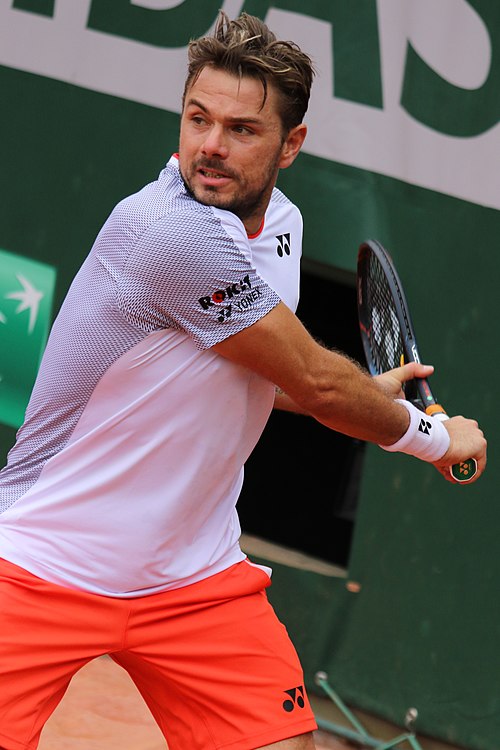
Which brings us to the man in the photograph at the top of this piece. Arthur Fery grew up ten minutes from the All England Club, went to Stanford on a scholarship, became the first Stanford player ranked No. 1 in American college singles since Bob Bryan, and turned professional after three years with a ranking that gave no hint of what was coming. This July, as a wild card ranked outside the top 100, he beat Grigor Dimitrov, Zizou Bergs and Flavio Cobolli to reach the Wimbledon semi-finals — the first wild card to do that in the men's draw since Goran Ivanisevic in 2001. Alexander Zverev finally stopped him. Nobody in south-west London will forget the fortnight.
Three years of college tennis did not cost Fery a career. It gave him one.
What to look for in Cincinnati
The main draw in Cincinnati starts today, which means the sport barely pauses to breathe after Montreal. When you sit down to watch this fortnight, try a small experiment: notice how many of the players you are cheering for spent a season or two on an American campus.
Nakashima, if he can back up the best week of his life. Shelton, who now has a title to defend twice over. Jodar, who has gone from lecture halls to the top 25 in about the time it takes most players to win a Challenger. Quinn, the Georgia man who saved four match points to win the 2023 NCAA final and has since climbed to a career-high of No. 48. Cameron Norrie, three years at TCU and a former Wimbledon semi-finalist, still grinding out summers on hard courts. They are not novelties on the entry list any more. They are a significant chunk of it.
And whoever wins on Thursday night in Montreal, one fact holds either way. A Masters 1000 trophy will be handed to a man who once played a match knowing that if he lost it, his team lost too — and who found out, in a half-empty college arena in front of a few hundred students, exactly what he was made of.
Somebody should tell the seventeen-year-olds still being warned that university is where careers go to die. The evidence is on court tonight, holding a trophy.
Photo: Arthur Fery at Wimbledon qualifying by si.robi, CC BY-SA 2.0, via Wikimedia Commons.
🎾 Gear from this story
YonexYonex VCORE 98Ben Shelton's racket of choiceView on Amazon →As an Amazon Associate, SUPER.TENNIS earns from qualifying purchases.