At two in the afternoon in Tokyo today, a handful of people will stand around a table and pull slips of paper out of a bowl. Draw ceremonies are the least dramatic ritual in professional tennis. Nobody sweats, nobody serves, and the whole thing is over in ten minutes. This one is different, because one of the slips has a name on it that no longer belongs anywhere near a top-tier entry list, and everybody in the room knows exactly what it means.
Kei Nishikori is 36 years old. He is ranked outside the world top 450. He has been given a wild card into the Kinoshita Group Japan Open, and when he loses — whether that is Wednesday afternoon or the following Sunday evening — he will put his rackets in his bag and not take them out again. He announced in the spring that he would retire at the end of 2026. He then chose, deliberately, to make his last tournament the one in his own city.
If you only watch tennis rather than play it, you may have filed Nishikori away as the quiet one who was very good about ten years ago. This week is a good week to unfile him.
What is actually happening in Tokyo
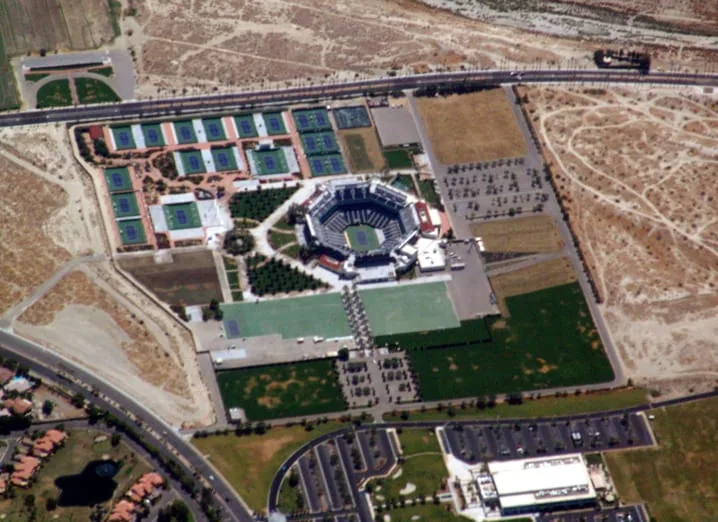
The Japan Open runs from 30 September to 6 October at the Ariake Coliseum, with the outside matches played on the courts of the surrounding Ariake Tennis Forest Park. It is an ATP 500 event on hard courts, and this year it has assembled one of the strongest fields of its recent history.
Carlos Alcaraz is the defending champion. He won here last year, beating Taylor Fritz 6-4, 6-4 in a final that took barely 80 minutes, and both men are back. Around them: Lorenzo Musetti, Casper Ruud, Frances Tiafoe, Ben Shelton, Tommy Paul, Brandon Nakashima, Jiri Lehecka. That is a serious week of tennis by any measure, and it is happening at the same time as the China Open in Beijing, where the men play from 30 September to 6 October and the women keep going until 11 October.
Two big events in the same week, nine hours ahead of London and thirteen ahead of New York, is the shape of the Asian autumn. If you are watching from Europe, the good matches land while you are eating breakfast. If you are watching from the Americas, they land in the middle of the night. It is the least convenient fortnight of the tennis year for most of the people who love it, and the reason so many excellent matches in this stretch go essentially unwitnessed outside Asia. We wrote about how this whole strange, sprawling final third of the season fits together in what happens to tennis after the US Open, and Tokyo is the week where it properly begins.
A tournament older than most of the players in it
The Japan Open started in 1972, which makes it the longest-running ATP event in Asia by a wide margin. It was born as the Tokyo Open, took its current name in 1974, and spent its first fifteen years at the Denen Coliseum in the Den-en-chofu district before moving to Ariake in 1987.
Look at the honours board and the whole modern history of men's tennis walks past you. Stefan Edberg won it four times, more than anyone. Pete Sampras and Jim Courier won it. So did Roger Federer, Rafael Nadal and Novak Djokovic. Ken Rosewall won it in 1973 at the age of 38, which still stands as the oldest champion in the tournament's history — a detail worth holding onto for later in this piece.
That is a long, strange, slightly under-appreciated lineage. Tokyo has never had the cultural weight of the four majors or the calendar leverage of a Masters 1000. What it has had, for more than five decades, is continuity: a proper tournament in a proper stadium in a country that loves tennis in a way that outsiders consistently underestimate. Japan has a domestic tennis audience that television ratings in Europe would envy, a deep club culture, and a national habit of turning up early and staying late.
The building with the sliding roof
Ariake Coliseum deserves its own paragraph. It opened in 1987 with no roof at all. In April 1991 a sliding roof was fitted, making it the first stadium in Japan with a retractable cover and, remarkably, only the third in the world after Rod Laver Arena in Melbourne and the SkyDome in Toronto. Wimbledon would not get one for another eighteen years. Flushing Meadows took even longer.
It holds around 10,000 people, which puts it in the same bracket as the second-largest courts at the majors, and it hosted the Olympic tennis in 2020 — the strange, empty Games where the loudest sound on court was the ball. Anyone who watched that fortnight remembers how much the building was missing. This week it will not be missing anything.
If you have never seen a match there, the thing that tends to surprise first-time visitors is the quiet. Japanese tennis crowds are attentive in a way that can read as reserved on television and feels completely different in the room: absolute silence during a rally, then a wall of noise the instant it finishes. Points get applauded rather than shouted through. It is a wonderful place to watch a tight tiebreak. Anyone who has tried to get near a player in the scrum at Flushing Meadows tends to find the whole experience in Tokyo faintly astonishing: orderly, unhurried, and somehow still loud when it counts.
Two Octobers that made him a national figure
Nishikori has played the Japan Open often enough to have a real record there: 24 wins, 9 losses. Two of those wins were finals.
In 2012 he beat Milos Raonic 7-6(5), 3-6, 6-0 to become the first Japanese man to win the title since Toshiro Sakai in the tournament's very first edition in 1972 — a forty-year gap closed in an afternoon. In 2014 he beat Raonic again, 7-6(5), 4-6, 6-4, and became the first Japanese player to win the thing twice. Before him, only Edberg, Sampras and Courier had managed multiple titles in Tokyo. That is the company he keeps at this tournament.
The 2014 win arrived three weeks after the fortnight that defined him. At the US Open that September, Nishikori became the first Asian-born man to reach a Grand Slam singles final, beating Novak Djokovic in the semifinal in four sets in brutal New York heat. He lost the final to Marin Cilic 6-3, 6-3, 6-3, in an hour and 54 minutes, against a man serving out of his mind. It was not close and it did not matter. A barrier that had stood since the beginning of the sport had gone, and it had gone at the hands of a player from a country whose men had reached exactly one Grand Slam quarterfinal in the previous sixty years.
That one, for the record, belonged to Shuzo Matsuoka, who made the Wimbledon quarterfinals in 1995 and lost to Sampras 6-7, 6-3, 6-4, 6-2 after winning the first set. Matsuoka was the first Japanese man that far at Wimbledon since Jiro Sato reached the semifinals in 1933. Sixty-two years between those two results. Twenty years later Nishikori was doing it twenty-two times over.
What the whole career actually adds up to
Twelve ATP titles. A career record of 451 wins and 231 losses, a shade under 66 per cent. A career-high ranking of world number four, reached in 2015 — the first Japanese man ever inside the top ten, let alone the top five. An Olympic bronze in Rio in 2016, won by beating Rafael Nadal in the medal match, which remains one of the most satisfying wins of his life to rewatch. Four years of turning up at the business end of majors as a matter of routine.
And then the body. Nishikori built a game that required him to be in the perfect position for every ball, which in practice meant running further in a five-set match than almost anyone else on tour. Elbows, wrists, a hip that eventually needed surgery and cost him the best part of two seasons. His last title came at the Brisbane International in January 2019, when he was 29. He has spent the seven years since that win trying to be a professional tennis player in a body that kept filing objections.
The astonishing thing is that he kept getting back. At the start of 2025 he reached his first tour-level final in six years, in Hong Kong, and climbed back inside the top 100 for the first time since June 2022. That was not a sentimental wild-card run. He earned it, at 35, several major operations deep.
What he actually looked like to watch
For anyone coming to this late, it is worth explaining why people who do not play tennis loved watching Nishikori, because it was not about power and it was never about drama.
He was 5ft 10in in a sport that had spent twenty years rewarding people six inches taller. His serve was ordinary. He had no single shot that made a highlight reel on its own. What he had instead was timing so clean that the ball seemed to leave his racket earlier than it should, and a habit of standing closer to the baseline on return than almost anybody else dared. Big servers would hit their best ball and find it coming back flat and early, already going somewhere awkward, and you could watch them start to grip the racket a little tighter.
The signature shot was the backhand down the line, taken early, hit with almost no visible effort, and landing about a foot inside the sideline. He hit it from positions where the correct answer was a defensive slice. Commentators used to call it a counter-punching game, which undersells it. Counter-punchers wait. Nishikori took the ball away from people.
The cost was structural. That style requires you to be in exactly the right place for every single ball, which means covering more ground over four hours than a bigger, blunter player ever has to. He was, in the most literal sense, worn out by the thing that made him good.
The part nobody enjoys
This season has been the hard one. Barely a dozen matches. A ranking in the 480s. His first match of 2026 ended with him retiring injured early in the second set, and the year never really recovered its footing.
The moment that will stay with Japanese fans came in New York in August. In the final round of US Open qualifying, Nishikori lost 6-4, 7-6(3) to Rei Sakamoto, a 21-year-old from his own country who grew up watching him and who took the main-draw place Nishikori had been trying to earn. Afterwards Nishikori said simply that he could not play his best. The kid who idolised him had ended his last US Open, in the car park courts rather than on Arthur Ashe, in front of a few hundred people. There is no neat way to feel about that.
Farewell tours in tennis are strange things, because the sport gives you no way to schedule your own ending. A footballer gets a final whistle. A tennis player gets beaten by somebody, somewhere, and that is that. Stan Wawrinka worked that out at Flushing Meadows this year, as we wrote at the time in his last US Open. Nishikori has done the one thing available to him: he has chosen the room.
The rest of the draw is not a sideshow
It would be unfair to the tournament to pretend this week is only a valediction, because the men at the top of the entry list have their own reasons to care.
Alcaraz arrives as defending champion after the oddest year of his career. He won the Australian Open, went 22-3 to start the season, and then lost four months to tenosynovitis in his right wrist — missing Roland Garros and Wimbledon entirely, a summer we picked through in the lost summer of a 23-year-old. He came back at the US Open, reached the quarterfinals, and is now ranked third behind Jannik Sinner and Alexander Zverev, the latter having won in New York over Ben Shelton. Tokyo is the beginning of the part of the season where Alcaraz either reasserts himself before Turin or does not.
Fritz has the rematch he wants. Musetti and Ruud are both chasing the last ATP Finals places. Shelton is here a fortnight after the biggest match of his life and will find out what that does to a person. And the winner of all this walks straight into Shanghai the following week, the biggest tournament of the Asian swing and the one that tends to decide who arrives at the season finale with any energy left — if you want the full picture of that event, our Shanghai Masters guide lays it out.
Who comes next
Japanese tennis is not about to go dark. Shintaro Mochizuki, now 22, won the Wimbledon boys title in 2019 as the first Japanese player to take a junior Grand Slam singles crown, and this summer became only the fourth Japanese man in the Open era to reach the fourth round of a major in singles. The other three are Matsuoka, with one, Yoshihito Nishioka, with two, and Nishikori, with twenty-two. That gap is the whole story of what he was.
Sakamoto is 21 and ranked around 133. Nishioka is still out there grinding. None of them is going to be world number four next season. But every one of them grew up in a country where a Japanese man in the second week of a major had been made to look ordinary, and that is not a small inheritance. Nishikori changed what a Japanese teenager with a racket could plausibly imagine for themselves, and he did it without ever seeming to enjoy the attention very much.
What this week is for
One thing is worth being clear-eyed about, with the draw being made this afternoon: Nishikori could land a qualifier and win a round, or he could land Alcaraz and be finished by Wednesday teatime. Tennis will not organise a farewell for him. He is ranked outside the top 450, and a ranking is not sentimental.
What the tournament can do, and has done, is put him on the biggest court it has, in front of the people who watched him beat Raonic twice, and let the roof at Ariake hold the noise in.
Remember Ken Rosewall winning this title at 38? Nobody sensible expects a repeat. But Rosewall is a useful reminder that this tournament has a long memory and an unusual tolerance for old players doing improbable things in Tokyo in October. Nishikori does not need to win anything. He needs about ninety minutes of the ball coming off the strings the way it used to, and roughly ten thousand people who already know what they are looking at.
Set an alarm for the middle of your night, if you are somewhere that requires one. There will be better tennis this autumn than whatever Nishikori produces this week. There will not be another chance to watch it happen.
Photo: Kei Nishikori at Roland Garros 2018, Creative Commons, via Wikimedia Commons.
🎾 Gear from this story
BabolatBabolat Pure AeroCarlos Alcaraz's racket of choiceView on Amazon →As an Amazon Associate, SUPER.TENNIS earns from qualifying purchases.