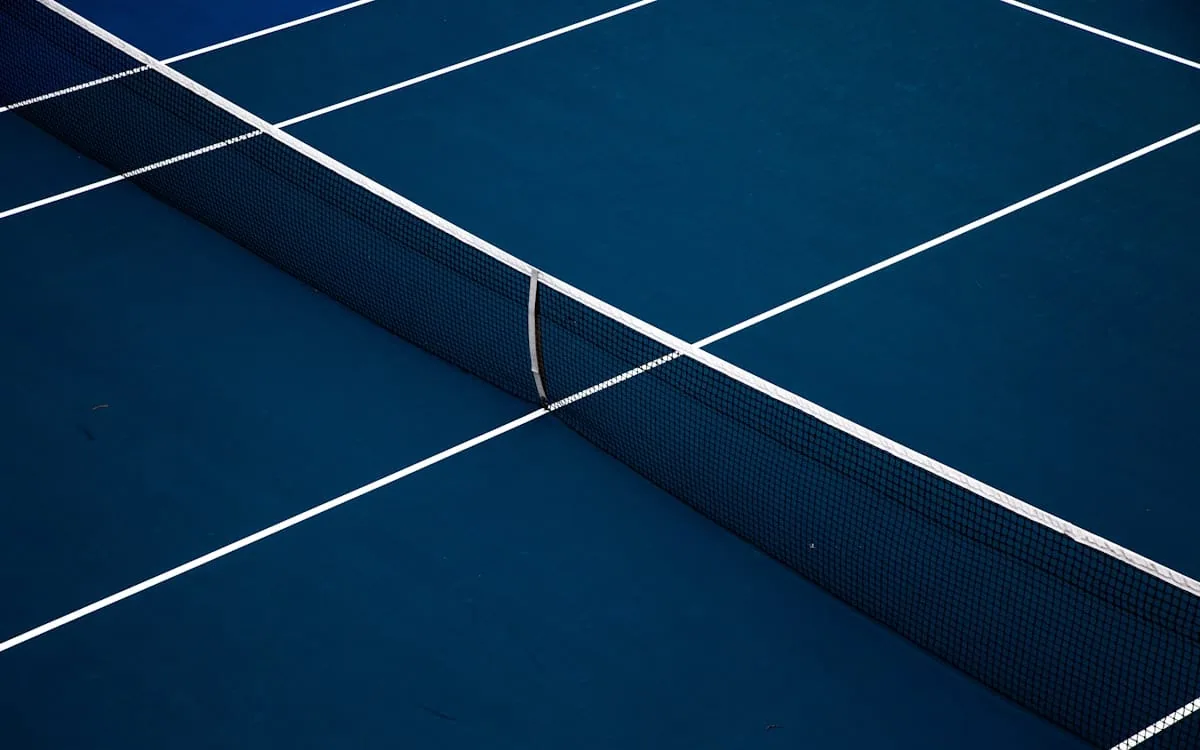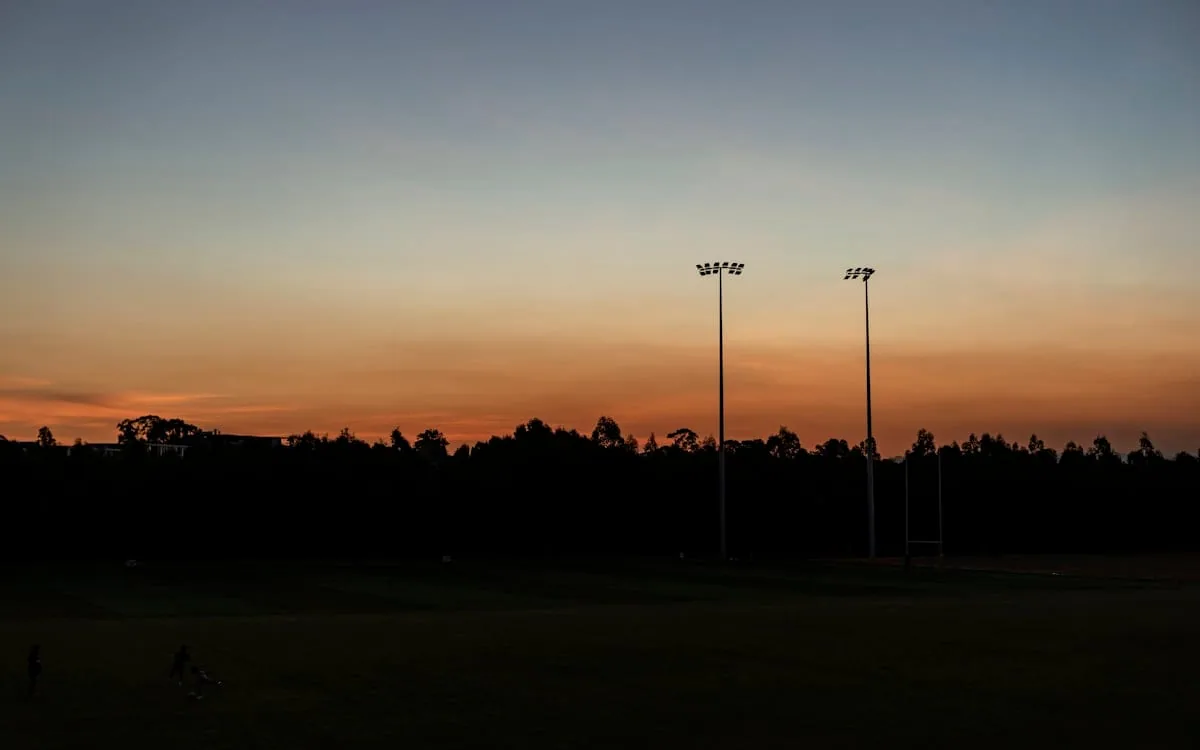
Iga Swiatek finished her 2026 season on a Tuesday afternoon in Ningbo, without hitting a ball.
On 20 October she withdrew from the tournament with a left thigh problem that had been bothering her for weeks, announced that she was ending her year there, and went home. There was no farewell match, no last point, no crowd rising. Just a statement, a packed bag and a season quietly closed: 39 wins, 15 losses, one title in Toronto, and no Grand Slam trophy for the first time since 2021. For the first time since 2019, she will not be at the season-ending Finals.
If you have followed tennis all year, that is a deeply odd way for a season to end. And it is about to happen again, and again, and again, player by player, over the next five weeks, until one night in late November the lights go out in an arena in Bologna and the sport simply stops.
Then comes the part nobody televises. Five or six weeks when there is no tennis at all, and the people you have watched since January vanish into gyms, clinics, airports and living rooms. This is what happens in that gap, and when the game comes back.
The season does not end. It frays.
Most sports have a final whistle. Tennis has a slow leak.
Right now, as you read this, three ATP tournaments are being played in Almaty, Brussels and Lyon, and two WTA events are running in Ningbo and Osaka. Next week it is Vienna and Basel, two ATP 500s that always feel like proper, serious tennis in proper, serious halls. The week after that, the men go to Paris for the last Masters 1000 of the year at La Defense Arena in Nanterre, a cavernous rugby stadium that swallowed the old Bercy tournament in 2025 and gave it a louder, stranger home. The main draw there runs from 2 to 8 November.
Then the funnel narrows fast. The WTA Finals take eight women to the Indian Wells Tennis Garden from 8 to 15 November, outdoors, in the Californian desert, in two round-robin groups of four. The Nitto ATP Finals take eight men to the Inalpi Arena in Turin from 15 to 22 November, for the sixth year running. And then, from 24 to 29 November, the Davis Cup Final 8 is played in Bologna, where Italy will defend a title they have now won three years in a row.
Count the players involved in those last three weeks and you get perhaps sixty, out of the thousand-plus who held a professional ranking in 2026. For everyone else the season ends somewhere far less glamorous: a second-round loss in Brussels, a retirement in Ningbo, a decision made in a physio room in late October that the body has had enough.
That is why there is no single finish line. Your favourite player probably stopped weeks before the champagne gets opened in Turin, and nobody announced it.
The cruel arithmetic of one more week
If you have ever wondered why players keep entering tournaments in late autumn while visibly limping, the answer is a spreadsheet.
Rankings are a rolling twelve-month total. Points earned last November drop off this November, which means a player who did well a year ago is not defending a reputation, they are defending a number. Stop early and the number falls. Fall far enough and in January you are seeded lower, drawn against a top player in round one, or forced into qualifying at events you walked straight into last season.
That is the pressure that produced one of the small, sad dramas of this month. Marta Kostyuk went to Ningbo still mathematically alive for the last place at the WTA Finals, 815 points behind Karolina Muchova, needing to reach the final to get there. She lost the first set 6-4 to Ekaterina Alexandrova, took a medical timeout, and retired. The place went to Muchova, who was not even playing that week and found out about her first Finals appearance from somewhere else entirely. Kostyuk had already given us one of the best seasons of her life, and it ended on a trainer visit in the second round.
Nobody at the top of the game gets to choose a clean ending. They play until the maths or the body closes the door, and most of the time it is the body.
What the last fortnight actually decides
The season-ending events are the only part of this that most fans see, and they are genuinely worth your time, because the format is unlike anything else in tennis.
Round-robin play means nobody goes home after one bad afternoon. A player can lose their opening match, look finished, win two in a row, and reach a semi-final anyway. It also means dead rubbers, qualification scenarios involving sets won and games lost, and the peculiar sight of a top-five player sitting in a hotel room doing long division. The eight men in Turin are chasing something that has become one of the great annual prizes in the sport, and the way those eight chairs get filled is a story that has been running all year.
The women have the stranger journey. Their Finals have moved almost every season for a decade, from Singapore to Shenzhen to Guadalajara to Fort Worth to Cancun to Riyadh, and this year to Indian Wells, with a long-term home agreed in the United States from 2027. We wrote about that restless search for a permanent address in September, and it remains one of the quiet absurdities of women's tennis: the biggest event of the year outside the Slams has spent ten years living out of a suitcase.
Then Bologna, which deserves a mention of its own. The Davis Cup Final 8 is the last competitive tennis of 2026, played in a converted exhibition hall at the city fairground, with Italy trying to make it four straight titles in front of a crowd that treats the week like a national holiday. When the final point is played there on 29 November, that is it. That is the end of the professional tennis year.
Four weeks. Maybe six. Possibly ten.
Here is the number that surprises people: the gap between the last ball of 2026 and the first ball of 2027 is about four and a half weeks.
The 2027 season starts on 1 January with the United Cup in Perth and Sydney, the mixed team event that has become the proper opening ceremony of the tennis year. The Australian Open follows from 17 to 31 January. So a player who reaches the Davis Cup final in Bologna on 29 November and wants to play the United Cup has roughly thirty-two days to recover from eleven months of competition, rebuild their fitness, fix whatever hurts, see their family, and fly to the other side of the world.
Nobody else in sport works like this. Footballers get a summer. Formula One has a mandated shutdown. Even the NBA, which plays an absurd number of games, gives its players a close season measured in months. Tennis players get the back end of December.
In practice it is a little kinder than that, because very few people play through to the last week. A player whose season ends in early November gets closer to eight weeks, and someone who stopped after the US Open might have had a genuine autumn. But the shape is the same for everyone: a short, dense, unglamorous block of time that decides what kind of player turns up in Melbourne.
What they actually do with it
Week one is usually nothing.
Not light training, not active recovery. Nothing. Coaches talk about it as a deliberate shutdown, a period where the player is told to stay off court and, as far as possible, stop thinking about tennis. Weddings get scheduled in December for this reason. So do operations. The minor surgeries that players postpone all year, the wrist cleanups and the knee arthroscopies, get booked for the first week of the break so the recovery window lands before Australia.
Then the training block begins, and it is brutal in a way that highlight reels never show. The template most top players follow runs about three to four weeks, usually starting in the middle of December. Carlos Alcaraz has done a version of it for years at home in Murcia and at the academy in Villena, under Juan Carlos Ferrero: the first week is almost entirely physical conditioning, the second adds volume with long sessions on court, and the third turns to specifics, which means serve patterns, return positions, the one shot that cost matches in October.
Where they do it tends to follow the sun. Alicante, Murcia and Marbella for the Spanish-speaking group, Monte Carlo for the tax-efficient European contingent, Dubai and Abu Dhabi for players who want heat and empty courts in December, Florida for most of the North and South Americans. The point is not the postcard. It is that you cannot build a hard-court season in a cold, wet indoor hall in northern Europe at three in the afternoon with the lights on.
December is also when the quiet business of tennis gets done. New coaches are hired, old ones let go, usually with a short Instagram post and no explanation. Rackets get re-tested and restrung to new specifications. Nutritionists change plans. Schedules for the following year are argued over between a player, an agent and a physio who all want different things. By the time a player walks onto court in Perth in January, almost every decision that will shape their season has already been made in private, six weeks earlier.
The break is not free
There is one more thing about the off-season that rarely gets said out loud: for most of the tour, it costs money.
Prize money stops the moment a player stops competing, but the bills do not. A coach is on a salary or a retainer through December. So is a fitness trainer, if there is one. Court time has to be rented, usually somewhere warm, which means flights and accommodation for a team of two or three people for a month. Physiotherapy is paid for by the hour. For a player inside the top twenty none of this registers. For a player ranked around 150, whose whole year might have netted less than the cost of running a small business, six weeks with no income and a full training block to fund is the hardest financial stretch of the calendar.
That is why the off-season looks so different depending on where you sit in the rankings. At the top it is a controlled, expensive, meticulously planned rebuild. Further down it is a player going home, training at the club they grew up in, borrowing a hitting partner from the junior section, and doing their own strength work in a commercial gym with a membership they bought for January.
Both of them turn up in Australia in the same first week. Only one of them arrives rested.
The exhibition economy
Not everyone disappears, though, and this is where the off-season gets interesting.
December has quietly become one of the richest weeks in tennis, because exhibitions pay appearance fees that dwarf the prize money at a normal tournament, and they do it for two or three matches with no ranking risk. The circuit changes every year, but the pattern does not: a handful of the biggest names fly somewhere warm and well funded, play in front of a dressed-up crowd, collect a fee that would take months of regular tour grinding to match, and get back to training.
Purists hate it. The argument is that players already have too little time to recover, and the richest ones give away a chunk of it for money they do not need. The counter-argument, which players make less publicly, is that a career lasts about twelve years if you are lucky, that a knee can go in a warm-up, and that turning down a seven-figure fee to protect a January quarter-final is a luxury very few can afford.
What is undeniable is that the money has reshaped the calendar. The season-ending events are no longer the only lucrative thing in the last stretch of the year, and that changes how players treat October and November. Some of them are not winding down at all. They are repositioning.
What the rest of us do
This is the part the tour never thinks about: fans have an off-season too, and nobody prepares you for it.
If you have had tennis in your life every week since the first week of January, the first Saturday in December is genuinely disorientating. There is no live scoreboard to glance at, no night session in a different time zone, no reason to check your phone at midnight. The sport you have organised small parts of your week around simply is not there.
The good news is that it is an excellent time to do the things the season never allows. Watch the matches you missed, properly, from the start, without knowing the result. Catch up on the documentaries. Read the books, because tennis has produced some genuinely great writing, and the quiet weeks are what it was made for. Look at the 2027 calendar when it drops and pick one tournament you have never been to, because tickets for January and February events are on sale in December and they are never cheaper than they are the moment they go up.
And then, around the third week of December, something nice happens. The photographs start. A player on a practice court in a hoodie, hitting in winter light. A fitness coach posting a sprint session. Someone showing off a new racket paint job. The sport starts leaking back into view, piece by piece, before a single competitive point is played.
The lights come back on
Here is the sequence to keep in your head for the next ten weeks, if you want one.
Vienna and Basel from 26 October. Paris from 2 November. Eight women in Indian Wells from 8 November. Eight men in Turin from 15 November. Bologna from 24 November, and the end of everything on 29 November. Then nothing at all until 1 January, when the United Cup starts in Perth and Sydney and the whole thing begins again, and 17 January, when the Australian Open opens in Melbourne.
That is the architecture. Five weeks of increasingly concentrated tennis, four and a half weeks of silence, and then a summer morning in Australia where the first points of the new season are played in bright sunshine while most of Europe is still in the dark.
It is worth knowing the shape of it, because the gap is not emptiness. It is where the next season is actually built. The player who wins in Melbourne in January will have done the work for it in a half-empty gym in the week before Christmas, with nobody watching and no points on offer. The matches you will be shouting at in three months are being decided right now, in physio rooms and fitness tests and conversations about whether the shoulder can take another year.
So when Bologna goes dark on the last Sunday in November, do not treat it as the end. Treat it as the moment the sport goes indoors, closes the door, and starts work on the version of itself you are going to meet in January.
🎾 Gear from this story
WilsonWilson Blade 98Marta Kostyuk's racket of choiceView on Amazon →As an Amazon Associate, SUPER.TENNIS earns from qualifying purchases.