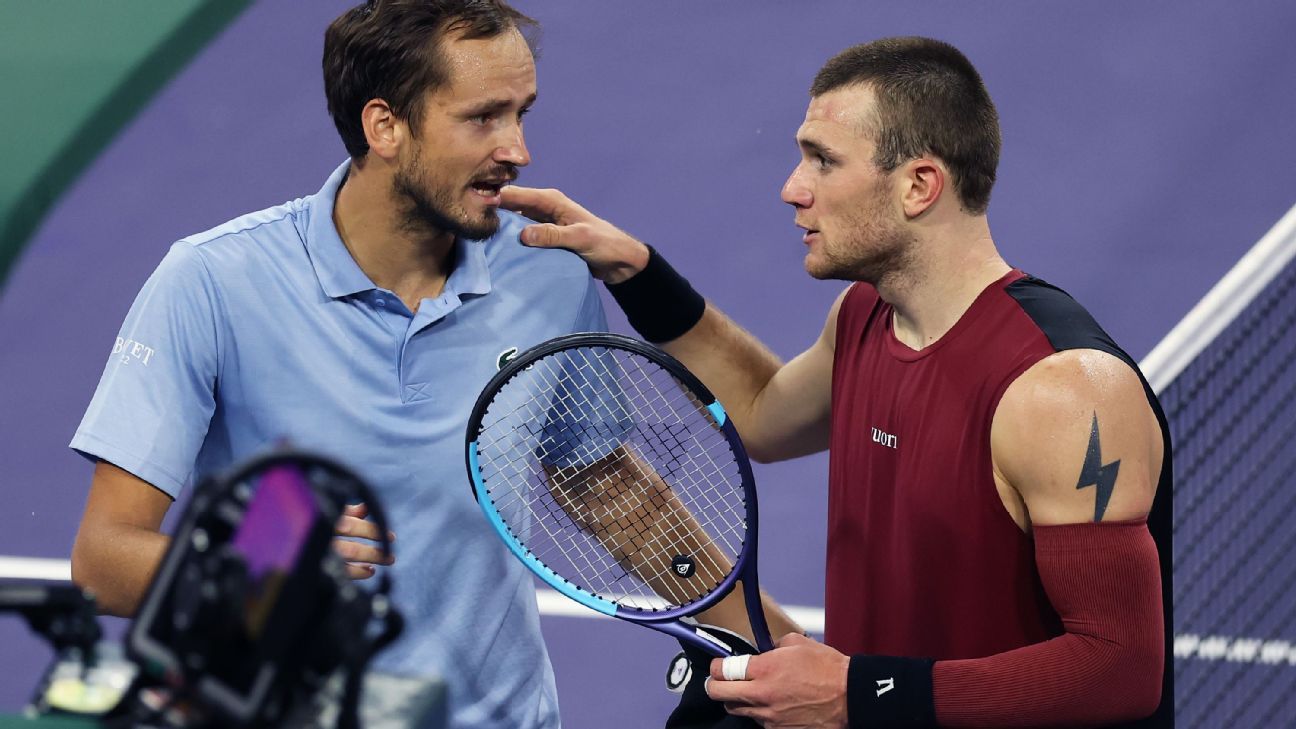
Source: Original Article
The world of tennis is no stranger to controversy, and Jack Draper’s recent experience at Indian Wells is a prime example. Following a contentious hindrance call that led to his ousting from the tournament, Draper found himself at the center of a heated discussion about officiating standards and player rights.
During a crucial moment in the match, the umpire ruled that Draper was hindered by an external factor, resulting in a point penalty that many fans and analysts deemed questionable. Draper expressed his frustration in the aftermath, stating, "I didn’t feel like I was distracted at all. It’s moments like these that can change the course of a match."
This incident has reignited conversations about the consistency of officiating in tennis, with fans calling for more transparency and accountability from umpires. Many viewers took to social media to voice their opinions, with some supporting Draper and others defending the umpire’s decision.
The controversy has highlighted the pressure players face not only from their opponents but also from the officiating crew. In high-stakes matches, every point counts, and decisions made by umpires can have significant implications for players’ careers and reputations.
As the tennis community reacts to this incident, many are calling for a review of the current rules surrounding hindrance calls, advocating for clearer guidelines that can help prevent such situations in the future. The ATP and WTA have faced scrutiny regarding their officiating protocols, and this incident may prompt further discussions on how to improve the system.
For Draper, this experience serves as a lesson in navigating the unpredictable nature of professional tennis. As he reflects on the match and the surrounding controversy, fans are eager to see how he channels this experience into future competitions. His resilience and determination will be key as he continues to rise through the ranks of the ATP tour.
The ongoing dialogue about officiating and player rights not only impacts Draper but also sets a precedent for how the sport addresses similar situations moving forward. As the tennis world watches closely, the hope is for a more equitable playing field for all athletes.