There is a half-second at the Davis Cup that you will not see anywhere else in tennis. A player hits a winner, the crowd goes up, and instead of turning to his own box he turns to a bench — four men already on their feet, already halfway onto the court, one of them a former world-class player now wearing a tracksuit and the job title of captain. For eleven months of the year tennis is the loneliest team sport ever invented. For one week in late November, it isn't.
That week starts on 24 November in Bologna.
What is actually happening, in plain terms
Eight countries. One building. Six days.
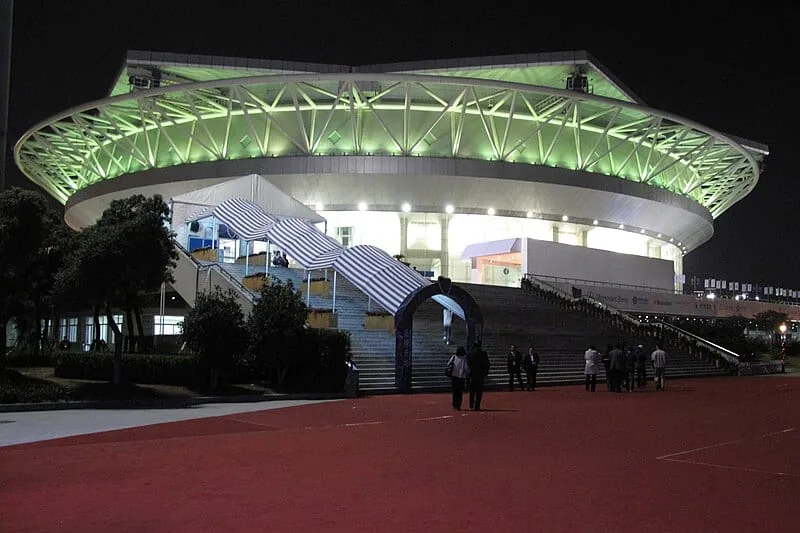
The Davis Cup Final 8 runs from Tuesday 24 November to Sunday 29 November 2026 at the BolognaFiere complex in Bologna, in a hall that has been converted into a temporary indoor arena with a hard court dropped into the middle of it. It is a straight knockout: four quarter-finals, two semi-finals, one final.
Each round is called a tie, and a tie is best of three matches, all played on the same day. Two singles rubbers first, then a doubles if the score is 1-1. Win two, you go through. There is no aggregate, no second leg, no coming back next weekend. A country's entire year can end in about six hours.
The schedule, as it stands:
- Tuesday 24 November — Czechia v Canada
- Wednesday 25 November — Italy v South Korea
- Thursday 26 November — Great Britain v Germany (day session), Austria v Spain (evening session)
- Friday 27 and Saturday 28 November — semi-finals
- Sunday 29 November — the final
The four seeds are Italy, Spain, Germany and Czechia, in that order. The bracket is fixed in advance, which means you can already trace the collision courses. Italy or South Korea meets Czechia or Canada in the first semi-final. Great Britain or Germany meets Austria or Spain in the second. If the seeding holds all the way through, Sunday is Italy against Spain — which is exactly what Sunday was last year.
The thing in the photograph
The trophy at the top of this page is worth looking at properly, because it explains the whole competition.
The silver bowl on top is the original. In 1900 a group of students at Harvard decided it would be a good idea to challenge Britain to a tennis match, and one of them, Dwight Filley Davis, went out and bought a trophy for it. The first tie was played that year at the Longwood Cricket Club in Boston, between the United States and a team entered as the British Isles. Davis played the opening singles himself and won it. The Americans took the first three matches.
Everything underneath the bowl — the tiers of dark wood, the hundreds of little engraved silver plates wrapped around them — is just the accumulated weight of the 126 years since. They had to keep adding plinths because they ran out of room for the names. That is what you are watching for in Bologna: a few square centimetres of metal on the side of a very large piece of furniture.
It is the oldest annual international team competition in sport. It has survived two world wars, the amateur era, the open era, and a long run of format arguments that we will come back to.
Italy are going for four, and they are a man short
Italy have won the last three. That is not a small thing. No country had won three Davis Cups in a row since the United States did it between 1968 and 1972, which gives you a sense of how hard the competition makes repetition.
Last year they did it at home, in this same city, beating Spain 2-0 in the final. Matteo Berrettini beat Pablo Carreno Busta 6-3, 6-4, and then Flavio Cobolli came from a set down to beat Jaume Munar 1-6, 7-6(5), 7-5 and finish it. The striking part is who wasn't there: neither Jannik Sinner nor Carlos Alcaraz played that final. Italy won it anyway, with their second rank, in front of their own people.
They will have to do something similar again. Sinner is out — knee inflammation, and he has ended his 2026 season early. For a team chasing a fourth consecutive title in its own country, losing the best player in the squad in November is about as unhelpful as sporting timing gets.
Captain Filippo Volandri has named Lorenzo Musetti, Flavio Cobolli and Luciano Darderi for singles, with Simone Bolelli and Andrea Vavassori as the doubles pair. Darderi, ranked inside the top 25, gets his first Davis Cup call-up — Argentine-born, Italian-representing, and about to walk into one of the loudest rooms in tennis as a debutant. Berrettini did not make the initial five, though nobody in the Italian camp has described that as final; a late change before the quarter-final is not out of the question.
Cobolli is the one carrying the most. He has had the season of his life — if you followed his long chase for a place at the ATP Finals you will know how much tennis is already in his legs — and he is the man who closed out the trophy twelve months ago. He knows precisely what the last point of a Davis Cup final feels like. That is a strange and useful thing to have in a squad.
Spain brought Alcaraz
The second seeds arrive with the headline act. Carlos Alcaraz is in David Ferrer's squad, and this is his first Davis Cup appearance in two years — he has not played the competition since the 2024 edition. Whatever else happens in Bologna, a fit and willing Alcaraz in a knockout team event is the single biggest variable in the draw.
Around him: Alejandro Davidovich Fokina, Pedro Martinez, the doubles specialist Marcel Granollers, and Rafael Jodar. Jodar is the lovely story of the Spanish squad — the player who went from outside the top 150 to the ATP Finals inside one season now finds himself on a national team list next to a six-time major champion. Twelve months ago that sentence would have read as a typo.
Spain open against Austria on the Thursday evening, which is the tie that most people have pencilled in as routine and which is, for that exact reason, the one worth watching.
Austria and South Korea did not read the script
Two teams in this field were not on anybody's shortlist in January.
Austria got here by putting Belgium on indoor clay in Vienna in September and beating them 3-1. They won the doubles on the Saturday to go in front, and then Jurij Rodionov settled it in the first reverse singles, beating Zizou Bergs 7-6, 6-3. It was the most old-fashioned possible way to qualify: pick your surface, pack your own hall, win the doubles, finish the job on Sunday afternoon. Austria will play Spain in a neutral arena in Italy with none of those advantages, which is the modern Davis Cup in one sentence.
South Korea beat India 3-1 in Seoul to reach the Final 8 for the first time. Of the eight teams in Bologna they are the one with the least to lose and, drawn against the hosts on the Wednesday, the one guaranteed the most hostile room. Teams in that position have ambushed favourites in this competition before. It is not a prediction, just a reminder that a best-of-three tie decided in an afternoon is a very short distance to defend.
The top half, the bottom half
Czechia v Canada opens the week on Tuesday. The fourth seeds bring Jakub Mensik and Jiri Lehecka — two players who have spent 2026 being quietly difficult for everyone — with Patrik Rikl and Adam Pavlasek for doubles, and Tomas Berdych as captain, which is its own small pleasure for anyone who watched him drag Czech teams through this competition for a decade.
Canada counter with Felix Auger-Aliassime and Denis Shapovalov, both of whom have won this thing before, plus Gabriel Diallo, Liam Draxl and Duncan Chan under captain Frank Dancevic. Canada are seeded eighth and are nobody's idea of an eighth-best team. Remarkably, these two countries have never met in an official Davis Cup tie in 126 years. They meet now, with a semi-final at stake.
Great Britain v Germany is the Thursday afternoon fixture and the heavyweight quarter-final. Germany have Alexander Zverev, who has had the season of his career: he is the new world No. 1 and has already clinched the year-end top ranking, the first German ever to do it. Jan-Lennard Struff supports him in singles, with Kevin Krawietz and Tim Puetz — a genuinely elite doubles pair — behind. That matters enormously in a format where the third match decides everything.
Britain, under Leon Smith, bring Cameron Norrie, the Wimbledon semi-finalist Arthur Fery, and the doubles pairing of Henry Patten and Neal Skupski. On paper Germany are favourites. In practice Britain have one of the best doubles teams in the building, and in a 1-1 tie that is the only paper that counts.
Why the format keeps changing, and why people shout about it
If you have been watching tennis for a while, you will remember a different Davis Cup: home and away, best of five sets, four weekends scattered through the year, played in whatever gymnasium or bullring the home nation fancied. That version produced the competition's folklore — the hostile away ties, the clay laid down in a hockey rink, the five-set Sunday reverse singles in front of 12,000 people who hated you.
In 2019 the International Tennis Federation partnered with Kosmos, the investment group fronted by the footballer Gerard Pique, and replaced it with a season-ending event: eighteen teams, one city, one week, best-of-three ties. The first edition was in Madrid. The reaction ranged from cautious to furious. The complaints were consistent — the home-and-away soul of the thing had been sold, the round-robin maths confused everyone, and matches finished at two in the morning in a half-empty arena.
The Kosmos partnership eventually collapsed. The ITF kept the shape but kept adjusting it: group ties spread across several host cities in September, then a knockout Final 8 in November, which is the structure you are watching now. Malaga held the closing stages for several years before it moved to Bologna.
Is it better? Honestly, it depends what you wanted. The group weekends in September have quietly restored a lot of the old atmosphere — Austria beating Belgium on their own clay in Vienna is pure throwback. The Final 8 is a cleaner, shorter, more televisual product than the 2019 version, and playing it in a country that has won the last three has solved the empty-seats problem rather emphatically. What it has not restored is the thing the purists actually miss: the five-set match, and the long away trip to somewhere that does not want you.
Team tennis now exists in two flavours, and it is worth knowing the difference. The Laver Cup is an exhibition with brilliant staging and no national anthem. The Davis Cup has 126 years of engraved silver and countries that genuinely mind. One is a party. The other is a record.
What it actually feels like in the room
This is the part worth turning up for, and it has very little to do with ranking points.
Players cry at the Davis Cup. Not the controlled, trophy-ceremony version — the undignified kind, usually after winning a point rather than a title, usually with a teammate's arm round their neck. You get coaching out loud from the bench, which tennis otherwise treats as faintly scandalous. You get captains in tracksuits talking to grown men mid-game like a football manager. You get a crowd singing between points, which no umpire has ever successfully stopped.
And you get the thing that makes the format cruel: the doubles. For most of the season doubles is the match people wander out to buy a drink during. Here it is the decider, and it is routinely the best tennis of the week. Krawietz and Puetz, Bolelli and Vavassori, Patten and Skupski — these are specialists who spend eleven months being under-watched and one afternoon holding a country's season in their hands.
The other emotional mechanic is the dead rubber that isn't. Because a tie is best of three in a single day, the second singles match is frequently played with the whole thing level and a doubles pair warming up behind the court. There is no overnight. There is no regrouping. You watch a player's face when he realises that the next 90 minutes decides whether his country is still in it, and the format has removed every escape hatch.
How to watch it from a sofa
The practical notes are simple.
Bologna is in Central European Time, and sessions run afternoon and evening. For viewers in Britain that is a one-hour difference and essentially perfect timing. For the eastern United States, afternoon ties start in the morning and evening ties land in the early afternoon — far friendlier than anything the Asian swing asks of you. For Australia it is the small hours, as usual.
Broadcast tends to be split: national broadcasters in several of the competing countries carry their own team's ties, often free to air, while a subscription sports channel holds the full event. It is worth checking your own country's listings for the days your team plays rather than assuming the whole week is behind one paywall, because it usually isn't.
And if you are only going to watch one day, make it Thursday. Two quarter-finals, Zverev in the afternoon, Alcaraz in the evening, and both of them in a format where losing once sends you home.
Then the lights go out
When the last point is played on 29 November, that is the season. Not nearly the season, not the unofficial end — the actual end. The ATP Finals will have finished the week before, the WTA Finals before that, and after Bologna the sport goes dark for the stretch we have written about separately, the strange empty weeks of December.
Which is part of why this week lands the way it does. Everything else in tennis is provisional — lose here, you play again on Monday somewhere else. Bologna is the one event with nothing behind it. Eight teams walk into a converted exhibition hall, seven of them leave with nothing, and the eighth gets a few square centimetres of silver on a trophy that was bought by a student in 1900 and has been accumulating names ever since.
Italy get to try to put theirs on it for the fourth year running, at home, without the best player they have. If they manage that, it will be the most impressive of the four by a distance. If they don't, somebody is going to have the night of their life in front of a crowd that came to watch somebody else.
Either way, it is the last tennis of the year that will make anyone cry.
🎾 Gear from this story
BabolatBabolat Pure AeroCarlos Alcaraz's racket of choiceView on Amazon →As an Amazon Associate, SUPER.TENNIS earns from qualifying purchases.