Somebody at the Optics Valley tennis centre had to type two names into the graphic for Sunday night, and when it went up on the screen it looked like a glitch.
Maja Chwalinska. Sonay Kartal.
Not Sabalenka, who has owned this tournament. Not Swiatek, who came into the week two wins from the season she wanted. Not Paolini or Svitolina or Ostapenko or any of the eight seeds who arrived in Wuhan expecting to still be in the building on the last Sunday. A sixteenth seed who started the year outside the top 140, and a woman ranked 170th in the world who spent the summer being told her spine needed to be left alone.
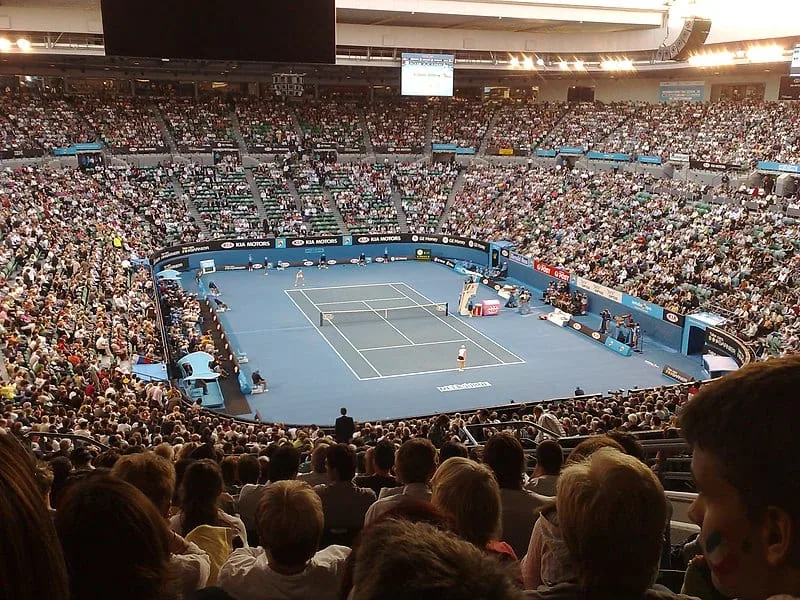
The Dongfeng Voyah Wuhan Open is the last WTA 1000 of the season. Fifteen thousand seats under a roof that shuts in sixteen minutes, a thousand ranking points and a cheque most players on tour will never see, and a week that usually belongs to whoever is already great. Instead it has produced the most improbable final of 2026, and the two stories feeding into it are so different from each other that it is worth taking them one at a time.
The last big week in Asia
If you have only half-followed the autumn, here is where this sits. After the US Open the tour goes east for six weeks, and the Asian swing builds to two 1000-level events: Beijing, and then Wuhan. For the women, Wuhan is the end of the line at that level. There is nothing bigger left in the season except the eight-player Finals, which is an invitation, not a draw.
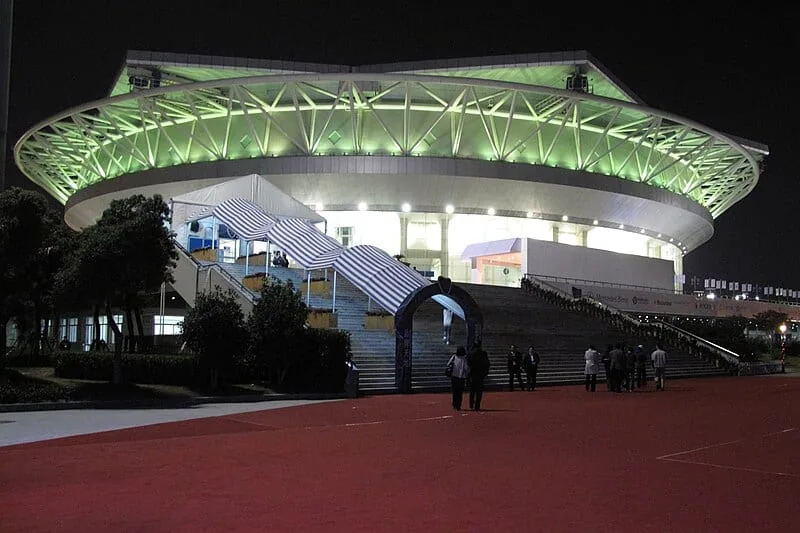
The tournament itself is a relatively young one, staged at the Optics Valley International Tennis Centre since the middle of the last decade. Centre Court holds about 15,000 people across three tiers, and the roof closes in sixteen minutes, which matters in a city where October rain arrives without discussion. It is a big, loud, modern bowl, and because the local crowd has no particular horse in most races, it tends to adopt whoever is playing the better tennis in front of it. Over the past week that has mostly meant adopting two players nobody in the building had come to see.
A draw that came apart in the middle
For four days, Wuhan behaved. The seeds held, the top half looked like the top half, and the only question seemed to be whether anyone could stop Aryna Sabalenka from adding to a record here that already looks ridiculous.
Then Ann Li beat her. Three-six, six-four, seven-six in the third, on roughly her tenth match point, in the sort of match where you stop breathing properly somewhere around the fifth deuce. Li then ran into Iga Swiatek in the quarter-finals and lost, which should have put the tournament back on its rails.
It did not. By Saturday morning the last eight had been reduced to four, and only one of them, Swiatek, was anywhere near where the seedings said she should be. Iva Jovic, the teenager who has been one of the stories of the season, was gone. Maria Sakkari, whose own slow climb back toward the top ten had been one of the warmer subplots of the Asian swing, was gone after two and a half hours. Jasmine Paolini had been dismantled for the loss of two games. Elina Svitolina was out. Jelena Ostapenko went in two tie-breaks on Saturday night having held six set points and converted none of them.
Four of those five defeats were inflicted by the same two players. That is not a draw opening up. That is two people kicking the door in.
Kartal: six months of being told to wait
Start with the harder year.
In March, Sonay Kartal was in the fourth round at Indian Wells, playing Elena Rybakina, when she stopped. She did not limp off in obvious agony; she just stopped, because there was nothing left to play with. The diagnosis was a stress fracture in her back, and stress fractures in backs do not care about calendars.
In May she announced she would miss Wimbledon. For a British player that is not a scheduling note, it is the year. She had been in the second week there the previous summer, had become one of the faces of a home fortnight, and the following May she had to write a statement saying that the thing was relentless and she did not know when it would end. The grass season went past without her. So did the hard-court summer. So did the US Open. Her ranking, which had peaked at 44th in July 2025, slid the way a ranking does when you are not defending anything: 54th, then past a hundred, then past a hundred and fifty, and finally to 170th.
What a back injury takes is not just matches. It takes the ordinary business of being an athlete. You cannot serve. You often cannot run. The rehab for a lumbar stress fracture is months of core work that looks like nothing, performed in a gym a long way from a stadium, with a physio who keeps telling you the same thing, which is that the only way to get it wrong is to hurry.
She came back in September, at the Billie Jean King Cup finals, in a team environment where somebody else carries the pressure if you have a bad day. Wuhan is only her third tournament since. She got into the main draw on a protected ranking, which is the small mercy the tour extends to players who have been out long enough: your old ranking, held in trust, usable a limited number of times, so that a serious injury does not also cost you the right to play against good players. In the entry list it shows up as two letters, PR, next to a name. It is the least glamorous line in tennis.
What she has done with it: beat Anhelina Kalinina, a top-50 player, in straight sets. Beat Belinda Bencic. Beat Paolini, the fifteenth seed and a former Grand Slam finalist, six-two, six-love, in a match that lasted barely an hour. Beat Elina Svitolina, who has spent this season playing some of the best tennis of her career, six-two, two-six, six-four. And then, on Saturday, beat Ostapenko in two tie-breaks, saving every one of the six set points that came at her.
No woman ranked that low has ever reached a WTA 1000 final since the category was created. She is the first British player to reach a final in Wuhan. She will be back inside the world's top 50 on Monday whatever happens on Sunday night, which is a strange sentence to write about somebody who, in May, did not know whether she would play again in 2026. Asked after the semi-final how she planned to mark it, she said she was probably due a couple of new tattoos.
It helps to know what she actually does on a court, because it is not power. Kartal is not tall and she does not blow anybody off the court; she is a counter-puncher who takes the ball early, changes direction better than almost anyone outside the top 20, and makes opponents play one more ball than they want to. Against Paolini, a player who thrives on pace she can redirect, that style was poison. Against Ostapenko, who hits as hard as anyone alive and needs rhythm to do it, it turned a shoot-out into a two-hour problem-solving exercise, and Ostapenko blinked first in both tie-breaks.
Chwalinska: the qualifier who kept going
Now the other half of the draw, which is a different kind of improbable.
Maja Chwalinska began this season ranked around 146th in the world. She is Polish, left-handed, from a family with no tennis money in it at all: her father worked as a miner and then as an electrician, her mother is a receptionist. For most of her twenties she was the sort of player the rankings barely register, winning matches at small events in Antalya and Oeiras, occasionally qualifying for something bigger, mostly not.
Then came Paris. She came through qualifying at Roland Garros, won her first-round match, and simply never stopped: nine straight wins from the qualifying draw to the final, the first qualifier in the tournament's history to reach the women's final, and only the third woman in the Open era to reach a Roland Garros final on her main-draw debut, after Evonne Goolagong and Chris Evert. She lost that final to Mirra Andreeva in straight sets, which at the time felt like the obvious ending to a fairy tale.
Her tennis is unusual in a way that is easy to miss on a scoreboard. Left-handers are rare enough on the women's tour that most opponents get maybe three or four matches a year against one, and Chwalinska uses that: the serve that slides away from a right-hander's backhand in the deuce court, the forehand angled cross-court into a corner nobody practises defending. She returns beautifully, which is the single most transferable skill in modern tennis, and she is extremely hard to rush. What changed this year was not the shots. It was the belief that she was allowed to win with them.
The thing about fairy tales is that they are supposed to stop. Players who have one impossible fortnight usually go back to being who they were, and the tour is full of names that briefly meant something in one June and then did not. Chwalinska did the opposite. She kept the ranking. Then she improved it. By the autumn she had turned a career of near misses into a 7-2 record on the Asian swing and a seeding at a WTA 1000.
In Wuhan she beat Iva Jovic six-four, six-one to reach her first 1000-level quarter-final. She then beat Maria Sakkari six-love, three-six, seven-five in two hours and thirty-five minutes, which was the best win of her career until the next one came along two days later. She saved four of the five break points she faced in that deciding set. When the rankings update on Monday she will be inside the world's top 20 for the first time, having started the year 126 places outside it.
The semi-final nobody in Poland wanted
And then there was Saturday, and the match that two countries watched for completely different reasons.
An all-Polish semi-final at a WTA 1000 would once have been unthinkable. Iga Swiatek has been the centre of Polish tennis for so long that everyone else in the country is, by default, somebody standing next to her. The two had played once before, as teenagers, at a small event in Stockholm in 2016, and Swiatek had won. A decade on they met again with a place in a final at stake, and something far heavier underneath it: Swiatek is still fighting for a seat at the WTA Finals.
The match was not the one anybody wanted. Swiatek had been carrying a quad problem all week, managing it day to day, and it caught up with her. She took a medical timeout in the first set. Television found her in tears while she was being treated, having what looked like a very hard conversation with her team. She played on. Chwalinska, 7-5 up in the first after saving two set points, won ten of the next eleven games.
There is a version of that scoreline which is cruel to both of them, and Chwalinska went out of her way on court not to let it stand. She said Swiatek had not been at full fitness, called her a great champion and a living legend, and wished her well. Swiatek, for her part, said afterwards that she had felt the quad from the first day of the tournament, that it had simply been too much, and that it was a shame because she felt they had been playing great tennis before it went.
The best detail came in Chwalinska's press conference. At the net, after match point, Swiatek had told her, as a joke, that if she did not qualify for the Finals she would kill her. Everything, Chwalinska reported, is fine between them. It is the kind of exchange that only happens between two people who know exactly how small the Polish tennis world is and how long they are going to keep bumping into each other in it.
What a week like this is actually worth
It is tempting to file all of this under lovely story and move on. It is worth being precise about what it changes, because the answer is: a great deal.
A WTA 1000 title is worth a thousand ranking points. For a player inside the top ten that is a good week. For a player ranked 170th it is a different order of event entirely, the sort of haul that normally takes most of a season to assemble from smaller tournaments. The winner's cheque is in the region of two-thirds of a million dollars, and the runner-up takes a sum that for most of the tour would be a career-best year. Neither of these women has ever been paid anything like it for a week of tennis.
Then there is everything that money buys, which is the part fans rarely see. A full-time coach instead of one who travels when the budget allows. A physio on the road. The ability to fly to a tournament rather than take the cheapest connection with a nine-hour layover. The freedom to skip a small event in February because your body says so, rather than playing it because the rent says so. The gap between being ranked 170th and being ranked 50th is not mostly about talent. It is about whether you can afford the infrastructure that keeps talent healthy.
And there is the seeding. From inside the top 20, Chwalinska will not meet a top-five player before the fourth round of a major. That one structural fact, more than any single win, is what turns a breakthrough into a career.
What happens next
The season does not pause for either of them. The last few weeks of the year run straight on: the final 500s and the scramble for the eight places at the WTA Finals, which this year have moved to Indian Wells and begin on 8 November. Swiatek's hopes of being there are the reason that joke at the net had an edge to it.
Beyond that, the tour slides indoors for the last stretch of the calendar, into arenas where the ball flies and the crowd sits close, and then the whole thing stops for about six weeks before Australia. Kartal will spend that off-season doing the thing she has done all year, which is strengthening a back, except this time with evidence that it works. Chwalinska will spend it as a seeded player for the first time in her life, which brings a set of pressures she has never had to carry.
By the time most of Europe is awake on Sunday, one of them will have won a WTA 1000 and the other will not, and the honours board at Optics Valley will carry a name that nobody picked in any preview written eight days ago.
But the number that will still be sitting in the archive long after the trophy photo is forgotten is a two-letter abbreviation on an entry list. PR. Protected ranking. The administrative shorthand for a player the system had quietly set aside, filed under wait and see, allowed back in through a side door that exists precisely because somebody once understood that a broken bone should not also cost you your place in the sport.
Wuhan has spent a week being a reminder of what that side door is for.
🎾 Gear from this story
WilsonWilson Blade SW104Iga Swiatek's racket of choiceView on Amazon →As an Amazon Associate, SUPER.TENNIS earns from qualifying purchases.