On Monday morning, in a conference hall on the western edge of Brussels, somebody will close a very large door, and the tennis season will change character completely.
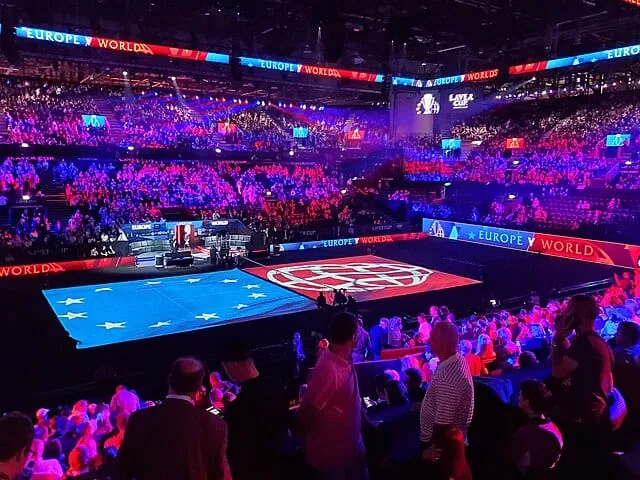
That is not a metaphor. Palais 12 at Brussels Expo is an exhibition building, the kind of place that hosts trade fairs and arena concerts, and for one week in October it becomes a tennis stadium. The court goes down on the concrete. The seating gets trucked in. The lights are hung from a ceiling rather than from poles. And from the moment play starts, nothing that happens outside that building matters to the tennis at all. No wind. No sun moving across the baseline at six in the evening. No rain delay, no humidity, no cloud passing over at the wrong moment of a tie-break.
For the next six weeks, the men who decide this season will play almost every meaningful point of it indoors. It is the strangest, most compressed and least understood stretch of the tennis year, and if you have spent the last month setting alarms for matches in Beijing and Shanghai, it is about to become dramatically easier to watch.
Here is what actually changes when tennis goes inside.
The map: where the tour goes from here
Start with the calendar, because the indoor season is not one tournament, it is a convoy, and it moves fast.
It opens on 19 October in two places at once. In Brussels, the BNP Paribas Fortis European Open runs to the 25th, an ATP 250 in its eleventh edition, with Felix Auger-Aliassime defending the title he won there last year. Five thousand kilometres east, the Almaty Open runs the same week in Kazakhstan, also indoors, also on hard court. Qualifying in Brussels starts on the 17th, which means that by the time you read this, players are already hitting under a roof.
Then, in the middle of that week, the sport does something it has only recently started doing: it stops for an exhibition. The Six Kings Slam takes over the ANB Arena in Riyadh on 21, 22 and 24 October, with a rest day in between and Netflix carrying it, pulling six of the best players in the world out of the tour schedule for three nights of guaranteed money.
The week after is the serious one. Basel and Vienna, both ATP 500 events, both indoors, both finishing on 1 November. The Swiss Indoors at the St Jakobshalle is in its fifty-fifth edition; the Erste Bank Open at the Wiener Stadthalle is in its fifty-second. These are old, specific, deeply local tournaments in cities that have been doing this since long before anybody thought of a race to a season finale, and they share a week every autumn, which means the top players have to choose between them and the draws fall apart in interesting ways.
Then Paris. The Rolex Paris Masters, the last Masters 1000 of the season, qualifying from 31 October and the main draw from 2 to 8 November. After that, Stockholm from 8 to 14 November, and then Turin, where eight men walk into the Inalpi Arena on 15 November for the ATP Finals and the season ends.
Six weeks. Five countries. One sport that has, for all practical purposes, stopped being an outdoor game.
The women do something different, and it is worth knowing so you do not go looking for them in Vienna. The WTA stays in Asia into late October, with Ningbo and Tokyo, and then flies to California: the WTA Finals are at the Indian Wells Tennis Garden from 8 to 15 November, in the open air, in the desert, under a sky. The men finish their year inside a building; the women finish theirs outdoors in sunshine. We wrote about how that finale ended up in a different place every other year and where it is finally settling next.
What a roof actually does
A roof removes variables. That sounds boring until you think about what those variables are.
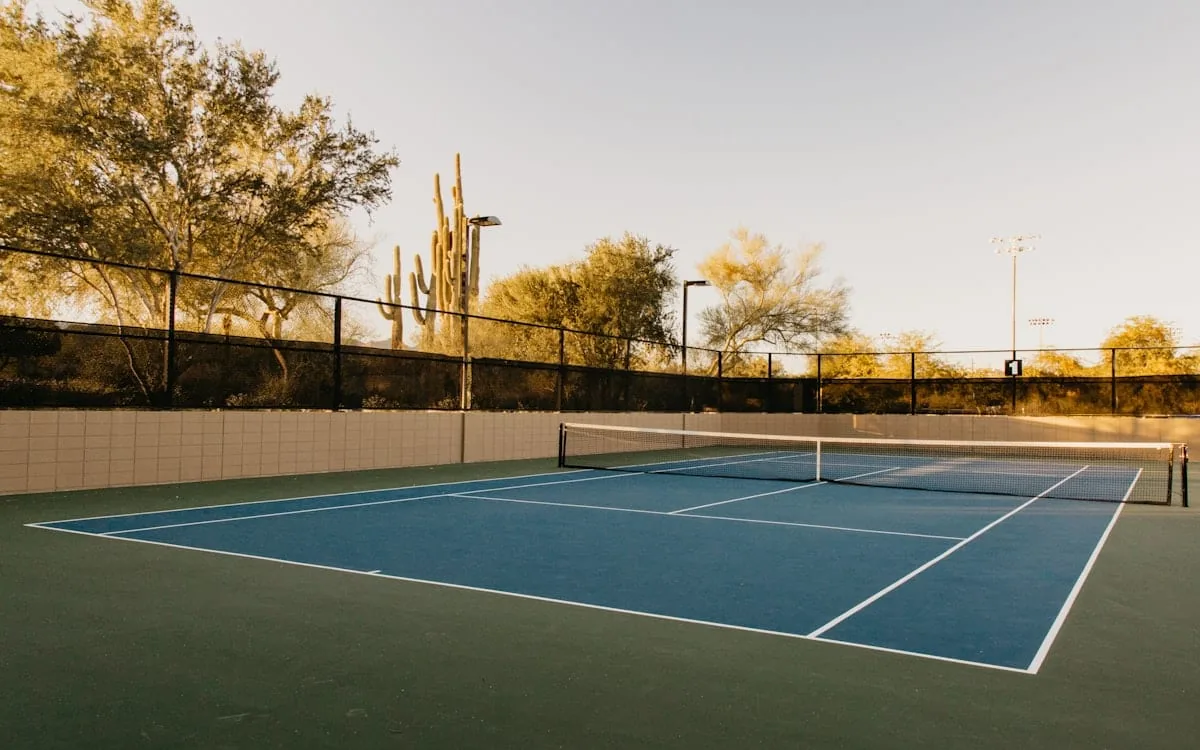
Outdoors, a tennis court is never the same court twice. The ball travels differently at two in the afternoon than it does at ten at night, because warm air is thinner and the ball flies further through it. A breeze of a few kilometres an hour, barely enough to move a flag, is enough to push a topspin lob two feet long or hold a drop shot up in the air for an extra half-beat. The sun crosses the stadium and one player serves into it for an hour. Humidity rises after dark and the balls get heavy and slow. Every outdoor match contains a weather report that the players are reading constantly and you are mostly not noticing.
Take all of that away and you are left with pure tennis, which is both the great appeal of the indoor season and the reason some people find it slightly sterile. There is nowhere to hide. If you are being outplayed indoors, you are being outplayed. You cannot wait for the wind to change or for the light to go or for the conditions to come to you, because the conditions are not going anywhere. They were set by a tournament director and a laboratory, and they will be exactly the same at eleven at night as they were at noon.
That last part is the bit most fans do not know: court speed is a decision, not an accident. Surfaces are tested and classified by the International Tennis Federation into five categories, from category 1, slow, up to category 5, fast. The testing is wonderfully literal. A ball is fired out of an air cannon at a sample of the surface and timed through infrared gates before and after the bounce, and the difference between those two speeds gives the court its pace rating. Rougher surfaces grab the ball and slow it down. Surfaces that throw the ball up higher play slower too, because a higher bounce gives the returning player more time to get there.
Indoor tournaments choose where on that scale they want to sit, and historically they have chosen quick. That is why the indoor swing has a reputation for big serving, short points and sudden one-break sets, and why players whose game depends on grinding an opponent down over five shots often arrive in late October and find the rallies ending before they have properly started. It is also why a certain kind of player comes alive in November. Every year, somebody who has spent the summer being blown about on outdoor hard courts walks into a European arena, discovers that his flat forehand now arrives like a thrown brick, and wins the biggest title of his life.
The sound of it
The other thing a roof does is contain noise, and this is the part that does not show up in any analysis but changes how the sport feels on television.
Outdoors, sound escapes. A crowd of fifteen thousand people in an open stadium makes a wide, diffuse roar that goes up into the sky and dissipates. The same crowd under a ceiling makes something else entirely: a hard, bright, echoing wall of sound that comes back down onto the court and hangs there. You can hear individual voices. You can hear a single person shouting something in Flemish or German three rows back. The ball makes a different noise, sharper, with a slap off the strings that carries.
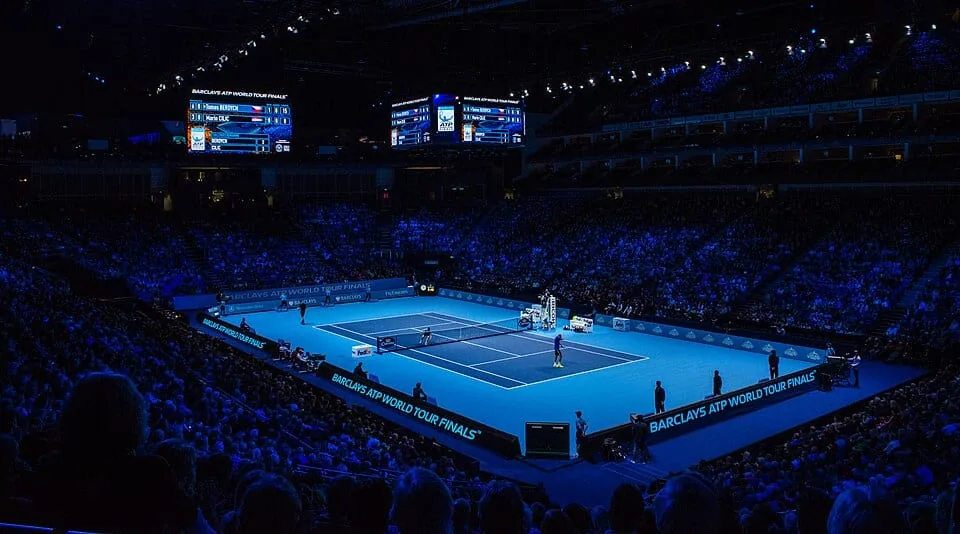
It is also darker. Indoor arenas light the court and leave the stands in shadow, so what you see on your screen is a bright rectangle with twelve thousand half-visible faces around it. It looks less like sport and more like theatre, which is exactly what the venues are designed for. These are not tennis stadiums. The Wiener Stadthalle hosts ice hockey and concerts. Brussels Expo hosts trade fairs. Turin plays its finale in a building put up for the ice hockey at the 2006 Winter Olympics. The tennis arrives for a week, borrows the room, and leaves.
There is one glorious exception. The Stockholm event, which this year runs in mid-November at the Royal Tennis Hall, is the oldest indoor tournament on the tour and the only one played in a building that was actually built for tennis. It is a small, wooden, slightly austere Swedish hall, and watching a match there after a month of borrowed concrete arenas feels like hearing a piece of music played on the instrument it was written for.
The ghost of the carpet
If you started watching tennis in the last fifteen years, you have never seen the indoor season as it used to be.
Until the late 2000s, a lot of these tournaments were played on carpet: literally a surface rolled out over the arena floor, usually a rubber-backed textile, fast and low-bouncing and utterly unlike anything else on the calendar. Points lasted three shots. Serve-and-volley survived there long after it had died everywhere else. The ball skidded rather than sat up, and a player with a huge serve and a flat return could beat anybody on the planet for one week in November.
The ATP standardised its indoor events on hard courts from 2009, chiefly on injury grounds, and the surface vanished from the top level of the men's game. The women played on carpet a while longer, at Quebec, where the last event of its kind was held in 2018. Some Challenger tournaments still use it. Nothing you will watch between now and Turin will be played on it.
What that means in practice is that the modern indoor season is a milder version of its old self. It is still faster than the Asian swing. It still rewards the server. But it is recognisably the same sport you watched in Shanghai, played in a different room, rather than the strange, lightning-quick, specialist discipline it was in the 1990s. Whether that is progress depends entirely on how much you enjoyed watching a player hit one return, miss, and sit down.
Paris, and the biggest room in tennis
The centrepiece of all this is the Paris Masters, and it is worth understanding what happened to it recently, because it is the clearest example of indoor tennis thinking big.
The tournament has existed since 1969. From 1986 to 2024 it lived at Bercy, now the Accor Arena, a sloping grass-sided pyramid on the right bank of the Seine with a main court seating around 15,500 and a reputation for atmosphere that bordered on intimidating. Then, last year, it moved fifteen kilometres west to Paris La Defense Arena in Nanterre, a vast modern box that normally holds rugby and stadium concerts.
The numbers tell you why. Total spectator capacity went from about 16,800 to roughly 23,000. The main show court now seats somewhere around 17,000 people, depending on which set of figures you believe, which makes it the second-largest tennis arena in the world behind Arthur Ashe Stadium in New York. For a tournament played entirely indoors, in the first week of November, in a city where it is dark by six, that is an extraordinary number of people to put in one room.
It is also the last chance saloon. Paris is the final Masters 1000 of the season, which means it is the last meaningful pile of ranking points available to anybody still trying to force their way into the top eight. Every year it produces at least one desperate, brilliant, slightly unhinged run by a player who needs it. This year it carries something else as well: it is where Gael Monfils, who has been entertaining French crowds for twenty years, plays his last home tournament. We followed what the final weeks of that farewell actually look like and it is going to be a loud, emotional, thoroughly indoor goodbye.
Why these six weeks decide the year
What people tend to miss about late-season tennis is that the stakes go up precisely as the quality of the bodies goes down.
Everyone in these draws has played a full season. Some of them have played eighty matches. Shoulders are sore, backs are tight, and the physios are earning their money. At exactly the moment when nobody has much left, the calendar hands them the two biggest prizes still available: a Masters 1000 title in Paris and a seat in Turin.
That second one is the whole drama of the autumn. Eight men qualify for the ATP Finals, which run from 15 to 22 November, and you cannot get in through a draw or a hot fortnight. You get in by having been one of the eight best players in the world across twelve months. Three men are already in. The rest of the places get settled in Basel, Vienna, Paris and the odd 250 that a top-twenty player enters because he needs the points. We laid out the full state of that race and who is still fighting for a chair last week, and almost everything that changes it now happens under a roof.
This is why a first-round match in Vienna in late October has a strange intensity that the same two players would never bring to a first round in Dubai in February. One of them is playing for a plane ticket to Italy. The other is playing to stop him.
What it means for you, watching
Practical news, and it is good news.
If you have spent the last five weeks squinting at your phone at four in the morning for the Asian swing, that is over. The indoor season is European, which means European evening tennis: matches that start when you are eating dinner and finish before you go to bed, with the night sessions in Vienna, Basel and Paris landing in prime time across the continent and in the late afternoon in the Americas. After the time-zone contortions of the Asian swing, which we mapped out city by city, this is the gentlest the calendar gets.
A few things to watch for once you are there. Watch the first serve percentages, because indoors they climb and the second-serve points that remain become enormous. Watch for the player who returns from two steps further inside the baseline than he did in September, because that is somebody who has read the conditions correctly. Watch the ball bounce after a drop shot, because on a quick indoor court it stays low and dies, and the shot that would be a desperate scramble outdoors is simply over. And watch the crowds: these are indoor arenas in cold cities in November, full of people in coats who have bought a ticket because this is the only week of the year that top-level tennis comes to them.
There is a particular feeling to a tennis match in a dark European arena with the rain coming down outside, and the season narrowing, and twelve thousand people who have no intention of going home early. In six weeks it will be over, the lights will go off in Turin, and the sport will scatter for ten weeks. Between now and then, every important thing that happens in men's tennis happens in a room with the weather locked outside.
Close the door and pull up a chair.
Photo: a full house in an indoor arena, the court lit bright and the stands left in shadow, from our picture library.