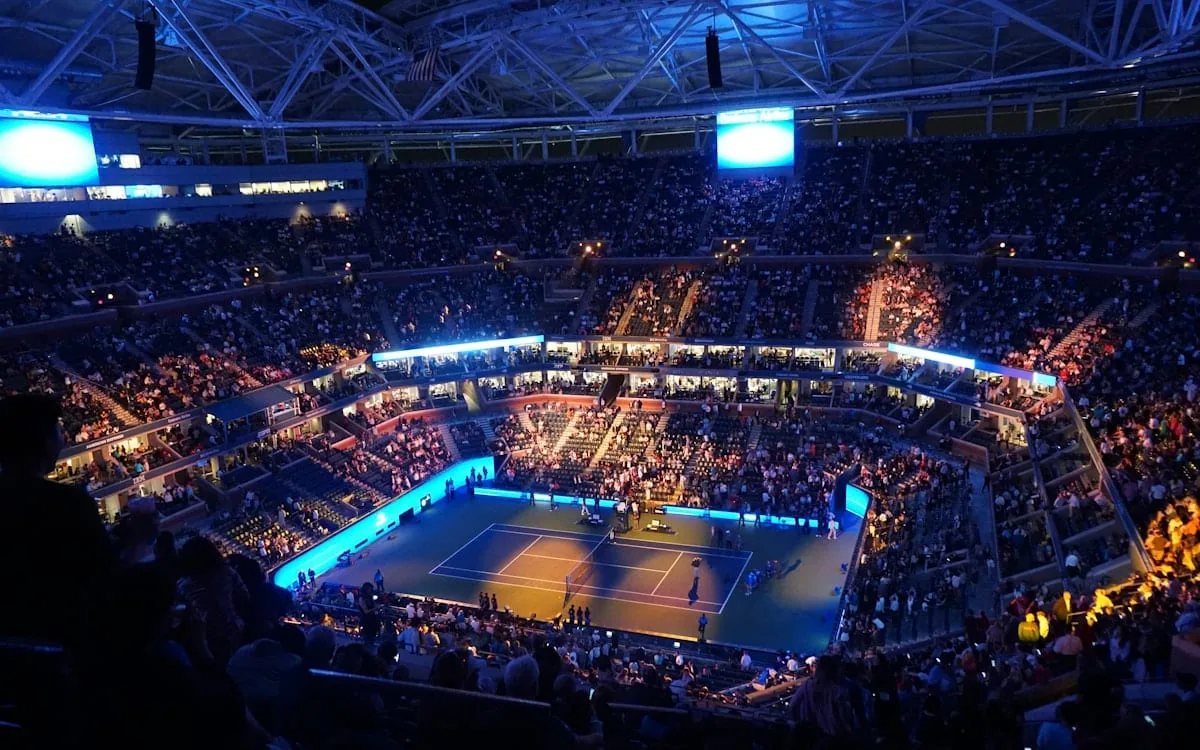
In a converted rugby stadium on the western edge of Paris on Monday afternoon, a 22-year-old from Lima won a tennis match, shook hands at the net, and became the first Peruvian in the history of the tournament to do it.
The scoreline was 6-2, 6-4. The opponent was Zizou Bergs of Belgium, ranked a few places below him. The crowd was the thin, distracted Monday crowd that every big event gets on its first day, half of them still finding their seats. It was not a famous match and nobody will put it in a highlight reel at the end of the year.
But if you follow this sport for the stories rather than the rankings, that result is one of the better ones available to you this week. Because the player who won it, Ignacio Buse, has spent 2026 doing something that has not happened in Peruvian tennis for more than twenty years, and because on Wednesday morning he walks back out onto the same court to play Daniil Medvedev.
A result with a footnote attached
The Paris event is the last Masters 1000 of the men's season, a 56-player draw squeezed into the first week of November, and it is the final chance for anyone outside the elite to grab a result that changes their winter. This year it is being played at La Defense Arena in Nanterre, a vast arena built for rugby that the tournament moved into after decades at Bercy, and which now carries a sponsor name most people have not bothered to learn. We wrote about the move out of Bercy and what the new building actually feels like when the draw came out.
It is a strange, ragged week this year. Jannik Sinner, who won the title twelve months ago, withdrew before it started. Alexander Zverev is the top seed and Carlos Alcaraz the second. Half the draw is playing for a seat at the season-ending finals in Turin the following week and the other half is playing for the ranking points that decide whether their January starts in a Grand Slam main draw or in a qualifying event in the suburbs. Everybody in the building is tired. It is the last week of a season that began in Australia in January, and you can see it in the way players walk between points.
Buse arrived there as the 33rd-ranked player in the world and absolutely nobody's idea of a story. He had been in a horrible run of form. And the man across the net had beaten him 6-0, 6-3 three weeks earlier in Shanghai, which is the kind of scoreline that follows you around for a while.
On Monday he turned it over completely. Bergs made 29 unforced errors, Buse made very few, and the whole thing was done inside ninety minutes. In Peru, where the match went out in the early hours, it was the sort of result that gets forwarded to people who do not follow tennis.
A club in Lima and a father with a basket of balls
Buse was born in Lima on 25 March 2004, which makes him 22 and a half, and he started hitting balls at the Country Club de Villa, where his father Hans worked as a coach. That detail explains more than it looks like it does.
In a country with a deep tennis culture, being a coach's child is a nice head start. In a country without one, it is often the only way in at all. Peru has perhaps a few dozen courts that a serious junior can train on properly, no professional circuit worth the name, and a sporting conversation dominated so completely by football that a teenager choosing tennis is choosing to be odd. You do not fall into tennis in Lima. Somebody has to put a racket in your hand and then keep putting it there for ten years.
He was good early, good enough that American universities came looking. He visited the University of Florida as a recruit at the time Ben Shelton was playing there, which is one of those near-misses that becomes a nice line later on: an alternative life in which he spends three years in Gainesville playing college tennis and turns professional at 22 instead of 18. He went professional instead, and the two of them met anyway, in the first round of the 2025 US Open, Buse's first Grand Slam main draw after coming through three rounds of qualifying. Shelton won in straight sets and did not lose serve once. Buse had five break points and took none of them. That is the normal version of this story, the one where the kid from the small tennis country gets a lovely day out and a cheque and goes back to the Challenger circuit. If you want the other side of that afternoon, Shelton's own long road is a story we told in full after this year's US Open.
For most of the players who get that day, it stays the high point. Buse spent 2025 grinding through Challengers, the second tier, where you play in sports halls and municipal clubs in front of two hundred people for prize money that barely covers the next flight. He won two of them. Across the whole of that Challenger season he won 34 matches and lost 19, which sounds respectable until you work out what it involves: something like thirty weeks of airports, a different city every Monday, hotel rooms booked by the player and paid for by the player, and the knowledge that a first-round loss means the week cost you money rather than earned it. He finished the year on the edge of the top 100 and crossed it on 5 January 2026.
Two trophies, one season
What happened next is the part that will matter when somebody writes his career up properly.
In May, at the Hamburg Open on clay, he came through qualifying and then won the whole thing. Seven matches in a week and a bit, two sets dropped in all of them, and in the final he beat Tommy Paul, an established American top-20 player, 7-6, 4-6, 6-3. The first set alone went to a tie-break that stretched to 8-6. It was his first title on the main tour, and it moved him to No. 31 in the world, a place no Peruvian had been in a very long time.
Then, in late August, he did it again on a completely different surface. At the Winston-Salem Open, the hard-court event that sits in the week before the US Open and is usually treated as a warm-up nobody wants to win, he beat Benjamin Bonzi in the semi-final and then Arthur Fery of Britain 6-3, 6-2 in the final. Second tour title. First on hard courts. Youngest champion in the history of that tournament. And only the second Peruvian man ever to win a tour-level title on a hard court, the first being Jaime Yzaga in 1993, when Buse's parents were teenagers.
Two days later, on 31 August, the rankings came out and he was No. 30 in the world.
To understand why people in Lima lost their minds over a two-digit number, you need the arithmetic of Peruvian tennis, and it is brutally short. Three men in the country's history had won a title on the main tour before this year: Pablo Arraya, Jaime Yzaga and Luis Horna. Yzaga is the high-water mark, No. 18 in the world in 1989, a quarter-finalist at the 1991 Australian Open and again at the 1994 US Open. Horna got to No. 33 in 2004. Peru's Davis Cup team reached the World Group play-offs in 1989 and again in 1994 and has spent most of the time since in the regional divisions, playing ties that nobody televises.
That is the whole shelf. Three names, one of them from the 1980s. Buse is the fourth Peruvian man ever to reach the top 50, he has matched Horna's two titles, and at No. 30 he went past Horna's career-best ranking before his twenty-third birthday.
The six weeks when it stopped working
Here is the part that gets left out of the montage.
Everything above happened by the end of August. Then the season turned, as it always does, into the brutal autumn stretch of hard-court events in Asia and indoor Europe, and Buse stopped winning. He got through one round at the US Open, beating Marcos Giron in five sets, and lost the next one to Bonzi, the same man he had beaten in Winston-Salem a fortnight before. In Beijing he lost to Quentin Halys. In Shanghai he lost to Bergs for six and three. In Vienna he lost to Adrian Mannarino, a 38-year-old left-hander who makes young players feel like they are hitting into a wall.
Six weeks, no wins worth the name, and a ranking sliding back from 30 to 33 while his best results from the previous autumn came off the ledger. This is the invisible mechanic of professional tennis that fans rarely feel: your ranking is not a record of how good you are, it is a rolling 52-week scoreboard that keeps deleting your old results. Stand still and you fall. A player at 30 in the world who goes five tournaments without a win is not having a quiet patch. He is watching a year of work drain out of a hole in the floor.
That is the context for Monday. It was not just a first for his country. It was a 22-year-old ending a run that had gone on long enough to start affecting the way he walked onto a court.
Barcelona, and the price of the ticket
Buse does not live in Peru any more. Like virtually every South American player who gets good, he had to leave. He trains in Barcelona at the Tennis Empowerment Centre Carles Ferrer Salat, under the coach Juan Lizariturry, and spends chunks of the year based in Florida.
This is the structural fact of tennis that the sport does not like talking about. The circuit is essentially a European and North American operation with a long Asian swing bolted on. If you are born in Lima or Asuncion or Belo Horizonte and you have talent, the professional path requires you, at seventeen or eighteen, to move eight thousand miles from your family to a city where you know nobody, pay for coaching in euros, and start the rest of your life. The ones who make it are not only the most talented. They are the ones whose families could absorb that, and who did not get so homesick in the first winter that they went back.
It is why the South American breakthroughs land so hard when they come. Brazil has been living through its own version of this with Joao Fonseca, who arrived with the weight of an entire country's hopes and a comparison to Gustavo Kuerten strapped to his back at eighteen. Paraguay had a day of its own this year when Dani Vallejo reached a tour quarter-final in Tokyo and a nation that had not had a top-level player in decades suddenly had one to watch on a Sunday morning.
Buse has been open about what he carries. Asked for his advice to young players, his answer began: first of all, always be humble. After Hamburg, he said simply that the win was for Peru. He has talked about wanting to grow tennis as a sport at home, which from a 22-year-old can sound like press-conference filler and in his case plainly is not, because he is currently the entire argument for it.
Wednesday morning, and the Russian
So: Wednesday, late morning in Paris, Buse plays Daniil Medvedev.
Medvedev is a former world No. 1, a US Open champion, and a man who won this exact title in Paris in 2020. He is also a player who has spent the past two seasons somewhere between brilliant and baffling, and who had a first-round bye here, meaning Wednesday is his opening match of the week and Buse has already had a hit-out on the court. That is a small edge and it is the kind of small edge that sometimes matters.
The match-up is interesting on paper, which is not always true of these things. Medvedev's whole method is to stand four metres behind the baseline, return everything, and let the other player slowly discover that their best shot is not good enough. Against an opponent who is young, who has been losing, and who has every reason to over-hit, that is traditionally a short afternoon.
But Buse is not the player Medvedev will have scouted in September. He has two titles on two surfaces this year, he has just taken apart the man who humiliated him three weeks ago, and he is playing with the specific looseness of somebody who has already got more out of the week than he expected.
If you are reading this on Tuesday, the practical note is that it is on Wednesday and it starts early European time, which makes it a late-night or dawn watch depending on which hemisphere you are in. If you are in the Americas it is a coffee match. Peru will be awake for it either way.
What you are actually watching
Here is the honest case for caring about a second-round match between the 33rd-best player in the world and a former champion who is no longer quite himself.
Most of the sport, most weeks, is people you have heard of playing people you have heard of. The results are not surprising and the stories are already written. What is rarer, and much more fun, is catching a player in the exact window where their life is changing shape and nobody has decided yet how the story ends. Buse is in that window right now. He might lose 6-2, 6-2 on Wednesday and finish the year 33rd and spend 2027 trying to prove that August was not a fluke. He might win and go on a run that puts him in the top 20 by the Australian Open. Both are completely plausible, and that uncertainty is the thing you cannot get from watching the top four.
There is also the other half of it, which has nothing to do with rankings. Somewhere in Lima on Monday, a child at a club with four courts and a long waiting list watched a man with a Peruvian flag beside his name win a match at one of the biggest tournaments there is. For twenty years, the honest answer to the question of whether a Peruvian could do this was: in theory. It is not a theory any more.
Yzaga retired in 1999. Horna played his last match in 2009. For most of the time since, Peruvian tennis has been a history lesson rather than a thing you could switch on and watch. On Wednesday morning, for the price of getting up early, you can watch it happen live.
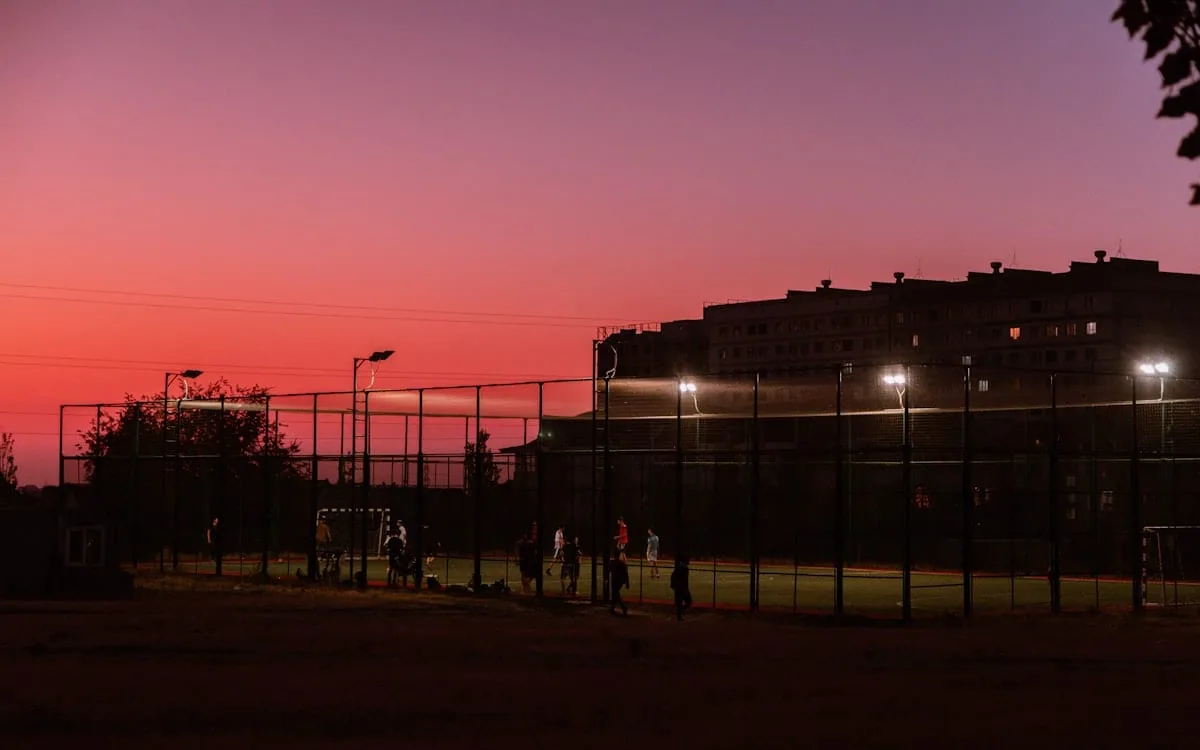
Photo: public courts at the end of the day, from our picture library.
🎾 Gear from this story
TecnifibreTecnifibre T-Fight 305Daniil Medvedev's racket of choiceView on Amazon →As an Amazon Associate, SUPER.TENNIS earns from qualifying purchases.