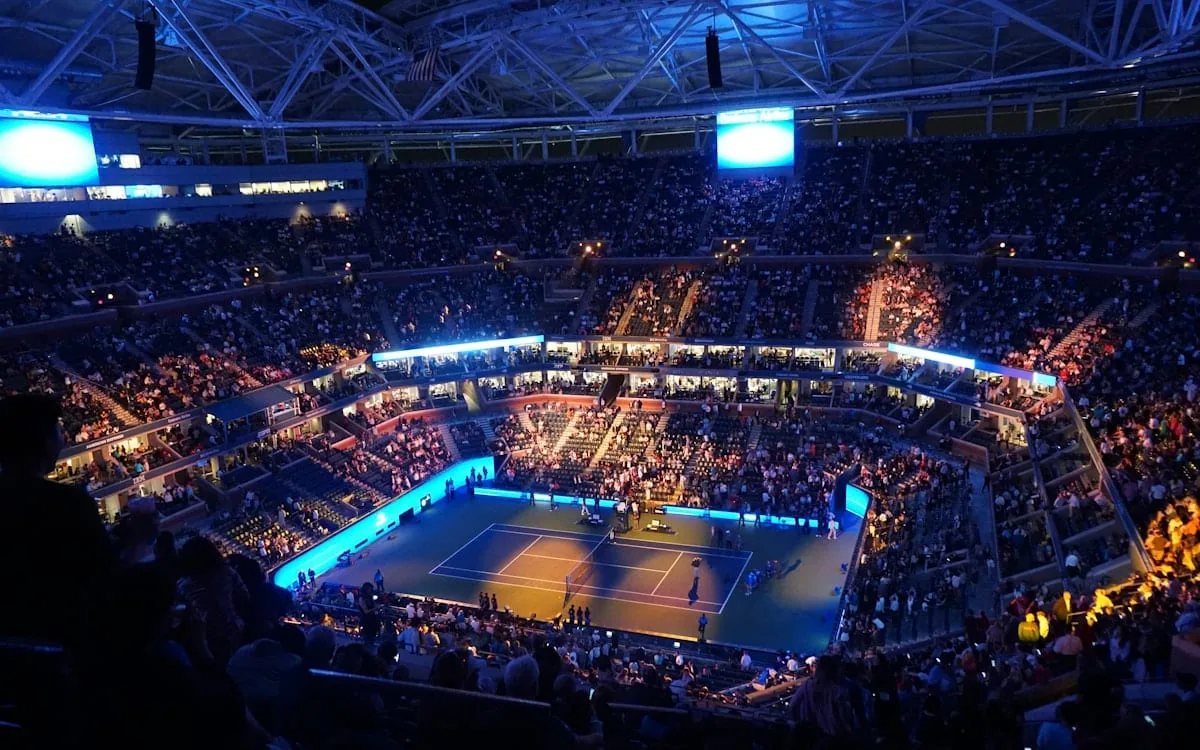
Tonight somebody lifts a trophy in Turin, the lights go down in the Inalpi Arena, and almost everyone watching will file the 2026 men's season under finished.
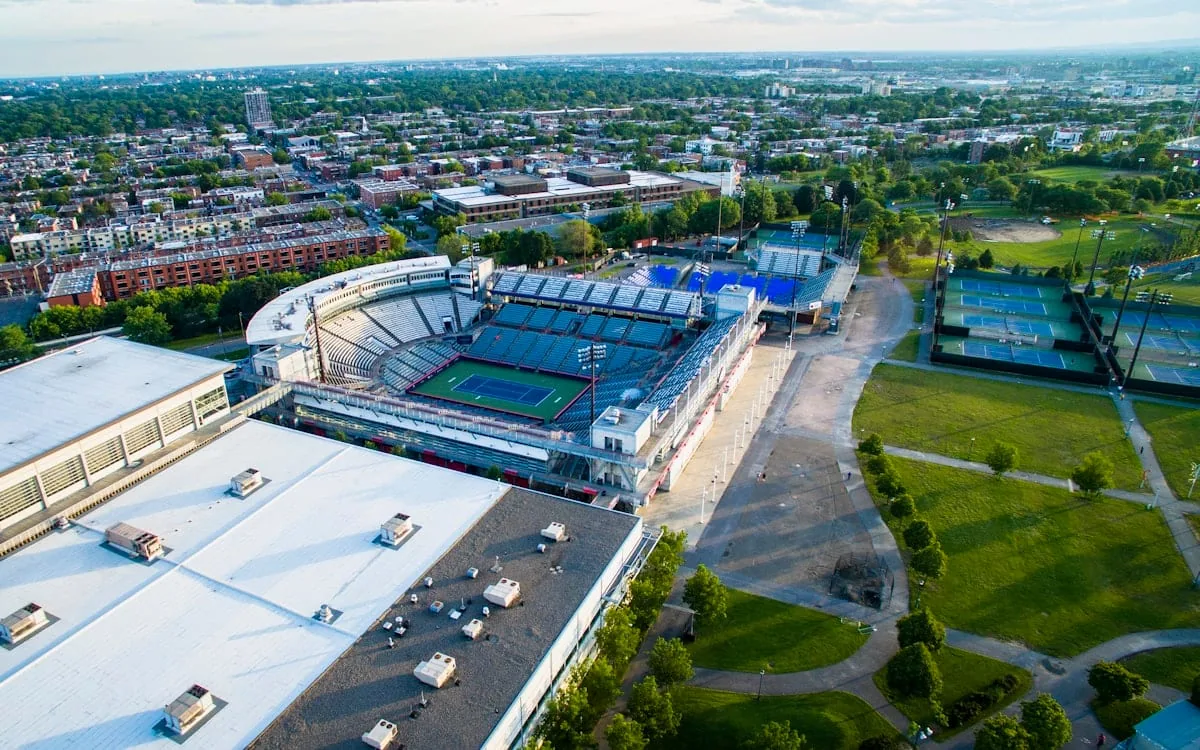
It isn't. Not quite. Seventeen days later and the entire length of Italy to the south, in a city most tennis fans would struggle to find on a map at the first attempt, eight players aged 20 and under walk into an arena to play the actual last tournament of the men's year. It runs from 9 to 13 December. The venue is the PalaCalafiore in Reggio Calabria, down at the very toe of the Italian boot, looking across the water at Sicily.
This is the Next Gen ATP Finals, and this year it has a story worth your attention even if you have never watched a minute of it. It has moved continents. It has lost two of the three players you might actually have heard of. It is the one event in professional tennis that openly treats the rulebook as a draft. And it has quietly become the single best predictor in the sport of who you will be watching in five years.
The season behind the season
The simplest way to describe it: the Next Gen ATP Finals is the junior version of the thing happening in Turin this week, run on the same basic shape and for a much younger cast.
Eight players qualify. Entry is by a season-long race, exactly like the big one, except the race only counts players who are 20 or under as of the end of the calendar year. The 2026 race closed on 15 November. The eight who made it are split into two groups of four, everyone plays everyone in their group, and the top two from each group cross over into semifinals. If the group arithmetic sounds familiar, it should: it is the same round-robin structure they have been using in Turin all week, with the same quietly brutal consequence that you can lose a match and still win the tournament, and win two and still go home.
There are $2 million in prize money on the table. There are no ATP ranking points. That combination tells you most of what you need to know about the event's character: it pays like a serious tournament and counts like an exhibition, which gives everyone involved permission to try things.
How it ended up in Calabria
The tournament's address has never stayed still for long.
Milan had it first, from its launch in 2017 through 2022, with a gap in 2020 when the pandemic wiped it off the calendar. Then it went to Jeddah, in Saudi Arabia, for three editions from 2023 to 2025. The Saudi arrangement was supposed to run to 2027. It didn't. The ATP's contract with the Saudi Tennis Federation was terminated early, the hosting rights went back on the market, and Italy's tennis and padel federation, the FITP, won them.
So the event has come home to the country where it started, but not to the city where it started. Instead of Milan, it goes to Reggio Calabria: a port city of roughly 170,000 people on the Strait of Messina, a part of Italy that has historically watched the big sporting money arrive somewhere else. The tickets went on sale earlier this autumn. The PalaCalafiore, the local indoor arena, gets five days of the international tennis circuit in the week before Christmas.
It is easy to be sniffy about that, and some people have been. A December event for under-20s in a regional arena is not the Masters 1000 circuit, and Reggio Calabria is not Milan. But a tour-level week has a way of rearranging a city's sense of itself. Local clubs get a surge of children through the door. The arena gets a reason to upgrade. For five days the centre of Italian tennis sits a very long way south of where it normally does, in a region more used to supplying players to the system than to hosting it.
There is a slightly remarkable consequence of all this reshuffling that nobody has particularly dwelt on. In 2026, Italy is hosting the season-ending finals for the men's tour in Turin, the Davis Cup's final stage in Bologna, and now the Next Gen Finals in Reggio Calabria. One country, three of the year's closing set pieces, spread from the Alps to within sight of Sicily. No other nation is close to that share of the November and December calendar.
The tournament that treats the rules as a suggestion
Here is the part that makes the Next Gen Finals genuinely strange to watch, and the reason it exists at all.
Every other professional tournament plays by the rulebook. This one plays by a draft of a possible future rulebook. From its first edition the event has been used as the tour's laboratory, a place to run experiments in front of cameras and a paying crowd rather than in a committee room.
The headline change is the scoring. Matches are best of five sets, which sounds enormous until you learn that a set is first to four games, with a tiebreak at three-all. Every game is no-ad: reach deuce and the next point takes the game, with the receiver choosing which side to take it from. The effect is a match that keeps arriving at the sharp end. In a normal set you can drift for twenty minutes. Here, the third point of any game might be the one that decides it, and the fourth game of any set might be the last. Players who like to settle into a rhythm hate it. People watching at home rarely do.
Not everyone loves it, and the argument against is a decent one. Short sets flatter the lucky and punish the patient: a player whose whole method is to build pressure across ten games never gets ten games, and a hot quarter of an hour can settle a match that a longer format would have handed to somebody else. That criticism is fair. It is also, in a way, the point. This event is not trying to produce the truest possible result. It is trying to find out what tennis feels like with the slack taken out, and then hand the answer to the people who decide what the sport looks like for everybody else.
Around the scoring sit a cluster of smaller experiments that have come and gone over the years: shot clocks timing the gap between points, allowances for coaching that the rest of the tour wouldn't touch at the time, towel racks so players stop using ball kids as valets, warm-ups cut to the bone, electronic line calling instead of human line judges.
That last list is worth re-reading, because several of those items are no longer experiments. The shot clock is now standard across professional tennis. Coaching, once forbidden to the point of absurdity, is now permitted on tour. Line judges have been retired at the biggest events in favour of electronic calling. Things that looked like gimmicks in Milan in 2017 are simply how the sport works in 2026. The Next Gen Finals got there first, in public, with teenagers as the test pilots.
It doesn't all survive. A no-let rule, where serves clipping the net stayed in play, has been tried and quietly dropped. Not every idea deserves to live. But the point of a laboratory is that you are allowed to be wrong in it.
The eight who got in
The 2026 field is a genuinely international spread, and a young one even by this tournament's standards.
Martin Landaluce tops it. The Spaniard, 20, from Madrid, leads the field on points earned and goes in as the top seed, back for a second appearance. His year is the kind that makes a player suddenly real: he broke into the top 100 in April, went on a run to a Masters 1000 quarterfinal in Miami having arrived through qualifying, and peaked at No. 55 in June. He is the closest thing this field has to an established tour player, and in Reggio Calabria he will be the man everyone else measures themselves against.
Moise Kouame is the one to watch, and the arithmetic explains why. The Frenchman is 17 years old, born in March 2009, and he becomes the youngest player ever to qualify for this event. He reached a career high of No. 132 in early November. At Roland Garros he beat Marin Cilic, a man who won a Grand Slam title when Kouame was five years old. Earlier in the year he had made his ATP Tour debut at Montpellier as a qualifier ranked outside the top 500, at 16. Players who do these things at this age are rare enough that the sport tends to notice immediately.
Federico Cina carries the home end of it. The 19-year-old Sicilian qualified on merit, which matters to him given where the event is being played: Reggio Calabria sits directly across the strait from the island he grew up on. His season included a first Challenger title in Pune and main-draw appearances at Roland Garros and the US Open, and he reached a career high of No. 135 in October. Playing a home tournament at 19, within sight of home, is a particular kind of pressure, and it is also the best week of his life waiting to happen.
Pierluigi Basile completes the Italian presence as the federation's wild card. He is 19, from Puglia, and ranked around No. 500 — comfortably the lowest-ranked player in the field. Wild cards at this event have a decent history of justifying themselves, and either way he gets five days of the best competition of his career.
The rest of the eight come from four more countries: Rei Sakamoto of Japan, Darwin Blanch of the United States, Jan Kumstat of the Czech Republic and Joel Schwarzler of Austria. Spain, France, Italy, Japan, the United States, Czechia, Austria. For a tournament that sometimes gets dismissed as a sideshow, that is a reasonable map of where the next decade of men's tennis is being grown.
You will not know most of those four names, and that is not a lapse in your attention. It is the condition the tournament exists in. Two years ago almost nobody outside the Challenger circuit could have told you much about the player who went on to win this thing unbeaten, and a year ago the same was true of the man who beat him to it the following December. The entire proposition here is that you are being handed names slightly before they become useful to you.
The two who said no
Two names are missing, and their absence is its own small story about what this tournament is for.
Joao Fonseca won this event in 2024 and is still young enough to play it. He has ended his season early instead. Rafael Jodar qualified on the race and withdrew as well — understandably, given that the Spaniard spent this month at a rather more significant address, having come from No. 168 to an ATP Finals debut in Turin in the space of a year.
That is the tension built into the Next Gen Finals. It is designed for the best young players in the world, and the very best young players tend to outgrow it before they can play it, or arrive at it too tired from a season spent with the adults to want it. The tournament's reward for successfully identifying a future star is that the star stops turning up.
The defending champion is absent for the least dramatic reason of all. Learner Tien won it in 2025, beating Alexander Blockx in the final, and has simply aged out. You get a very short window here. Miss it and it closes.
What winning it has actually meant
The honours board is the strongest argument this tournament has, and it reads better every year.
Hyeon Chung won the first edition in 2017, beating Andrey Rublev. Stefanos Tsitsipas took the 2018 title, beating Alex de Minaur in a final of four tiebreak-haunted short sets. Jannik Sinner won it in 2019, also over de Minaur, at a point when he was still a curiosity rather than a household name. After the cancelled 2020, Carlos Alcaraz won it in 2021, beating Sebastian Korda. Brandon Nakashima won in 2022 over Jiri Lehecka. Hamad Medjedovic took the 2023 title, beating Arthur Fils in the final — the same Arthur Fils who spent this November playing the senior version in Turin. Fonseca won in 2024 without losing a match, beating Tien, who came back and won it himself a year later.
Read that list as a whole and you are looking at a decade of the men's game in advance: two of its most recent dominant figures, a clutch of top-ten players, two men who were in the field in Turin this very week. The tournament has not been perfect at it. Not every champion kicked on, and some of the best players of this generation never played it at all. But as a piece of forecasting, a competition with a hit rate like that is doing something right.
It is also worth noticing what the runners-up did. De Minaur lost two of these finals and has spent years inside the world's top ten. Fils lost one and is a Turin regular. Tien lost one and won the next. Losing here has never been much of a verdict.
Five days in December, and why they are worth your evening
By the time the Next Gen Finals starts, the sport will have gone quiet. The big tours will be finished, the players will have scattered, and tennis will have mostly vanished into its short off-season until January. That is precisely the gap this thing fills, and precisely why it is an easy watch.
The matches are short. The scoring means something is at stake almost constantly. The crowd will be Italian and loud, especially when Cina or Basile is on court, and a southern Italian arena in December with a home teenager serving to stay in a set is not an atmosphere you can manufacture anywhere else. There are no ranking points, which means no tactical half-effort, no managing a schedule, no saving anything for next week. There is no next week. These are young players in an arena, playing for money, pride and the first serious camera time of their careers.
If you are only going to drop in on one day of it, make it the last day of the group stage. That is when the qualification arithmetic starts to bite, when a player already eliminated is suddenly deciding somebody else's week as well as his own, and when the short sets do their worst work on everyone's nerves. Listen for the coaching, too, since this is one of the few places you can actually hear it, and a minute of a coach talking to a 17-year-old who is a set down will tell you more about him than any of his shots will.
And there is the quiet promise the tournament never states out loud but plainly believes in. In five or six years, when one of these eight is deep in the second week of a Grand Slam and the commentary is explaining where he came from, the footage they will reach for is this: a kid in a half-familiar shirt, in a town at the bottom of Italy, in the week before Christmas, playing sets that finished before anyone knew who he was.
Turin settles the present tonight. Reggio Calabria gets the other question, the slower and more interesting one, on 9 December.
🎾 Gear from this story
YonexYonex Ezone 98Joao Fonseca's racket of choiceView on Amazon →As an Amazon Associate, SUPER.TENNIS earns from qualifying purchases.