The biggest thing that has ever happened to Rafael Jodar happened in a match he was not playing.
He had already gone out in Paris, beaten in the second round by Casper Ruud, and the tournament had carried on without him. What was left of his season was not tennis any more, it was arithmetic. Taylor Fritz — the American who had beaten him in a final in Washington in August — needed one more win to take the last seat at the ATP Finals. Fritz drew Carlos Alcaraz in the quarterfinals. Fritz had two match points. He did not take them. Alcaraz won it 6-7, 7-5, 6-3, and somewhere away from that court a 20-year-old from Madrid, who began this season ranked 168th in the world, found out from a screen that he will spend the middle of November in an indoor arena in Italy with the seven other best men in tennis.
If you only follow tennis at the Grand Slams, that sentence needs unpacking, because the ATP Finals is the one week of the year that works differently. There is no draw of 128 and no second chances for a bad afternoon. Eight men qualify, by results alone, across eleven months. They are split into two groups of four, everybody plays everybody, and the top two from each group go through to the semifinals. It is the smallest and meanest field in the sport, and almost nobody gets into it by accident.
Jodar got into it with a season that, as far as anybody can tell, has no precedent. Tennis Majors called it history when the field closed: no man has ever qualified for the season finale in the same year he played his first tour-level main draw. That is the part that is hard to hold in your head. Twelve months ago he was not losing to these players. He was nowhere near them.
What 168 actually means
A world ranking of 168 is not a number anybody frames. It is the rank of a player who exists almost entirely outside television.
At 168 you do not walk into the main draw of anything that matters. You play qualifying, which means arriving at a tournament on a Thursday to win two or three matches on an outside court for the right to be in the event everybody else is already in. The rest of the year you play Challengers, the tier below the main tour, where the crowds are a few hundred people, the prize money pays for the next flight rather than a house, and the difference between a profitable month and a losing one is one tiebreak somewhere in Italy or Kazakhstan.
That was the professional life available to Rafael Jodar last January. By the end of March he was inside the top 100. By late April he was inside the top 50. By August he was 11th in the world. There is no sensible way to describe that as a rise, because a rise suggests steps. This was closer to somebody taking the stairs out of the frame entirely.
A club in Madrid, and then a dorm room in Virginia
He was born in Madrid on 17 September 2006, which makes him 20 — the youngest man in the Turin field by a distance. He first picked up a racket at four, on the clay courts at the Chamartin club in the north of the city. That detail matters more than it sounds like it should, because almost everything good that has happened to him this year happened on a red court or against somebody who was not expecting a red-court player to hit through them.
As a junior he was excellent rather than mythical: a run to world No. 4 in the age group, and the boys singles title at the US Open in 2024. In the ordinary version of this story he turns professional at 18, takes three years to get through the Challenger grind, and we meet him properly at around 23.
He did not do that. He went to university in America instead. Two seasons at the University of Virginia, a college programme rather than a tour calendar, where he was named national rookie of the year by the Intercollegiate Tennis Association. For a long time the college route was treated in tennis as a sort of consolation path, the thing you did if the professional thing had not worked. That has changed hard in the last few years — it is the same road that produced the American pair who met in a Masters 1000 final this summer, a story we wrote about in the college tennis route that keeps producing finalists — and Jodar is now the loudest possible argument for it. He arrived on tour at 19 with two years of matches behind him, a body that had been allowed to finish growing, and the specific kind of confidence you only get from playing for a team in front of a student crowd that will shout at you if you sulk.
Then, at the very end of 2025, he committed to tennis full time. Six weeks later he was in the top 100.
Marrakech, and the week the volume went up
The first trophy came in Morocco in April. At the Grand Prix Hassan II in Marrakech he beat Marco Trungelliti 6-3, 6-2 in the final — a straightforward, almost rude performance for a first title — and became a 19-year-old with an ATP trophy and a plane ticket home to the Spanish clay swing.
What happened next is the part that made people start recording his matches. Madrid gave him a wild card into the main draw of its Masters 1000, the biggest tournament in his own city, in front of people who had watched him grow up at Chamartin. He beat Alex de Minaur, then eighth in the world, 6-3, 6-1. Not a scrappy upset. A beating, in an hour and a bit, by a teenager playing his first season.
That was his first top-10 win, and it made him only the second man born in 2006 or later to manage one — the other being Joao Fonseca, who he would meet later that same week. He kept going until the quarterfinals, where Jannik Sinner, then the best player alive, finally stopped him 6-2, 7-6(0) by reeling off eleven points in a row at the end. Sinner, who is not given to hyperbole, signed the camera lens afterwards with two words about his opponent: what a player.
Two matches at Roland Garros that told you everything
The clay kept giving. He reached the semifinals in Barcelona. Then came Paris in late May, and the part of his season that I would show anybody who wanted to understand the kid rather than the ranking.
In the third round of Roland Garros he played the American Alex Michelsen and went down two sets to one. He won in five. In the fourth round he played Pablo Carreno Busta, a former semifinalist at that tournament and a man who has made a career out of refusing to miss, and lost the first two sets. He won in five again, from two sets down, to reach a Grand Slam quarterfinal at 19 years old.
Alexander Zverev ended it there, 7-6(3), 6-1, 6-3, and then went on to win the whole tournament. Jodar left Paris with the most clay-court wins of anybody on tour this year and a line that sounded, at the time, like the kind of thing young players say to be polite: that he had learned he could compete with anyone. By October it read as a statement of fact.
The Monday final in Washington
The hard courts were supposed to expose him. Lower bounce, less time, bigger servers, the surface where a clay upbringing is meant to show.
Instead he reached the final at the DC Open in Washington at the start of August — his first hard-court final, at ATP 500 level, which is one tier below a Masters 1000. Rain pushed the match off Sunday entirely, so the final was played on the Monday, in front of whatever crowd could get the day off work. He fell early in the first set and took a medical timeout at 5-4 for treatment on his left hand. He lost 7-6(2), 6-4 to Fritz, who badly needed the title and said so.
Second place in Washington was worth $248,480 — more than he had earned in his entire life to that point — and a career-high ranking of 15th, his first week inside the top 20. A week later he was 11th. He was still 19.
And then it stopped working
This is the section that usually gets left out of stories like this one, so let us leave it in.
At the US Open, the Grand Slam where he had won the boys title two years earlier, he lost in the first round. At the Tokyo event that followed, he lost in the first round again. Two tournaments, two matches, two flights home. Everything that had been automatic since March — the free-swinging, the sense that the ball was going in because of course it was — stopped being automatic at precisely the moment the sport started expecting it of him.
Players much older than 20 have lost whole seasons in that spiral. The interesting thing about Jodar is how short his lasted.
Shanghai, and the best week of his life so far
In October he arrived in Shanghai ninth in the race for the eight places in Turin, which is the most frustrating position in tennis, and proceeded to play the best week of his career.
He beat Daniil Medvedev 6-3, 6-4 in the semifinals — a former world No. 1, a former champion of that very tournament, beaten in two sets by a player who had been in the top 100 for seven months. That put him in a Masters 1000 final, the biggest match of his life.
He led it by a set and a break. He lost it 1-6, 7-6(5), 6-4 to Alejandro Davidovich Fokina, a fellow Spaniard who was having a redemption season of his own and who won his first Masters title that afternoon — a story we told from the other side in the long road back for Davidovich Fokina. It was 18 October. Jodar had no idea yet, but the points he took from that week are the reason he is going to Turin.
How the eight finally closed
The qualification system is called the Race, and unlike the ordinary world ranking it resets every January — only this season counts, which is exactly why a player who began the year at 168 could be in contention at all. We explained how the chairs get filled in the race to Turin and its eight seats, and this year it stayed unresolved until almost the last possible match.
Two things decided it. The first was Jannik Sinner, the champion in 2024 and 2025, ending his season in October with a knee injury, which removed one of the men ahead of Jodar from the equation. The second was that quarterfinal in Paris, where Fritz needed to beat Alcaraz and could not, despite holding two match points.
Final tally: Jodar in with 3,234 points. Fritz out, on 3,050, and travelling to Italy as an alternate along with de Minaur — two players who will sit in a hotel in Turin all week in case somebody pulls out.
What actually happens in Turin
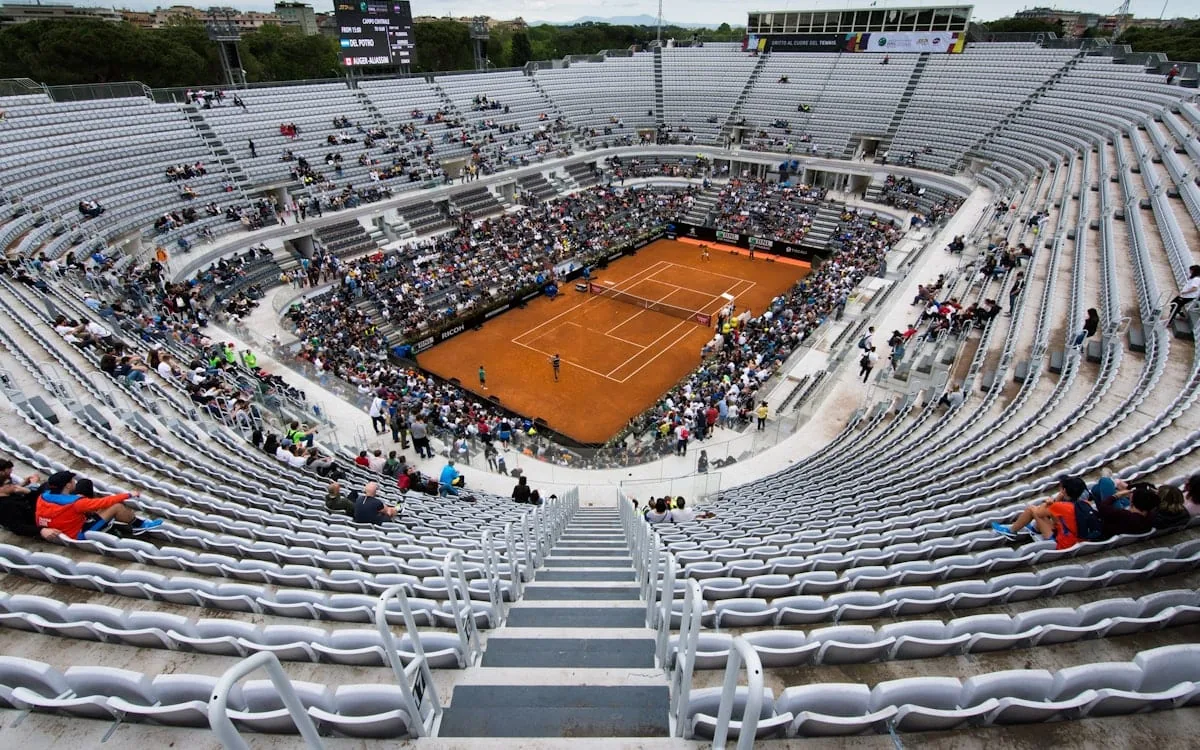
The tournament runs from 15 to 22 November at the Inalpi Arena, where it has been held since 2021 and where it is contracted to stay until 2030. On Thursday 12 November, the eight are drawn into two groups of four, named after John McEnroe and Ivan Lendl.
Then comes the format that confuses first-time viewers more than anything else in tennis: the round robin. You can lose and stay alive. You can win two matches and go out on a countback involving sets and games. If you have never had to care about that maths before, our guide to how the group stage actually works will save you a lot of squinting at a graphic on Thursday night.
The field: Alexander Zverev, who became world No. 1 on 2 November after winning both Roland Garros and the US Open; Carlos Alcaraz, the Australian Open champion; Ben Shelton, who would be the first left-handed champion since McEnroe himself; Medvedev, champion in 2020; Flavio Cobolli, the home player; Arthur Fils, the first Frenchman to qualify in a decade; Frances Tiafoe; and Jodar. Four of the eight have never been there before. Sinner, who won the last two, is at home with his knee.
The money is absurd and worth stating plainly, because it explains the atmosphere: $338,000 simply for turning up and playing your three group matches, $405,000 for every round-robin win, and $5,171,000 for a champion who goes through the week unbeaten — the largest cheque for winning anything in tennis.
What to look for if you have never watched him
Two things, mainly.
The first is how he handles an arena that is nothing like the courts that made him. He is a clay-court player by upbringing and by instinct, and Turin is fast, indoor, roofed, loud and airless, where the ball skids and the rallies are short. On paper it is the worst possible week for him. Then again, the two best wins of his year — de Minaur, Medvedev — both came on hard courts, in straight sets, which suggests the paper is wrong.
The second is what he does when a match goes badly, because we already know the answer. Twice at Roland Garros he was two sets down or a set and a break down against experienced opposition and did not panic. Whoever draws him on Thursday is not getting a grateful kid who is thrilled to be invited. They are getting the only man in the building who has nothing at all to lose, and who has spent eleven months proving that he does not much care what the ranking next to his opponent says.
There is one more thing, and it is the reason to make time for this particular week rather than catch the highlights. Everything Jodar has done this year, he has done for the first time: first tour title, first top-10 win, first Grand Slam quarterfinal, first Masters final. In Turin he gets to do it once more, in the room where the sport keeps its eight best chairs, in front of players who were household names while he was still playing college matches in Virginia.
On Thursday somebody in a suit will pull names out of two pots on a stage in Turin and hand three of the seven most accomplished men in tennis a problem they did not have to think about last winter. Sit down for his first match, whenever it lands. In January, the 168th best player in the world was not on anybody's television. In nine days he is on everybody's.
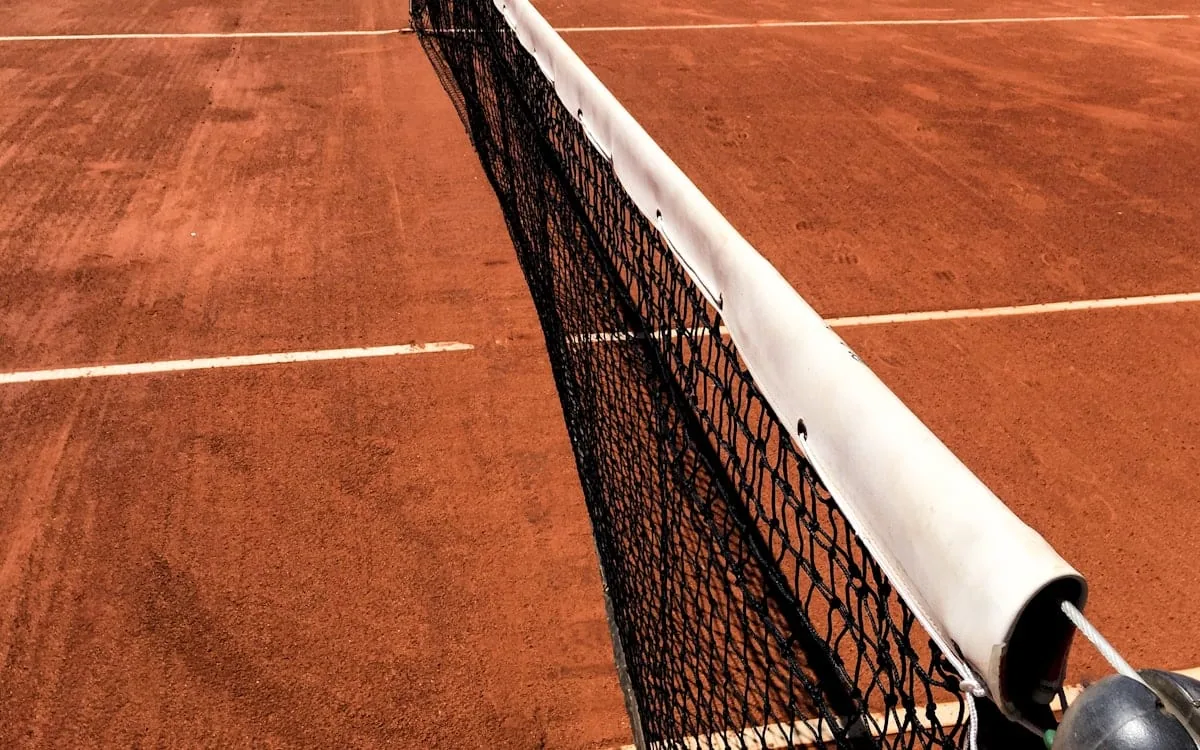
Photo: a clay court net close up, from our picture library.
🎾 Gear from this story
WilsonWilson Blade 98Taylor Fritz's racket of choiceView on Amazon →As an Amazon Associate, SUPER.TENNIS earns from qualifying purchases.