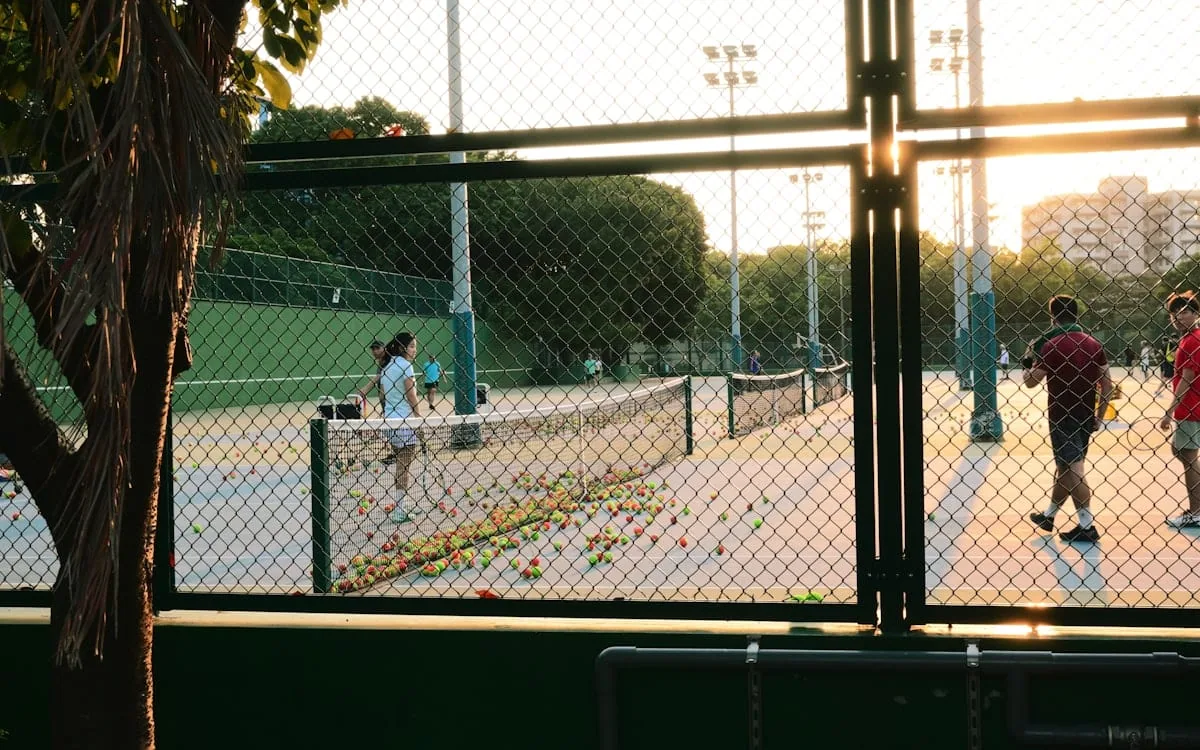
Tennis spends most of the year insisting it is the loneliest sport there is. One player, one chair, no substitutions, nobody to pass to when the arm goes and the legs stop answering. Then, three or four weekends a year, it quietly drops the act — and this is one of them.
From Friday to Sunday, fourteen countries play the second round of the Davis Cup Qualifiers. Seven of them are hosting. Seven of them have flown somewhere they would rather not be, to play on a surface somebody else chose, in front of a few thousand people who want them to lose. At the end of it, seven nations will have a place at the Final 8 in Bologna in November, and seven will go home and start the whole climb again next February.
If you only watch tennis when the Grand Slams are on, this is the weekend to make an exception. Not because the tennis is better than New York — it is not — but because it looks and sounds like nothing else the sport puts on.
What is actually happening
The Davis Cup has been running since 1900, which makes it older than the ATP, older than the seeding system, older than the idea that tennis players might be paid at all. The modern version ends with a Final 8: eight nations, one city, one week in late November. This year that city is Bologna, from 24 to 29 November, and Italy are already in it as hosts. They have also won the thing three years running, which is the sort of detail that tends to focus everybody else.
That leaves seven places. Fourteen nations are playing for them this weekend, on a home-and-away basis, which is the part that matters. There is no neutral venue, no shared show court, no single site where the media can be fed and the sponsors can be entertained. Each tie is staged by one of the two countries, in a building that country picked, on a surface that country laid.
Spain are in the draw as the beaten finalists from last year. The other thirteen came through a first round earlier in the season. If you want the full architecture of how a nation gets from the bottom rung to Bologna, our Davis Cup guide lays out the tiers and the routes. For this weekend, all you need is the shape: five rubbers per tie, first to three wins, two singles on day one, doubles and up to two more singles on day two.
Seven ties, seven very different rooms
Chile v Spain, Santiago. The biggest occasion of the weekend, and the one with the best backdrop. They are playing on outdoor clay at the Parque Estadio Nacional, on a court named Anita Lizana, after the Chilean who won the United States Championships at Forest Hills in 1937 — the first Latin American to win a major and the first to be ranked world number one. Nine decades later, on a court carrying her name, Chile get Spain on dirt in September. Alejandro Tabilo leads the home team, with Cristian Garin, Tomas Barrios Vera and Matias Soto alongside him. Nicolas Jarry, who has not played since April, is missing. Play starts at one in the afternoon on Saturday with two singles, and at noon on Sunday with the doubles.
Germany v Croatia, Halle. Six days after Alexander Zverev lifted the United States Open trophy in New York, he will walk into an arena in Westphalia with about eleven and a half thousand seats in it and play for Germany. The heristo arena is better known as the home of the grass event every June; for this weekend it is a hard court, and the Davis Cup is back in the building for the first time in twenty years. Zverev is joined by Yannick Hanfmann, the doubles pair of Kevin Krawietz and Tim Puetz, and Daniel Altmaier. Saturday at two, Sunday at noon.
Czechia v United States, Prague. Indoor hard at the O2 arena, Friday and Saturday, and a rematch with a grudge attached: Czechia beat the Americans 3-2 in this same round last September in Florida. The Czech four — Jakub Mensik, Jiri Lehecka, Tomas Machac and Vit Kopriva — is as strong a group as the country has had in years. The American team has been rebuilt on the fly. Taylor Fritz and Tommy Paul both withdrew, which leaves Ben Shelton, fresh from his first Grand Slam final, leading a side with two Davis Cup debutants in it: Learner Tien, who is twenty, and Martin Damm Jr, a left-hander who stands six feet eight. Christian Harrison and Austin Krajicek handle the doubles.
Great Britain v Ecuador, London. The Copper Box Arena on the Olympic Park, Saturday and Sunday, indoor hard. Cam Norrie is the British number one, Arthur Fery is the local who made a Wimbledon semi-final this summer, Toby Samuel is the newcomer, and the doubles is genuinely frightening: Henry Patten, the world number one, with Neal Skupski, who has won both the Australian and the United States title. Ecuador arrive as the outsiders and will not mind that at all.
Austria v Belgium, Vienna. The best story of the seven, purely as an act of construction. Austria are hosting at the Vienna Athletic Sports Club, and because the club does not have a tennis stadium, they are building one: a temporary clay court laid on the football pitch, with about five thousand seats bolted around it. Friday and Saturday. In a month it will be a football pitch again.
Korea v India, Seoul. Hard court at the Olympic Park tennis centre, Friday and Saturday, on courts that have just been resurfaced for the occasion. Korea have never been to the Final 8 and know exactly what is in front of them. India travel without Yuki Bhambri, their best doubles player, who has a thigh injury — and in a five-rubber tie, losing your doubles specialist is not a footnote.
Canada v France, Quebec City. The Centre Videotron, Friday and Saturday. Felix Auger-Aliassime heads a Canadian team with Gabriel Diallo, Liam Draxl and Duncan Chan; France answer with Arthur Fils, Arthur Rinderknech, Quentin Halys and Pierre-Hugues Herbert. On paper it is the most evenly matched tie of the weekend. In a hockey arena in Quebec in September, it will not feel even at all.
Why a home tie sounds different
There is something most casual viewers have never quite registered about this competition: at a normal tournament, the crowd is a guest. They are there to appreciate. They applaud winners, they groan at double faults, they are shushed by a man in a chair if they get above themselves, and the players do not, on the whole, care very much who they are.
A Davis Cup home tie inverts all of that. The crowd is a participant. They sing before the first ball, during the change of ends, and through most of the gaps in between. They bring drums, flags, horns and, in South America, a level of organised noise that tennis has no idea what to do with. Nobody is shushed unless a point is actually in progress, and often not even then. If you have ever wondered which sporting crowds in tennis genuinely change results, we went through that in detail in our piece on the loudest crowds in the sport, and a Davis Cup weekend is where the argument gets settled.
It starts before a ball is struck. Both teams are walked out, lined up on the baseline in their national kit, and both anthems are played while several thousand people either sing along or pointedly do not. Tennis has no other moment like it. A player who has spent the season being introduced as a set of numbers — a ranking, a seeding, a head-to-head — stands there for ninety seconds representing a place instead, usually the place he grew up, often in front of people who taught him. Half of them look like they would rather be anywhere else. All of them remember it for the rest of their lives.
Then there is the surface. The home nation picks it, which is why this weekend gives you clay in Santiago and Vienna and hard courts everywhere else. It is not neutral and it is not meant to be. Chile did not choose outdoor clay in spring sunshine because it was convenient. They chose it because Spain would have to come and play on it.
And there is a captain. In a normal match, a player is alone with the scoreboard. In a tie, there is a man or woman sitting in a chair at the side of the court in national kit, allowed to talk to the player at every change of ends, gesturing, arguing, calming, occasionally telling a twenty-two-year-old on debut that the crowd noise is a compliment. Behind the captain sits the rest of the team, in matching tracksuits, on a bench, doing what benches do. Tennis players spend their whole careers being told nobody is coming to help. For three days, somebody is.
What is in it for them, exactly
Almost nothing, if you measure it the way the tour measures things. There are no ATP ranking points for winning a Davis Cup rubber. There is no prize cheque that would move anybody in these squads. The calendar is brutal and the Asian swing starts almost immediately afterwards, so a player who flies to Santiago or Seoul this week is quietly accepting a worse October than the one he could have had.
They go anyway, and the reason is not complicated. Zverev has just finished the most significant fortnight of his career, winning his second major of the year in New York. Any sports scientist in the world would tell him to spend this week with his feet up. Instead he is expected in Halle on Thursday, because playing for Germany in a German arena in front of a German crowd is one of about four things in tennis that a trophy cabinet cannot give you.
The seven losers do not fall off the earth, which is worth knowing before you get too invested in a scoreline. They drop back into the qualifying rounds and start again in the new season, so a bad Sunday in Seoul or Quebec costs a year rather than a generation. That still stings. For a nation like Ecuador or Korea, a weekend like this arrives perhaps twice a decade, and the squad that turns up is usually the best four players the country currently has — not a selection, simply everybody. Ask Croatia, who have won this competition twice with teams assembled from a country of under four million people, what the margins look like.
There is also the specific cruelty of the format, which is the source of most of its drama. Lose your singles rubber at a tournament and you have let yourself down. Lose it in a tie and you have handed a country a deficit. You then sit on that bench and watch a teammate try to repair it, which is the single most uncomfortable seat in the sport. Players who are stone-faced for eleven months of the year end up crying on that bench, and they are not embarrassed about it afterwards.
How to watch it if you have never watched it
Start with the doubles, which is on Sunday in the Santiago, Halle and London ties and Saturday in the others. Doubles is usually the rubber nobody outside the sport plans to watch and the one that decides everything. Ties arrive at 1-1 far more often than anybody expects, which makes the doubles a live match point for a whole country. It is also, frankly, the most watchable tennis there is if you do not play: four people, quick hands, constant movement, points that end in three shots rather than thirty.
Watch the bench between points. You will learn more about how a tie is going from four people in tracksuits than from the scoreboard. Watch who the captain sends out first on day two, which is the single biggest tactical decision of the weekend. And do not switch off if a tie reaches 3-0 — the last rubbers are dead, in the sense that nothing turns on them, but they are often where a nineteen-year-old gets a first cap in front of a home crowd that has already got what it came for and is in the mood to be generous.
If you want one tie, take Chile against Spain. The Spanish are travelling without Carlos Alcaraz and with a team built around Rafael Jodar, Daniel Merida, Jaume Munar, Martin Landaluce and Pedro Martinez, with David Ferrer as captain. It is the youngest Spanish side to be sent anywhere serious in a decade, and it is being sent to a full stadium in Santiago, on clay, against a home team that has been waiting months for it. That is either a coming-of-age weekend for Spanish tennis or a very long Sunday.
The other team competition, one week later
You will notice that the Laver Cup follows almost immediately, at the O2 in London from 25 to 27 September, and it is worth being clear about what separates the two — we wrote about what the Laver Cup is actually for earlier this week.
The Laver Cup is the better-produced event. Black court, dramatic lighting, superstars on a bench being filmed being friends, six of the best players in the world guaranteed. The Davis Cup this weekend gives you Ecuador in an Olympic handball arena and a clay court built on a Viennese football pitch.
But nobody in London next week is playing for a country. That is the whole difference, and it explains why a Davis Cup tie between two nations you could not place on a map can still produce a scene that stops you dead: a doubles pair on their knees on a court in Quebec, a captain running from a chair, a stand full of people who drove four hours to be there singing something you do not understand.
Friday
Tennis is about to do something it does not do often. It is going to turn up in Santiago, Halle, Prague, London, Vienna, Seoul and Quebec City at more or less the same time, take over a building in each of them, and give seven countries a Friday night that has nothing to do with rankings.
Seven of those fourteen teams get Bologna in November. The other seven get a flight home and a long winter of thinking about one rubber that got away. Nobody gets a single ranking point out of any of it, and every player in all fourteen squads showed up anyway.
Find the one nearest to you, or the one whose anthem you like best, and give it a Saturday afternoon. It is the last weekend of the year where tennis has a home ground.
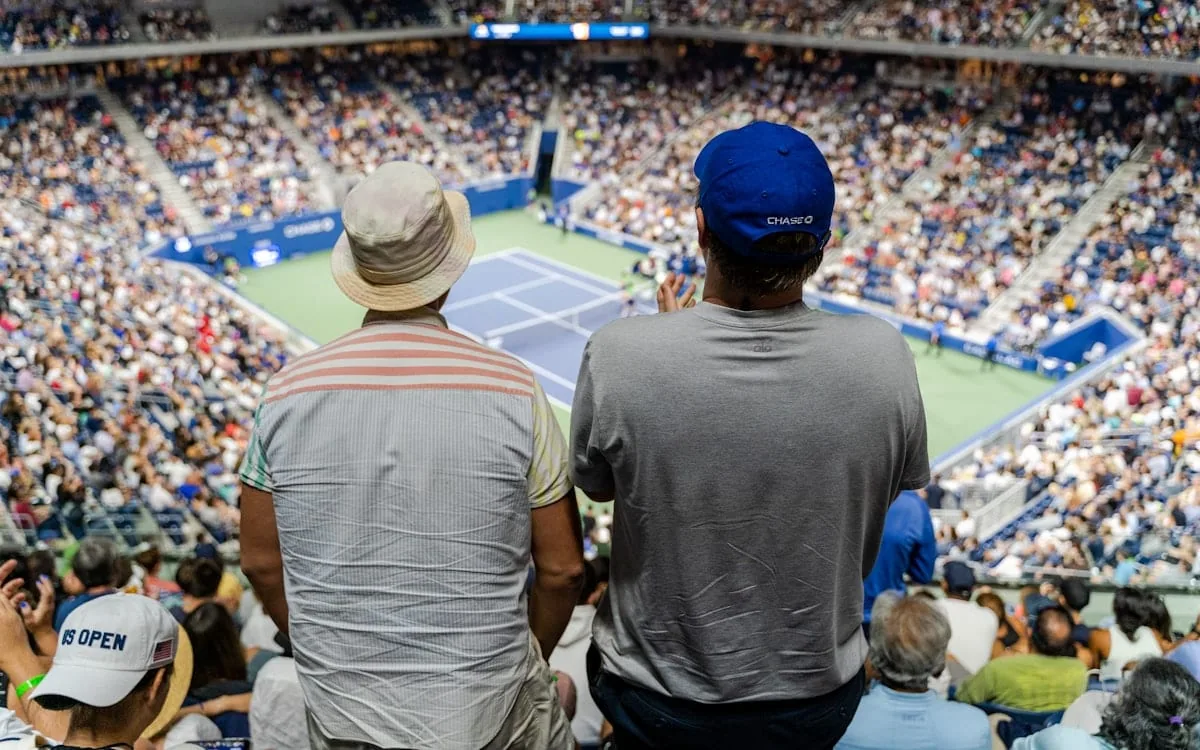
Photo: a full stadium seen from the upper rows, which is where most of us watch from.
🎾 Gear from this story
HeadHead Extreme TourAlexander Zverev's racket of choiceView on Amazon →As an Amazon Associate, SUPER.TENNIS earns from qualifying purchases.