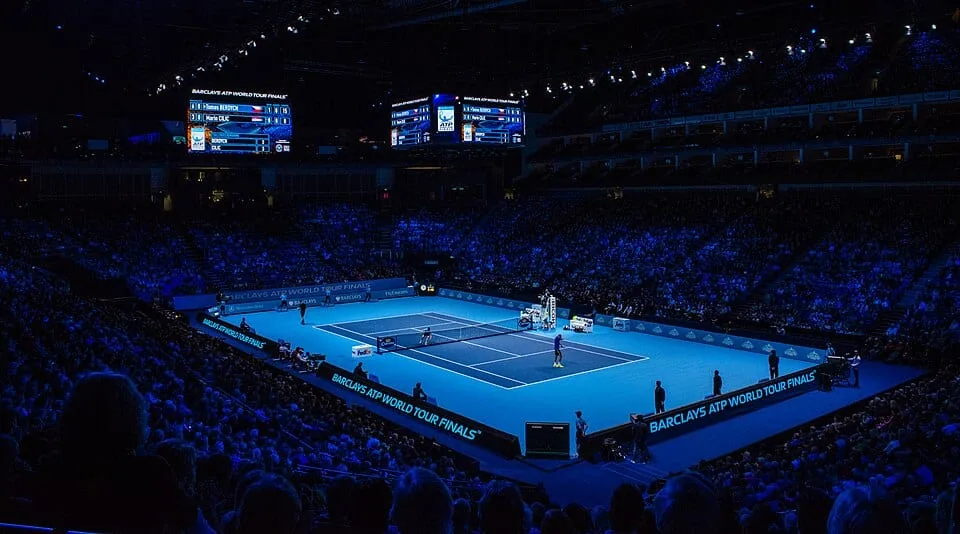
There is a room at every tennis tournament that you will never see on television, and this week it is somewhere under the stands of the vast arena at Nanterre, on the western edge of Paris. It has no windows. It has a row of machines bolted to benches, a kettle that is never off, and a queue of rackets in plastic bags with names written on them. Some of those names would stop you in the street.
By the time the first ball is hit at the last Masters 1000 of the season, the people in that room will have been working for days. Not one of them will appear in the broadcast. If they do their job perfectly, nobody will mention them at all. That is more or less the definition of success in the stringing room: total invisibility.
It is quietly one of the better stories in the sport, and if you are the kind of person who loves watching tennis without ever picking up a racket yourself, it will change what you notice. Because once you know what happens in that room, you start noticing it everywhere — in the bag a player unzips at the change of ends, in the frame they hand back to the ball kid after three games, in the small, furious moment when somebody looks at their strings as though the strings have personally betrayed them.
The room itself
Picture a converted conference suite, or a corridor of portable cabins, or on a bad week a corner of a car park with a temporary wall. Tournaments give the stringers whatever space is left over, which is rarely glamorous and often far from the courts.
Inside, the kit is serious. The ATP rulebook is blunt about it: tournaments must provide a professional stringing service, the machines have to be electronic models rather than the hand-cranked kind, and at the biggest events the service has to be running three days before qualifying even starts. Once play begins it does not stop. The rule is that stringing continues throughout the day and until the completion of play — which, in a week where a third-set tie-break finishes at one in the morning, means exactly what it sounds like.
At a Masters 1000 the team is usually around eight people. At a Grand Slam it is closer to twenty. They are drawn from all over the world — the Wimbledon crew a couple of years ago had twenty-two stringers of roughly a dozen nationalities — and most of them have day jobs in ordinary racket shops the rest of the year. For two weeks they live inside a windowless room together, eating what the tournament canteen has left, and then they go home.
What happens to one racket
A player, or more often a coach, drops off a stack of frames. Three to six per match day is normal for a singles player. Each frame comes with instructions: this string in the mains, that one in the crosses, this tension, measured to the half-kilo, and please do not change anything.
The stringer clamps the frame, cuts out the dead string bed if there is one, and starts threading. The mains go in first, the crosses after, each one pulled to tension by the machine and locked off. Then the logo gets stencilled onto the string bed with ink — that painted brand mark you see on every professional racket is not printed, it is applied by hand, in the room, every single time. Then the frame goes into a bag with the player name on it and joins the finished pile.
Twelve to twenty minutes per racket, for a good stringer working at pace. Across a full day, including stencilling and bagging and the inevitable interruptions, the realistic average works out at about four rackets an hour. That number sounds leisurely until you multiply it by eight people and fourteen hours and realise it is the only reason the tournament functions.
The numbers are genuinely absurd
At the National Bank Open in Canada, an eight-person team gets through somewhere between 130 and 200 rackets a day. Not in the fortnight. In a day.
At the Grand Slams it goes up a level. The Australian Open stringing room has pushed past 500 rackets on a single busy day, with a record of 616. Wimbledon strung 4,503 rackets in one championship with a team of nineteen, back when the counting was last made public, and Babolat have been the official stringing partner at the All England Club since 2022. The US Open, where Wilson runs the room, has gone beyond 5,000 frames in a fortnight with a team of eighteen.
Five thousand rackets. Threaded one string at a time, by hand, by eighteen people, in a basement in Queens, while a few hundred metres away a stadium full of people drink cocktails and have no idea the room exists.
If you have read about the 315 people it takes to run the ball crew at a Grand Slam, this is the same story told with different tools. A tennis tournament looks like two people on a court. It is actually several hundred people making sure those two have nothing to think about.
Half a pound
Here is the part that surprises people most. Players do not ask for a tension. They ask for a very specific tension, and then they notice when it is wrong.
The working range across the professional game is roughly 21 to 27 kilos — call it 46 to 60 pounds in the old money — with most players clustered somewhere in the middle. Within that, the requests get forensic. Stringers talk about being asked for half-pound differences between frames in the same bag, so that a player has slightly livelier rackets and slightly tighter ones available depending on how the match is going and how the air feels.
Those requests are treated as confidential. A stringing room knows the exact setup of every player in the draw, which is competitively useful information, and the convention is that none of it leaves the room. When a request comes in mid-match — the strings feel dead, send down two more at a kilo tighter — it travels from the court to the chair umpire to a runner and down into the basement, and comes back up as a bag.
There are legends attached to this, and the good ones are true. Stringers describe players who do not name a number at all but simply ask for the maximum the machine will pull. One account from the Australian Open room involves a player who wanted the frame pulled slightly out of shape, deliberately, because that was what felt right to them. The job is not really engineering. It is translation: taking a feeling somebody has in their hands and turning it into a measurement.
Why strings die so fast
This is the bit that explains everything else. Strings do not hold their tension. They start losing it the instant the machine lets go.
The classic measurements, taken by a pair of physicists studying string beds, found that a freshly strung racket loses a startling proportion of its pull tension almost immediately — roughly thirty per cent for nylon, and around forty per cent for the polyester strings that most professionals now use. It keeps falling after that. A string bed can drop ten per cent or more in the first hour alone while it settles.
Polyester is the villain and the hero here. It is the material that made the modern spin-heavy game possible, because it bites the ball and lets a player swing as hard as they like with a reasonable expectation that the ball comes down inside the line. But it goes dead quickly and without warning. Natural gut, the older and more expensive option made from cow intestine, feels wonderful and holds tension better, but it hates moisture and costs a fortune. Hybrids — gut in one direction, polyester in the other — are a common compromise at the top of the game.
So a professional will restring essentially every time they play. Not because the strings broke. Because they went flat. And on a long match day a player will go through several frames not out of superstition but because the fourth one in the bag has a string bed that is two hours younger than the first.
When a string does snap mid-point, the whole chain tightens at once. The player finishes the rally with a dead frame if they can, pulls the next one out of the bag, and the broken racket starts travelling before the game is over. On a busy afternoon the room may be working against three matches at the same time, to deadlines nobody can predict, with one fixed rule: the frame has to be back upstairs before the player runs out of the ones they trust.
If you have ever wondered why the same athletes also argue constantly about the balls they are given, it is the same instinct. The two objects that touch each other at a hundred miles an hour are both changing, all the time, and a player at that level feels every bit of it.
Does the roof change anything?
Paris is indoors. So is Turin in a week, and so was Vienna, and Basel, and every event between now and the end of the season. You would think that a controlled environment — no sun, no wind, no humidity swinging about — would make the stringing room simpler.
Ask five stringers and you will get an argument. One school says indoor arenas run warm once they fill with several thousand people and a few hundred lights, warm air loosens a string bed, and so you string marginally tighter to keep the ball down. The other school says the whole point of a roof is that the temperature barely moves, and that the right answer indoors is to change nothing at all and stop fiddling.
What both sides agree on is the direction of travel. Heat and humidity loosen strings. Cold stiffens them. Players who go from a sweltering outdoor court in August to a cool indoor hall in November are holding a noticeably different racket even if the numbers written on the bag are identical. The stringers adjust for that, quietly, match by match, and the players mostly never have to think about it. Which is the job.
This week, specifically
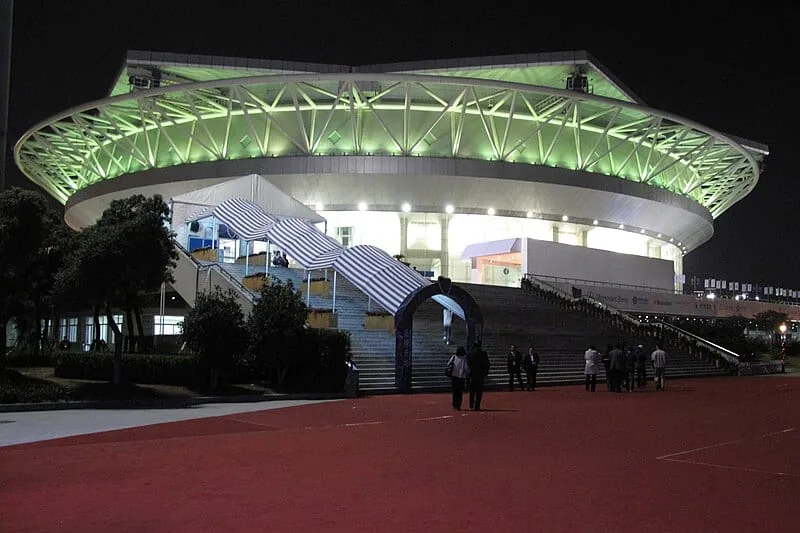
The tournament those machines are feeding right now is the fortieth edition of the Paris Masters, long since moved out of its old home at Bercy and into the far larger arena at Nanterre, which picked up a new sponsor name over the summer. Main draw play runs through to the eighth of November, and for a handful of players it is the last chance to grab a seat at the ATP Finals in Turin the following week.
The defending champion is not there. Jannik Sinner ended his season at the start of October with a right knee problem, which leaves Alexander Zverev as top seed, Carlos Alcaraz seeded second, and Novak Djokovic in a draw he has won more often than anybody alive. A clutch of other names came out of the entry list in the days before it began.
For the room downstairs, a wave of late withdrawals is not a relief so much as a reshuffle. Groups get reassigned, the volume lands unevenly, and a stringer who expected a quiet Tuesday finds six frames from somebody who has just started winning.
Who actually does this
Getting into a tournament stringing room is harder than you would guess. One recruitment process involves a straightforward stress test: string twelve to fifteen rackets in an eight-hour window, to a standard, without falling apart. Plenty of good shop stringers cannot do it.
Once in, the structure is personal. Each stringer is assigned a group of players and keeps them for the whole event, so the same hands do the same frames every day. That continuity is the point — a player who has found a feel they like does not want it reinvented by somebody new on Thursday. Stringers will tell you the allocation can be brutally unfair: if your group goes out in the first round you sit idle, and if your group all go deep you do not sleep.
They are not permanent staff. They are mostly people who run small businesses the rest of the year, who travel for a fortnight at a time, who know each other from the same circuit of events, and who, at the end of a Grand Slam, have collectively threaded enough string to stretch across a city. Nobody gets a trophy. A nod from a player in a corridor is roughly the ceiling.
If you ever do hold a racket
Almost nobody reading this plays. But the equipment story is a good one even from the sofa, and it is the rare corner of tennis where the professional version and the amateur version are genuinely the same objects.
The strings themselves are the cheapest way to change how a racket behaves — far cheaper than a new frame. A reel of polyester tennis string is what most of the tour is playing on, while natural gut is the luxury option that feels like nothing else and behaves badly in the rain.
The small accessories are the ones that actually get replaced constantly. Professionals go through overgrips at a rate that would shock you, often a fresh one every match, and the little rubber vibration dampeners you see wedged between the bottom strings are a personal fetish for half the locker room and an irrelevance to the other half. Strips of lead tape at the top of the hoop are how frames get customised to a player weight preference, which is why two identical-looking rackets can feel completely different.
If the craft itself appeals, the full set-up is buyable. A home stringing machine is a real piece of furniture and a real commitment, and the people who own one tend to fall in love with it. A tension calibrator is the unglamorous tool that checks the machine is pulling what it claims to pull, which matters more than any other setting. And the oversized thermal racket bags the professionals carry exist for exactly one reason: they stop a bootful of freshly strung frames from cooking in the sun and losing tension before anybody has hit a ball.
For what the actual frames in those bags are, we went through the rackets the top players use and the shop versions you can buy in more detail elsewhere.
Back to the basement
The next time you watch a player lose a point, glare at their string bed, and swap the racket for a fresh one from the bag, follow the object rather than the player. That frame will go down a corridor you have never seen, into a room you did not know existed, onto a machine operated by somebody whose name does not appear anywhere, and it will come back out in about a quarter of an hour, stencilled and bagged and pulled to a number that somebody once worked out by feel.
Over the next two weeks in Paris, and then in Turin, that will happen a few thousand times. The players will not thank anybody for it, because they will not notice it, because noticing it would mean something had gone wrong.
That is the deal in the windowless room. They are only ever right when nobody is looking.
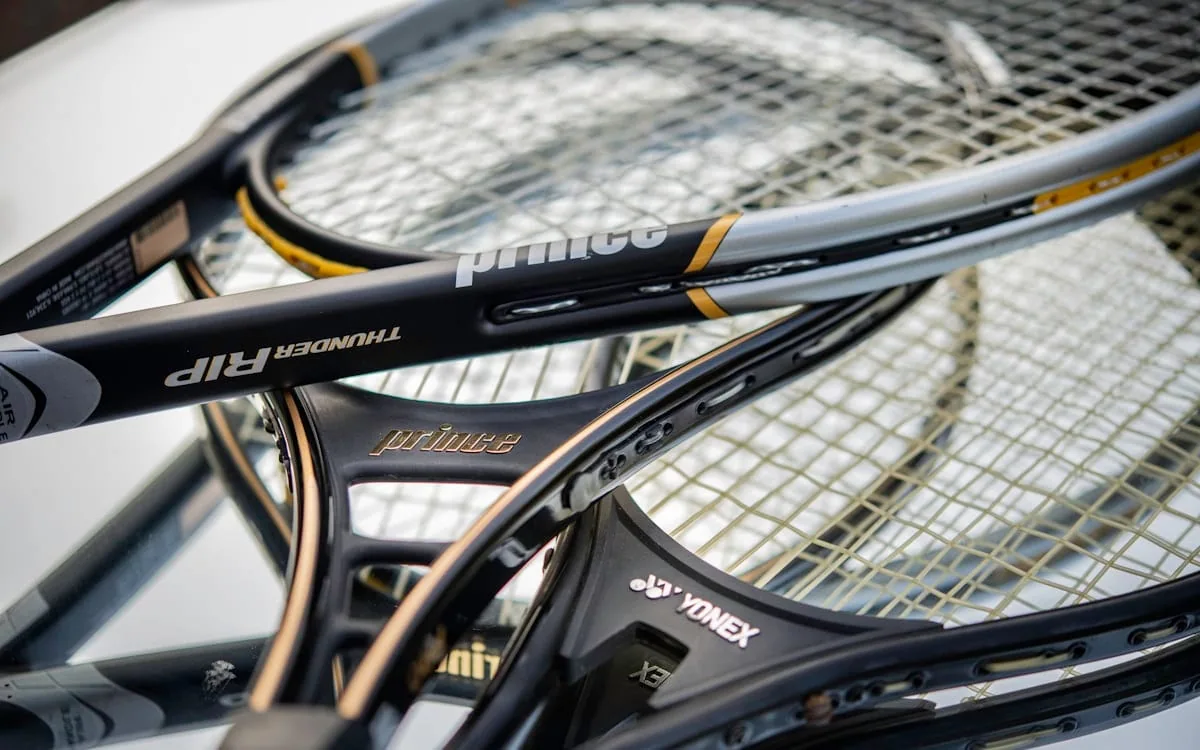
Photo: tennis rackets and string beds, from our picture library.
🎾 Gear from this story
HeadHead Speed MPJannik Sinner's racket of choiceView on Amazon →As an Amazon Associate, SUPER.TENNIS earns from qualifying purchases.