The camera always finds them. A rally ends with something absurd - a lunging backhand that somehow lands on the line, a drop shot that dies in the fluff - and before the player has even turned round, the broadcast cuts away to six people in a small block of seats behind the baseline. One of them is on his feet with a clenched fist. One has not moved at all, arms folded, eyes on the scoreboard. A woman in the second row has both hands over her mouth. Two seconds later you are back on court, and you probably never think about those six again until the next big point.
That little block of seats is the player box. It is the most filmed and least explained part of a tennis broadcast, and once you know how to read it, you will find yourself watching it almost as closely as the match. Tennis is the loneliest big sport there is. No substitutions, no huddles, no team-mate to carry a bad hour for you. The box is the nearest thing a player has to a bench, and everything it is allowed to do - and everything it is not - has changed more in the last four years than in the forty before them.
The best seats in the house are not for sale
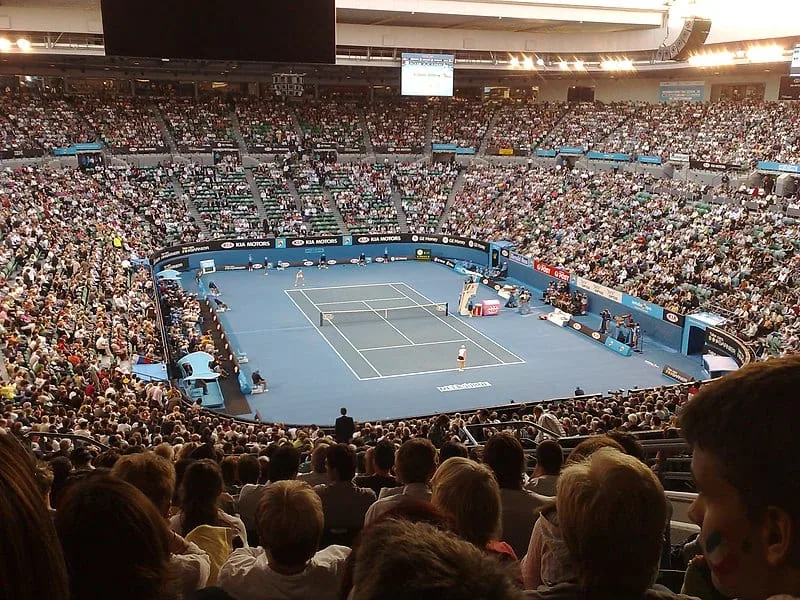
Every tournament sets aside a handful of seats for each player, usually in the first few rows behind one baseline, square on to the court so the player can find them without turning their head. You cannot buy them. They are issued with the player credential, the way a dressing room is, and the number varies: a couple of seats at a small indoor event, a proper row at a Grand Slam, where the boxes become their own small theatre of celebrity guests and visiting relatives.
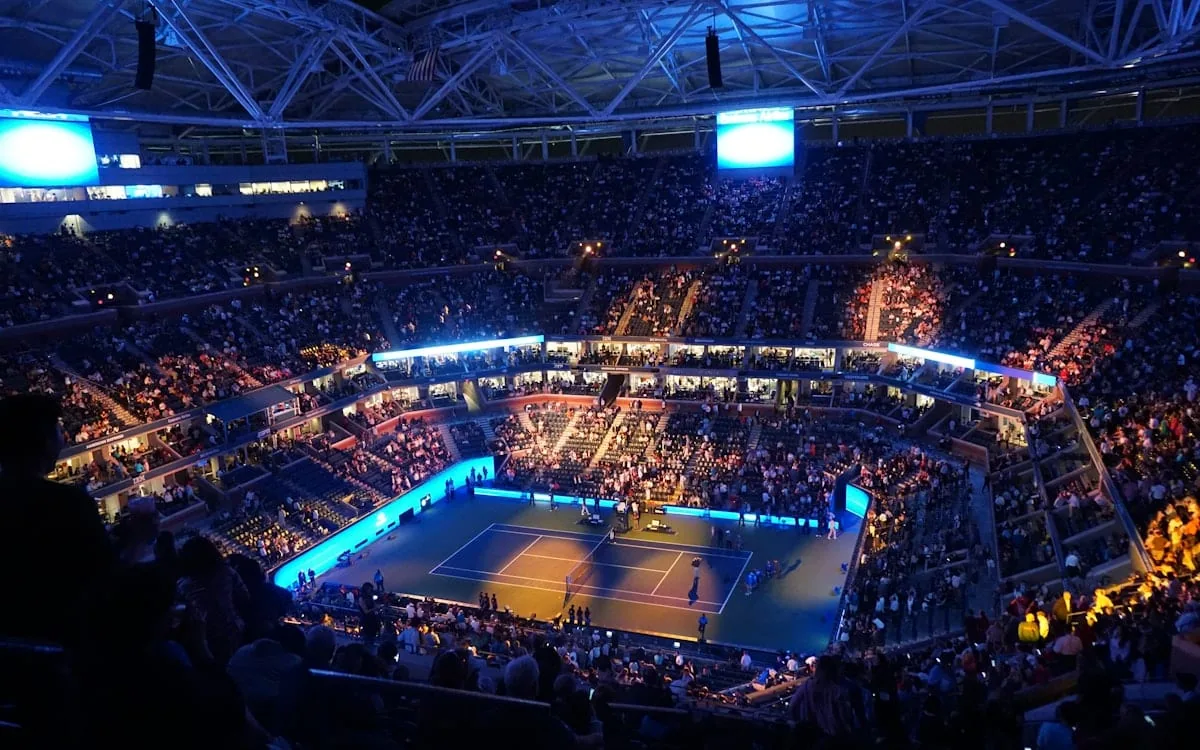
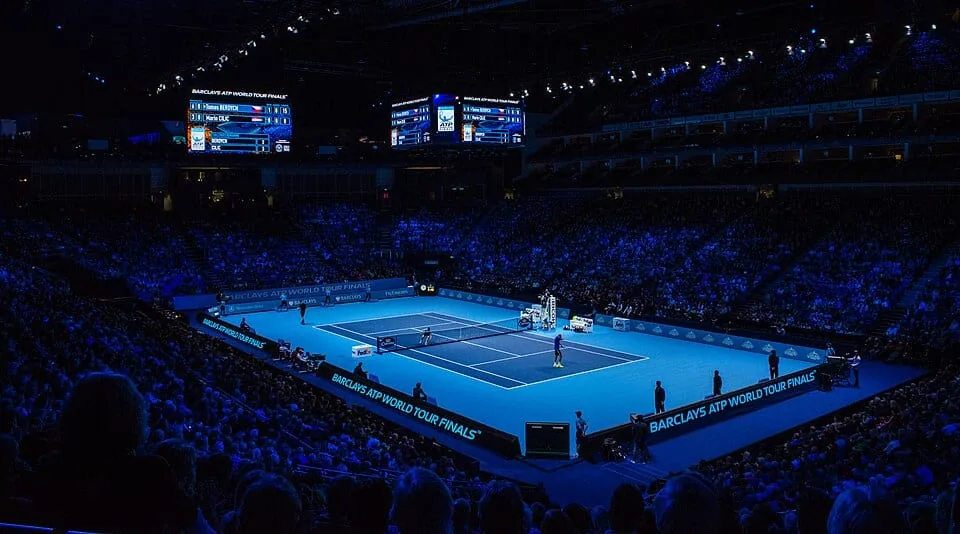
The geometry matters more than you might think. Behind the baseline means the player sees the box every time they walk back to serve, in their peripheral vision between first and second serves, and head-on during the ninety seconds they sit in their chair at a changeover. It is deliberate. The box is positioned to be glanceable. In the big indoor arenas of the autumn, where the court is dropped into the middle of a basketball bowl and the first row is close enough to hear a shoe squeak, the box sits almost on the paint. If you have ever wondered why players look so exposed at this time of year compared with the vast open bowls of the summer, part of the answer is simply proximity - the whole building, the box included, is pressed right up against them. It is one of the quiet pleasures of the indoor season, and one of its cruelties.
Who is actually sitting there
The cast varies, but the roles rarely do.
The coach. The one you can name. He or she sets the tactical plan in the morning, watches it survive contact with the opponent, and decides in real time whether to hold the line or change it. On television the coach is the person doing most of the gesturing: a flat palm pushed down means calm, a fist pumped twice means intensity, a finger drawn across the body usually means go back across the court rather than down the line.
The second coach or hitting partner. Many of the top players travel with two. One is the strategist, the other is the one who gets up at eight to feed four hundred balls to a backhand that has gone missing. The hitting partner is often a former touring pro who was ranked inside the top three hundred and decided that a salary and a schedule beat another year of qualifying. In the box they are usually the quietest person in the row.
The physio. Watch the physio when a player grabs at a thigh. Everyone else in the box reacts emotionally; the physio starts working immediately, because within a minute they may be on court with tape and a decision to make. They are also the person who knows, before anybody else, whether the shoulder that has been managed all month is about to end the season.
The fitness trainer. Tennis seasons are eleven months long and the schedule is brutal, so the person responsible for keeping a body intact through fifty flights a year sits in the box and takes notes on movement that nobody else can see. Legs slow at the start of the third set, a serve toss drifting, a player pushing off one side and not the other.
The agent. Not every box has one, and the agent is rarely demonstrative. They are there because a tennis player is also a small business, and because the half-hour after a match - media, sponsors, scheduling, the next three weeks - is their half-hour.
The family. The partner. The parent. The sibling who has flown in. These are the people who have no tactical function whatsoever and who the camera loves the most, because they are the only ones in the row who are not working and therefore the only ones with nothing to hide. A coach can keep a neutral face for three hours. A mother usually cannot.
Behind all of them, out of shot, is a whole layer of people who never get a seat at all: the stringers turning around six rackets at midnight, the tournament physios, the drivers, the laundry room. If the box is the visible team, the building is full of the invisible one - and if you have never seen what that looks like, the stringing room is the best example in the sport.
The ninety seconds that the whole row is waiting for
A changeover lasts ninety seconds. A set break lasts two minutes. That is the entire budget for anything the box wants to communicate properly, and it is the reason tennis coaching looks nothing like coaching in any other sport.
There is no whiteboard. There is no substitution to make, no formation to adjust, no player to take off. The only lever anybody in that row has is a sentence or two, delivered to someone whose heart rate is near its ceiling and whose shirt is being changed while they listen. Good coaches have learned to spend that budget on one idea, repeated. Not a lecture on court position. One thing: serve to the body. Make her hit a backhand on the run. First ball in.
You can hear it on the on-court microphones at the events that broadcast them, and the thing that surprises people most is how simple it sounds. There is almost no analysis. There is a short instruction and then a lot of reassurance, because the real job at one set all is usually not tactical at all - it is persuading a very tired, very frightened person that the plan is still the plan.
The rule that changed the box
For most of tennis history, every word of that was illegal.
Coaching during a match was banned outright, which created one of the great open secrets in sport: everybody did it anyway, through hand signals and shouted single words and conveniently timed towel breaks, and umpires mostly looked the other way until they did not. The most famous time they did not was the 2018 US Open final, when the chair umpire Carlos Ramos gave Serena Williams a coaching violation after spotting a gesture from her coach, Patrick Mouratoglou, in the box. Williams insisted she had seen nothing. Mouratoglou later said plainly that he had been coaching, and that every coach does it. The match spiralled from there, and the sport spent the next several years quietly agreeing that an unenforceable rule is a bad rule.
The change came in stages. The ATP began trialling off-court coaching in 2022. The US Open allowed it in 2024. By 2025 the rule had been written into the Rules of Tennis themselves, so that from the first of January that year any sanctioning body could permit coaching from the stands, and the Grand Slams took up the option across the board.
What is allowed is narrower than people assume. Coaching has to be brief and discreet. It cannot happen while a point is in play. Verbal coaching is only permitted when the player is at the same end of the court as the box; when they are at the far end, the box is limited to hand signals. Tournaments police the spirit of it rather than the letter, and a coach who stands up and conducts a tactical seminar across a baseline will still be told to sit down.
Some events went further. At the 2025 Australian Open, coaching pods appeared in two corners of the major courts, little four-seat outposts at court level where a coach could sit much closer to the action than the traditional box allows. Reaction among players was split straight down the middle - some loved the intimacy, others found the idea of a coach parked six metres away faintly claustrophobic. Wimbledon, predictably, did no such thing on its show courts, on the reasonable grounds that the player boxes were already there and had been for a century.
Names you will see in the boxes this autumn
Part of the fun, once you start watching the row rather than the rally, is recognising the faces.
Darren Cahill is back alongside Jannik Sinner for this season, which means the calmest man in the building is usually the one who matters most. Carlos Alcaraz goes into this year with Samuel Lopez leading his team after the long partnership with Juan Carlos Ferrero ended at the close of 2025 - the sort of change that would be front page news in football and that tennis absorbed in about a fortnight. Anton Dubrov has sat in Aryna Sabalenka's box since 2019, long enough to have watched her rebuild a serve and a temperament in public. Wim Fissette, one of the most well travelled coaches in the women's game, is the voice in Iga Swiatek's corner.
Watch them for ten minutes and the differences are obvious. Some boxes are loud and physical. Some barely move at all. Neither style tells you anything about whether the player is winning - it tells you what that particular player asked for.
The hardest seat in the building
Ask anyone who has sat in a box for someone they love, and they will tell you it is worse than playing.
A player has something to do. They can hit a ball, chase a drop shot, bounce the ball eight times and start again. The box has no outlet at all. It must sit still, in full view of a television audience, while the person they have invested a decade in loses a tiebreak. Parents are the worst at hiding it. You will see fathers who watch entire matches through their fingers, mothers who leave and stand in a corridor, partners who have perfected a particular tight, encouraging nod and then look at the floor the moment the camera moves off.
Players know all of this, which is why the box is sometimes a problem rather than a help. Some ban their parents from travelling. Some stop looking at the row entirely when things go badly, because the only thing worse than a bad game is seeing your own panic reflected in somebody else's face. And some do the opposite and spend an entire third set staring at one person, using them as a metronome. Neither approach is wrong. It is just that the box is the only place in a tennis stadium where everybody is emotionally involved and nobody is allowed to act.
There is a cost to it that does not show on camera either. A travelling team of a coach, a physio and a trainer is one of the largest items in any player budget - flights, rooms, salaries, fifty weeks of someone else's year - and for players outside the very top it is the main reason a good season can still end in the red. The box you are watching is, among other things, a payroll.
How to read the box, in about thirty seconds
Next time you watch a match, give the box one deliberate look per changeover, and look for three things.
First, posture. A box that is sitting back is usually a box that thinks the plan is working. A box leaning forward with elbows on knees has seen something it does not like, often a set before the scoreboard shows it.
Second, who the player looks at. Players have one person in the row they check in with, and it is not always the head coach. When someone turns and finds their partner rather than their coach after a lost break point, that is a player asking for comfort rather than instruction, and it is usually a sign that the match has become psychological.
Third, the physio's hands. If the physio is suddenly holding something, or has disappeared from the seat, a medical timeout is about to happen and you will see it before the commentators do.
You can get rather good at this. It is the same pleasure as learning to spot which serve is coming from a ball toss - the match widens out and gives you a second thing to follow. It also pays off most in the last weeks of the season, when every match carries weight and every box is tense, because by now the race for the eight places in Turin is close enough to touch.
Turin, in a few weeks
The season ends indoors at the Inalpi Arena in Turin, from the fifteenth to the twenty-second of November, with eight singles players and eight doubles teams and a crowd packed into a bowl that makes every point sound twice as big.
It is the best place in the sport to watch boxes. The arena is small enough that the rows are properly visible, the lighting is theatrical, and the stakes are high enough that nobody is bothering to hide what they feel. You will see coaches who have waited a whole year for the week. You will see physios who are counting down to the only proper holiday they get. You will see a parent in a replica jacket trying, and failing, to look relaxed in the second row of the biggest week of their child's life.
And when the trophy is finally handed over, the camera will do what it always does. It will leave the court, climb the first few rows, and find the people who were never allowed to touch a ball all week - the ones who flew in, sat still, said five useful words at a changeover, and carried the rest of it silently. Tennis calls them a box. Everyone sitting in it knows the right word is a team.
🎾 Gear from this story
WilsonWilson Blade SW 104Serena Williams's racket of choiceView on Amazon →As an Amazon Associate, SUPER.TENNIS earns from qualifying purchases.