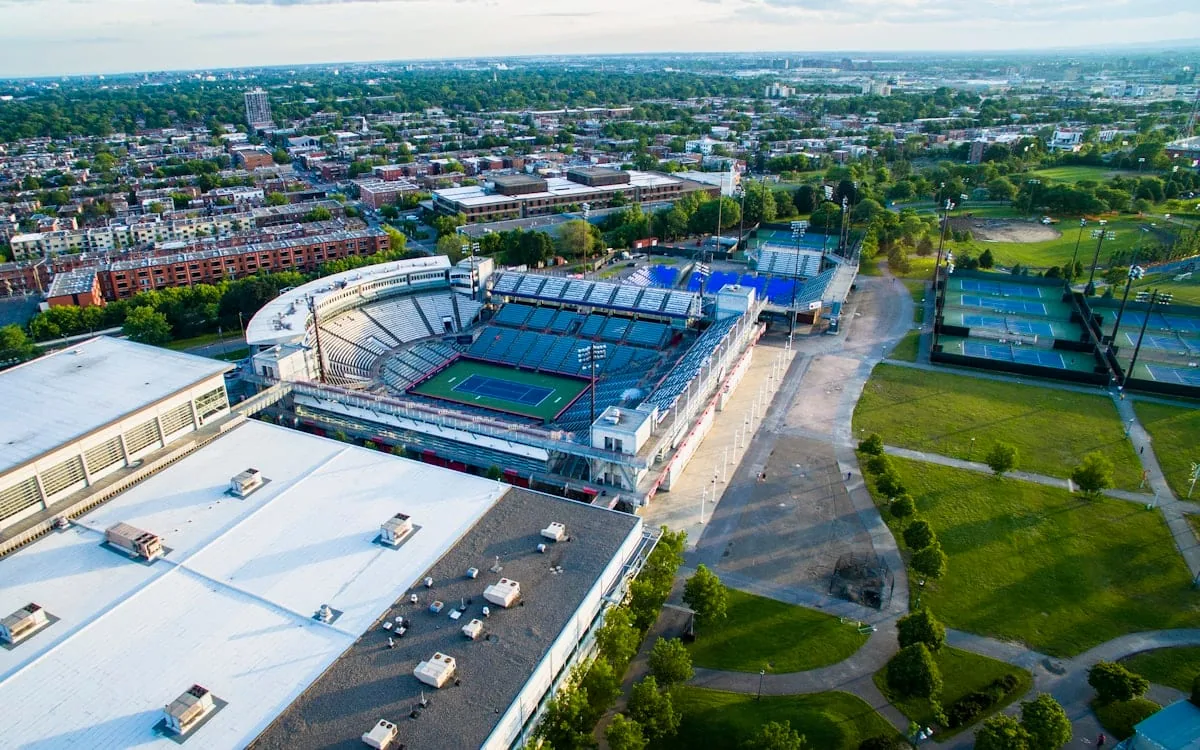
Somewhere at the Qizhong Forest Sports City Arena this morning, on a court with no television cameras and a few dozen people scattered across the seats, a man you have never heard of is playing the most important match of his year.
The Rolex Shanghai Masters does not really start until Wednesday. The draw everybody will talk about — Alexander Zverev at the top of it, Carlos Alcaraz just beneath him, and a hole in the middle of it where the world number one should be — runs from 7 to 18 October. But the tennis started on Monday. It finishes on Tuesday. And almost nobody will watch it.
This is qualifying. Forty-eight players, two matches each, twelve places in the main draw. It is the purest week in tennis and comfortably the cruellest, and if you have only ever picked the sport up somewhere around the quarterfinals, it is the part you are most likely to fall for once somebody explains how it works.
So let somebody explain how it works.
Two wins, and the rest of the year changes
Shanghai is one of the big ones: a 96-player singles draw, the second-largest format on the men's tour after the Grand Slams. Of those 96 places, the top of the rankings fills most of them automatically. Five go to wildcards, handed out by the tournament to whoever it wants in the building — a local hope, a returning name, a teenager somebody wants you to see. And twelve are left over.
Those twelve are what this week is about. The rule is simple enough that you can hold it in your head: a Masters qualifying draw is half the size of the main draw. Ninety-six becomes forty-eight. Those forty-eight players are split into twelve little pockets of four, and each pocket produces exactly one survivor. Win on Monday, win on Tuesday, and your name gets written into the real draw before Wednesday. Lose either one and you are at the airport.
Two matches. That is the whole thing. There is no group stage, no second chance, no best-of-three-days. A bad forty minutes on a Monday morning in a city you flew eleven hours to reach and the week is over before the tournament it belongs to has begun.
At the Grand Slams it is longer and, if anything, worse: 128 players, three rounds, sixteen places, a full week of it before the main event. At smaller tournaments the shape shrinks — twenty-four players, twenty-eight, sometimes just a single round between you and the draw. But the logic never changes. There is a door, there are far too many people trying to walk through it, and the sport does not pretend otherwise.
What makes it feel so different from the tournament that follows is the asymmetry of consequence. When a seeded player loses in the first round of the main draw, it is a disappointing week. When a player loses in the first round of qualifying, it is a disappointing month, because the money and the ranking points he had budgeted for simply do not arrive, and the next chance is in another country on another continent and he has to pay to get there.
The arithmetic of a Monday morning
Here is the part that turns qualifying from a curiosity into something you actually feel in your chest.
The total prize pot in Shanghai this year is a little over nine million dollars. The man who wins the thing on 18 October will take home a sum with six figures in front of the decimal point and a trophy he will be photographed with for a decade.
Down at the qualifying end, the numbers are smaller but they bite harder. Losing your first qualifying match is worth something in the region of seven thousand dollars. Winning it and then losing the second is worth roughly double that. And getting through — winning both — puts you in the main draw, where simply turning up and losing in the first round pays about twenty-four thousand.
Read those three numbers in order and you can see the whole economy of the week. Between the man who loses on Monday and the man who wins twice, there is a gap of something like seventeen thousand dollars, earned in the space of about four hours of tennis, in front of a crowd smaller than a school assembly.
Now put the costs against it. A player operating at this level is usually paying for his own flights, his own hotel, his own food, and quite often somebody else's flights and hotel too, because a coach does not travel for free and neither does a physio. Add stringing, racket services, entry logistics, visas, tax in whatever country he just left. There is a well-known piece of research that puts the break-even point in professional tennis — the ranking at which the prize money roughly covers the cost of chasing it — somewhere around 150 in the world. One hundred and fifty. There are eight billion people on this planet and being the 160th best of all of them at this particular job can still leave you out of pocket at the end of the season.
If you have ever wondered why tennis players at this level look so grimly serious in a half-empty stadium on a Monday, that is why. We have written before about what the sport actually pays the people who play it, and qualifying is where those numbers stop being abstract. It is a working week with the invoice attached.
The man who came out of this draw and won the whole thing
And now the reason this is not a sad story.
Twelve months ago, in this same building, a player ranked 204 in the world walked into Shanghai qualifying. He was Monegasque, which is to say he came from a country of around forty thousand people with no tennis tradition whatsoever. He was 26. He had never won an ATP title. Nobody had any particular reason to look at the qualifying draw sheet and stop at his name.
Valentin Vacherot won his two matches, got into the main draw, and then simply refused to leave. He beat five seeded players in a row. He reached the final. And in the final he played his own first cousin, Arthur Rinderknech, lost the opening set, and won the next two — 4-6, 6-3, 6-3 — to become the Shanghai champion.
Take a second with the records that fell that afternoon. He became the first qualifier in history to win an ATP Masters 1000 title. He became the lowest-ranked champion the category has ever had, and the first ranked outside the top 200 to win one. He became the first player from Monaco to win a tour-level title at all. He went from 204 in the world to 40 in a fortnight, which is not a career step, it is a career transplant.
He is in Shanghai again this week, and the detail that says everything is this: he does not have to play qualifying. He walks straight into the main draw as the defending champion, with his name on the honours board and a seeding beside it. We looked at how strange that transformation has been for him when the Asian swing began — a man who spent his twenties in the queue and now arrives as the person everybody else is trying to knock over.
Every player on the outside courts this morning knows that story by heart. It happened here. It happened in this draw. That is not nothing to carry out onto a court at ten in the morning.
The women's game has its own version, and it is even larger. At the 2021 US Open, an 18-year-old ranked 150th in the world named Emma Raducanu entered qualifying, won three matches to reach the main draw, and then won seven more to take the title — ten matches in all, without dropping a single set. She remains the only qualifier ever to win a Grand Slam singles title. Every teenager who has ever queued for a qualifying sign-in sheet since has had that arithmetic somewhere in the back of her mind.
What it looks like from the fence
If you ever get the chance to go to a tournament on a qualifying day, take it. It is the cheapest tennis you will ever watch and the closest you will ever stand.
There are no cameras on most of these courts and no commentary anywhere. The scoreboard is often a single small panel at one end. The players walk out carrying their own bags, because there is nobody else to carry them. Coaches sit on plastic chairs pressed against the fence, close enough to touch the court, saying things in six different languages that you can hear from twenty metres away. Somewhere behind all of it the main stadium sits empty and immaculate, being hoovered and painted and rehearsed in for Wednesday, like a theatre the day before opening night.
The tennis itself is a shock the first time. These are not lesser players in any sense you would recognise from your sofa. The gap between the man ranked 180 and the man ranked 30 is real, but it is measured in consistency and in the handful of points that decide sets, not in whether somebody can hit a backhand. The ball still makes that sound. The serves are still enormous. What is missing is the cushion: nobody out here has the margin to have an average day and win anyway.
It is also where you see the machinery of the sport close up. The stringing room behind the courts is already running at full tilt on qualifying Monday, long before the famous names have landed, because the players who need fresh rackets most urgently are the ones who cannot afford to lose a match to a dead string bed.
The strangest job in tennis
There is one more character in this week, and he is my favourite thing in the sport.
Lose in the final round of qualifying — win on Monday, lose on Tuesday, get that close — and you are not necessarily finished. You can stay. You sign in the next morning and you wait, in your kit, warmed up, with your bags packed for the airport, in case somebody in the main draw withdraws. If one does, the empty place goes to a beaten qualifier, drawn by lot. He is called a lucky loser, which is one of the few bits of sports jargon that is also an accurate emotional description.
It is a peculiar way to spend a morning: hoping, in a way you would never say out loud, that a man you are friendly with has woken up with a bad shoulder. Players talk about it with a kind of embarrassed honesty. You do not want anybody hurt. You also drove to the site at eight in the morning for exactly that reason.
And it works often enough to be worth the wait. Ten men have won full ATP tour titles after entering as lucky losers, starting with Heinz Gunthardt in 1978 and running through Sergiy Stakhovsky in Zagreb, Andrey Rublev in Umag, Marco Cecchinato in Budapest, and Kwon Soon-woo in Adelaide in 2023. In Madrid in 2023, Jan-Lennard Struff became the first lucky loser ever to reach a Masters 1000 final — a man who had technically already lost that tournament before it began.
Why this particular week has a gap in it
Qualifiers tend to do their damage in draws that are already wobbling, and this one is wobbling.
On 3 October, Jannik Sinner withdrew from Shanghai. The world number one has not played a competitive match since he won Wimbledon in July; a right knee problem that was supposed to cost him a few weeks has now cost him the entire Asian swing. He announced it himself, briefly and apologetically, and the consequences rearranged the top of the sport immediately: Zverev is the top seed here, Alcaraz the second, and the race for the year-end number one ranking has turned into something genuinely open for the first time in a long while.
When the biggest name comes out of a draw, the ripple does not stop at the top. Every seeding shifts down a place. Every section opens up a little. The player who would have run into a monster in the third round now runs into somebody beatable, and so on, all the way to the bottom of the sheet where this morning's qualifiers will be slotted in. It does not make a Vacherot inevitable. It makes one imaginable, which is all any of these players is asking for.
How most of these stories actually end
It would be dishonest to stop there, so here is the other half.
Last week in Tokyo, a 22-year-old Paraguayan called Dani Vallejo came through qualifying, beat a rising Spaniard, then beat Matteo Berrettini — a Wimbledon finalist — 7-6(6), 6-1, and became the first player from his country ever to reach the quarterfinals of an ATP 500. For two days he was the best story in tennis, and we told it properly here.
On Sunday he played Jiri Lehecka in that quarterfinal and lost 6-1, 6-1. Fifty-odd minutes. Nothing to be done about it.
That is the honest shape of the thing, and it is worth sitting with rather than skipping past. The overwhelming majority of qualifying runs end exactly like that: a good week, a better week than anyone expected, and then a wall. The player goes home with more money than he arrived with, a ranking a few places higher, and a plane ticket to somewhere smaller. He does it again next month. Most of them do it for years.
What makes the week worth your attention is not that every one of them turns into a champion. It is that the structure genuinely allows it. There is no committee, no invitation, no bracket that locks the unknown out. Win two matches on the outside courts and the sport is obliged to put your name in the same draw as Alcaraz. Tennis is not especially kind, but on this one point it is completely fair, and that is rarer in professional sport than it sounds.
If you want to watch it
Qualifying is not usually on the main broadcast, which is the one genuine frustration here. Tournament apps and the tour streaming services often carry the outside courts as raw feeds with no commentary — no replays, no graphics, just a fixed camera and the sound of the ball — and watching an hour of that is a startlingly good way to learn what a tennis point is actually made of.
For Shanghai specifically, the time difference is the usual obstacle for anybody in Europe or the Americas, and we put together a survival guide to watching the Asian swing without ruining your week when the swing began. The short version for qualifying: it goes on in the local morning, which is the middle of the night almost everywhere else, so this is the one part of the fortnight you are better off catching on a highlights reel than live.
And then on Wednesday the real thing begins, the stadium fills, the cameras come on, and the twelve names that were settled on Tuesday afternoon appear in the draw without any explanation of how they got there, printed in exactly the same typeface as everybody else's.
That is the detail I would leave you with. By Tuesday evening the qualifying draw sheet in the players' lounge will have twelve circles on it, and thirty-six names with lines through them. The thirty-six will be on planes by Wednesday morning, some of them to tournaments in cities you could not place, most of them already thinking about the sign-in sheet for the next one. The twelve will walk out this week onto a court with a roof and fifteen thousand seats, and one of them, if last year taught us anything, might not go home for another two weeks.
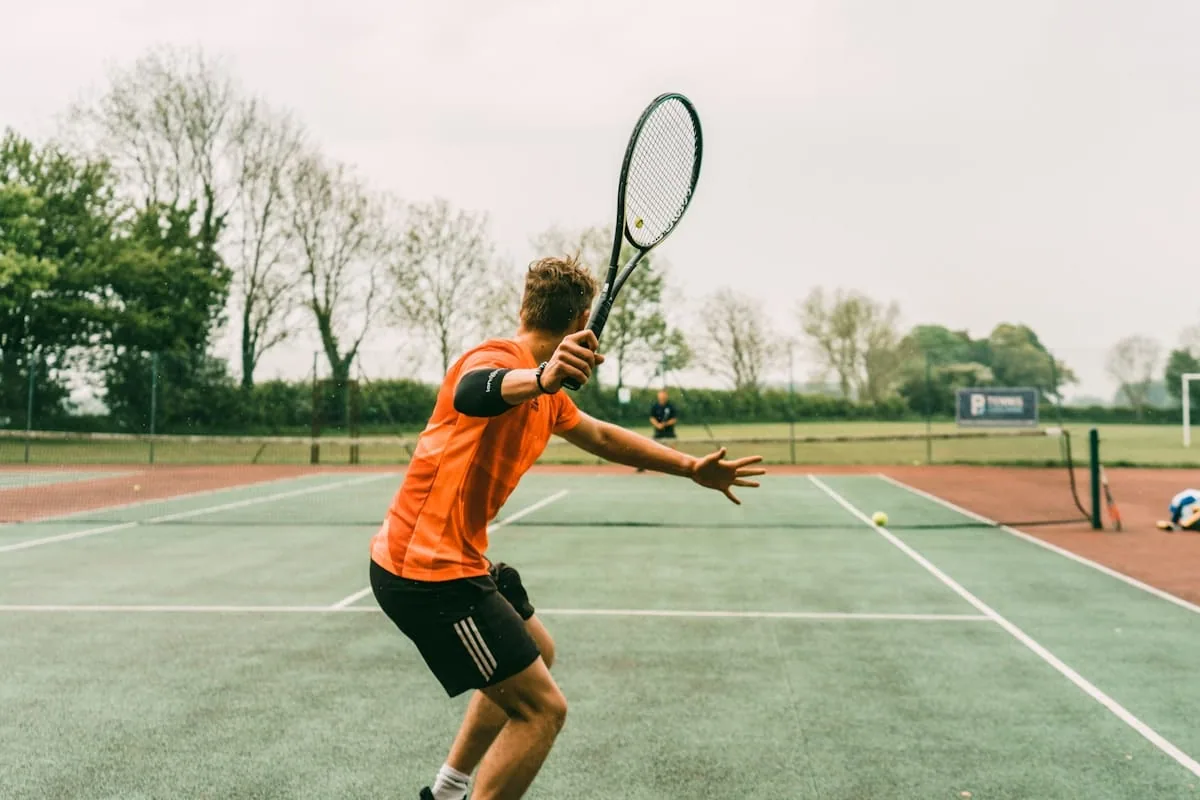
Photo: an outdoor hard-court complex, from our picture library.
🎾 Gear from this story
BabolatBabolat Pure AeroCarlos Alcaraz's racket of choiceView on Amazon →As an Amazon Associate, SUPER.TENNIS earns from qualifying purchases.